On 10 September 2026 the Iranian‑backed Houthi movement, operating under the name Ansarallah, announced the capture of the strategic Red Sea port city of Mocha. The seizure, confirmed by multiple Telegram channels including monitor_the_situation and BellumActaNews, marks the most significant territorial change in Yemen’s conflict this year, bringing the Houthis within striking distance of the Bab al‑Mandeb strait.
Ground advances and consolidation
Following the Mocha takeover, Ansarallah forces rapidly expanded their control along the coast. At 07:56:21 UTC, the JPost reported a Yemeni government‑declared counter‑offensive to retake Sana’a, while rnintel documented the capture of nearby villages, strategic heights (Jabal al‑Umari, Jabal Dhubab) and the Al‑Omari base with its Zubayr airport runway. By 13:07:53 UTC, rnintel noted the deployment of 3,000 Interior Ministry troops to secure the newly captured Hays‑Mocha area, indicating a systematic effort to consolidate gains.
"Ansarallah have captured the Al‑Omari base and Zubayr airport runway, bringing them within 30 km of the Bab‑el‑Mandeb Strait," – rnintel (13:58:35 UTC).
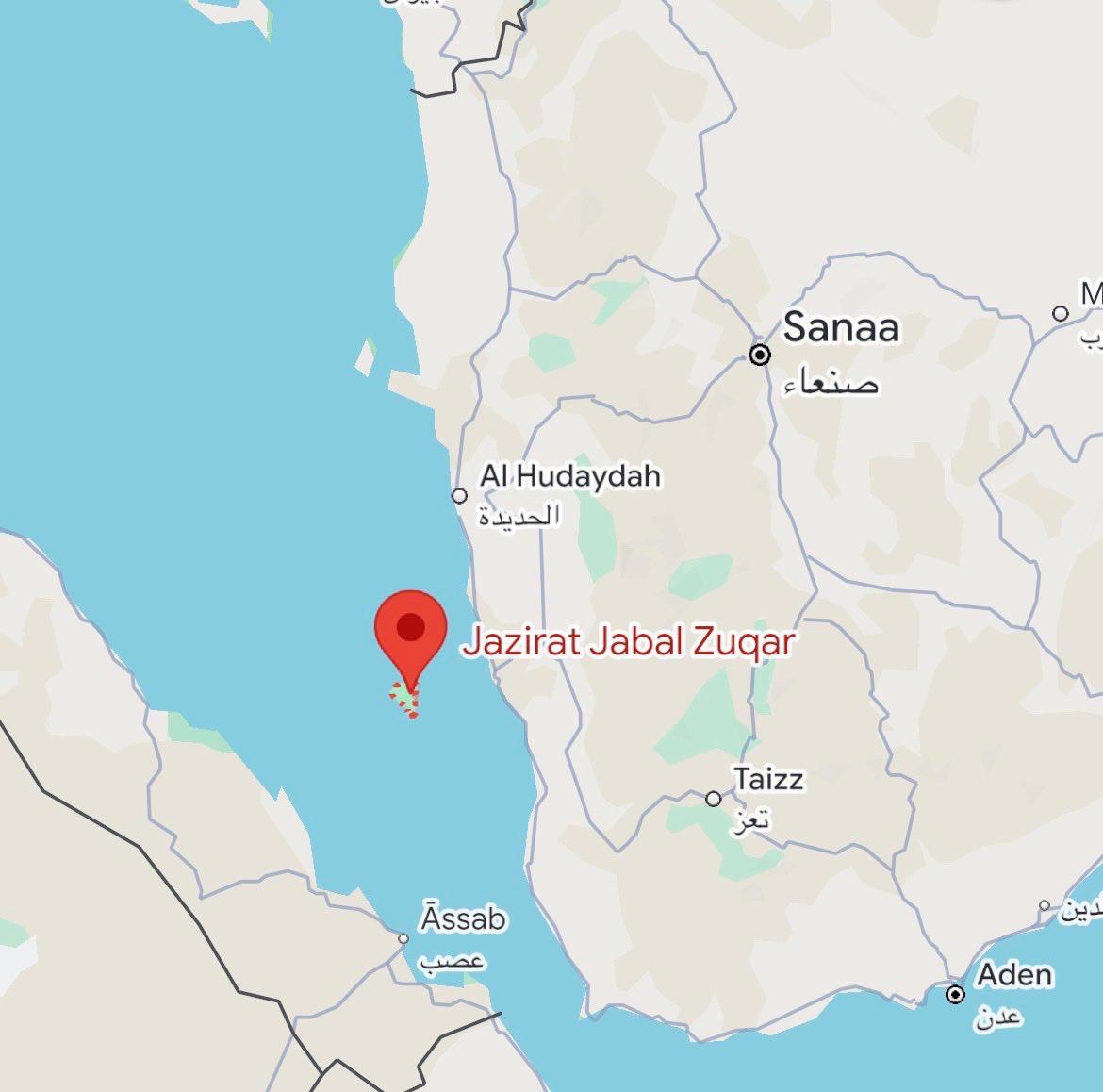
The advances extend to the Red Sea islands. monitor_the_situation (16:19:56 UTC) reported the capture of the Hanish Islands, while BellumActaNews (17:46:31 UTC) confirmed the seizure of Zuqar Island after coordinated rocket and boat‑borne assaults. These island gains further tighten Houthi control over maritime routes.
Saudi‑backed air response
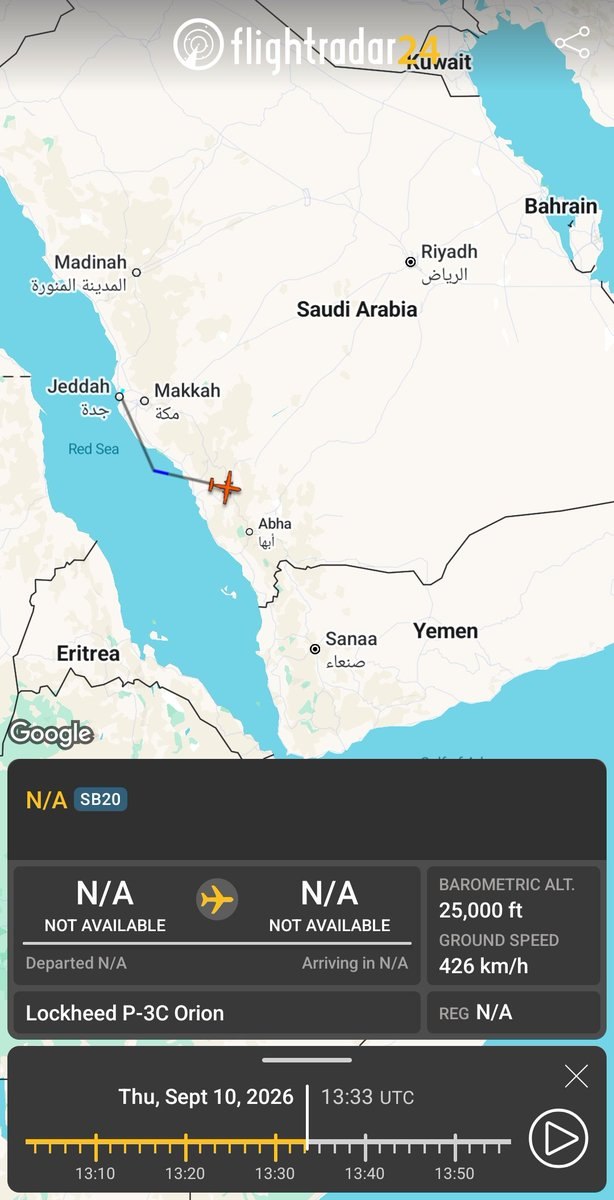
In response, the Saudi‑UAE coalition launched a series of airstrikes targeting abandoned military depots, distribution centers, power stations and bridges in Dhubab and Mocha. monitor_the_situation (17:24:41 UTC) reported Saudi airstrikes on Dhubab roughly 30 minutes before the city’s capture, aimed at depots left by retreating forces. Later, at 15:47:39 UTC, rnintel confirmed additional Saudi‑Yemeni airstrikes on Dhubab, while CIG_telegram (15:03:11 UTC) noted at least ten strikes to halt the Houthi advance.
Air operations also targeted infrastructure in Al‑Jawf, Al‑Bayda, Marib and Taiz governorates, as detailed by BellumActaNews (16:51:38 UTC), supporting the Presidential Leadership Council (PLC) offensive against Houthi positions.
Rocket and missile attacks on logistics hubs
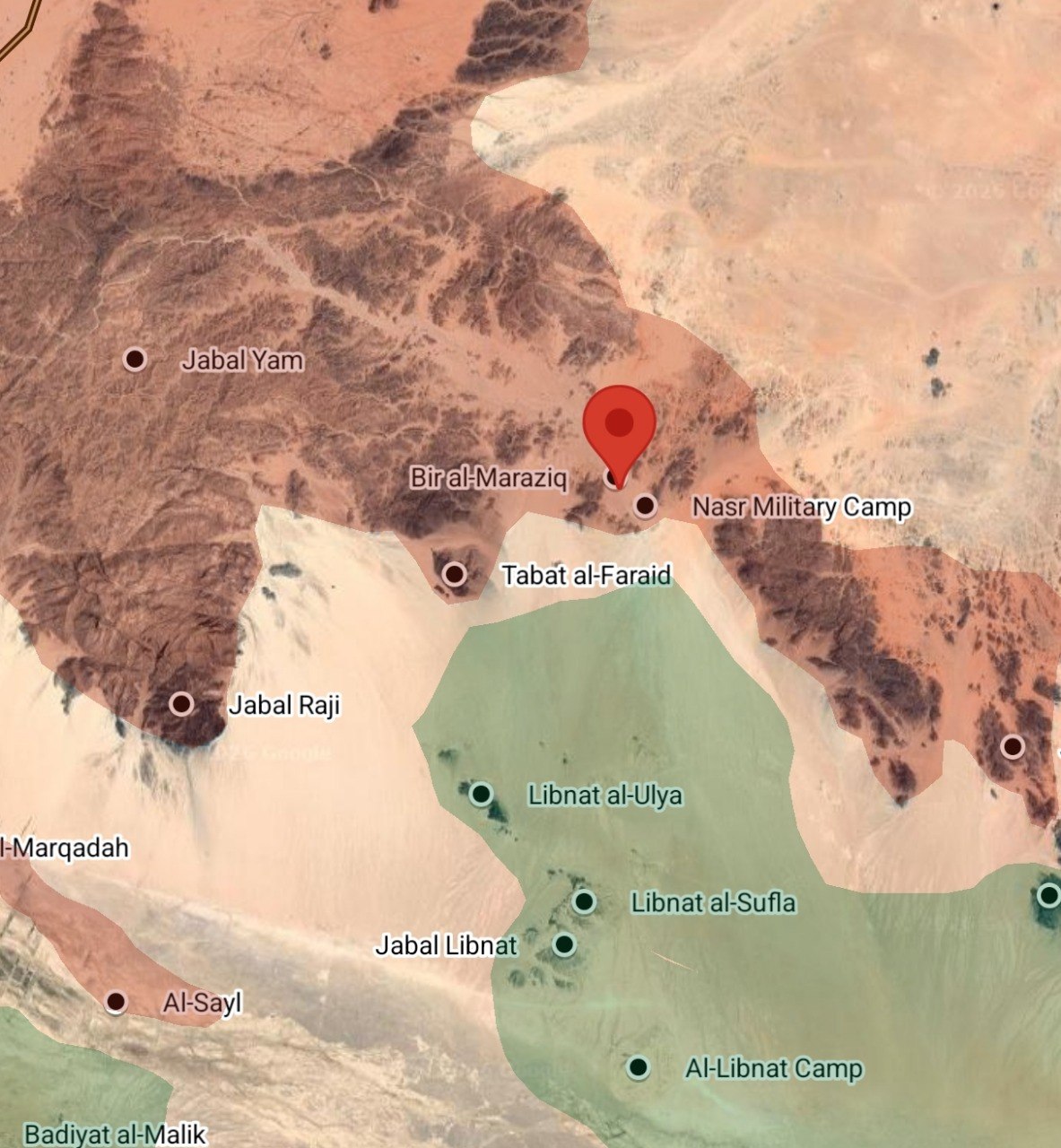
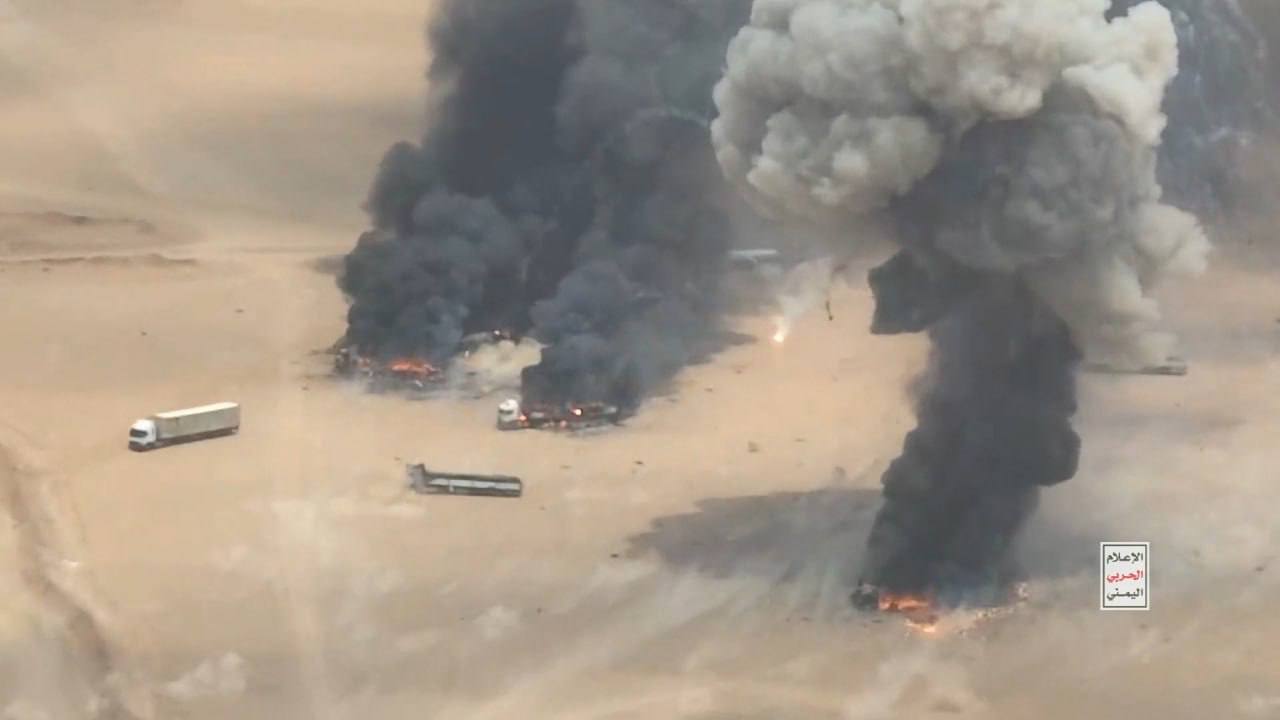
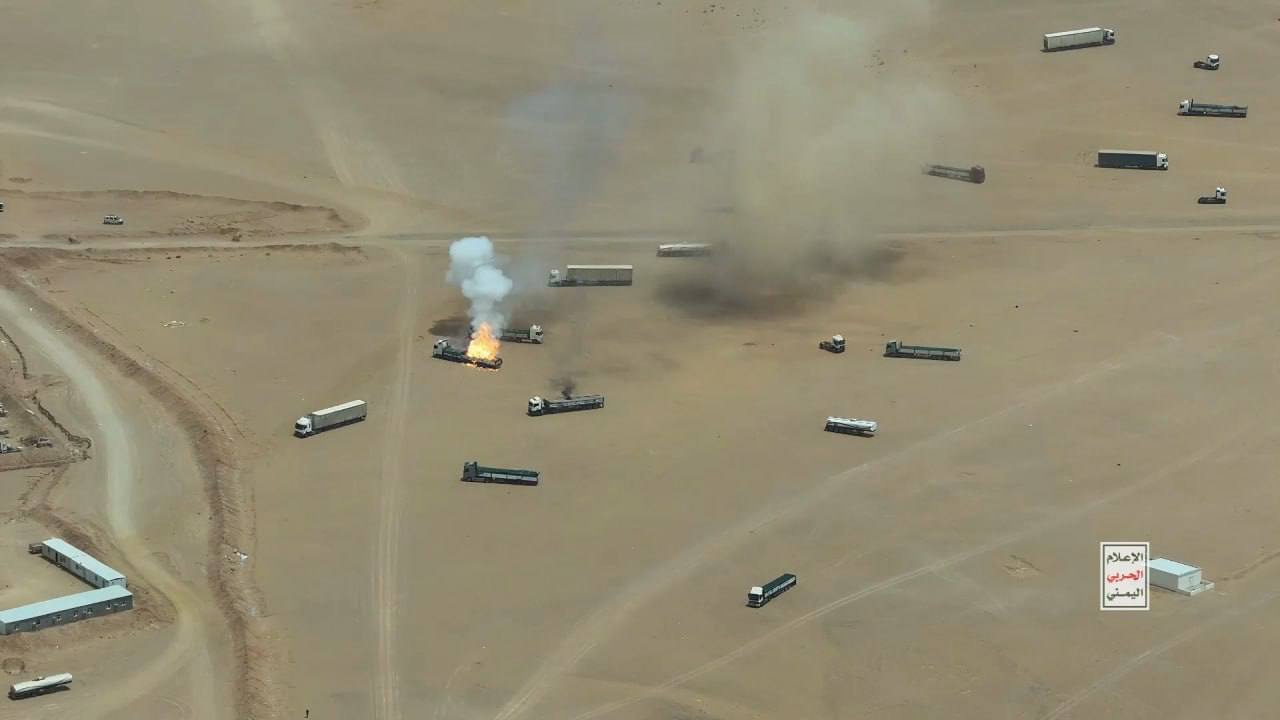
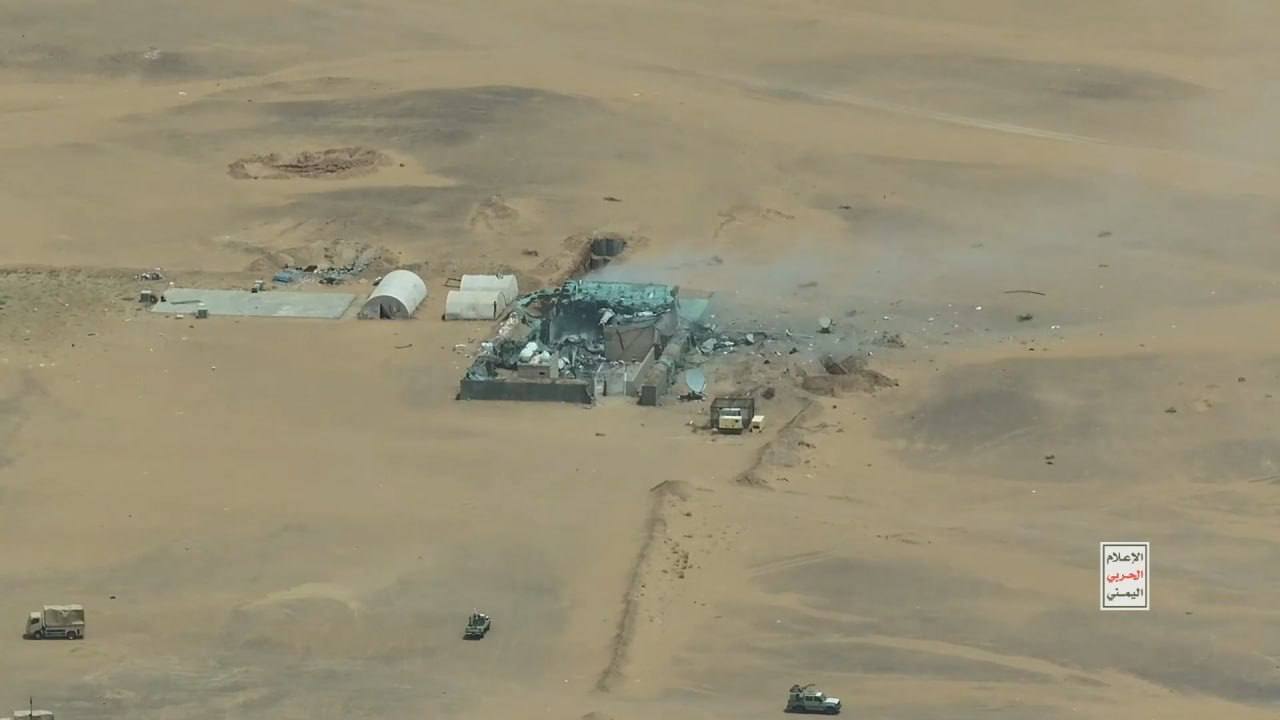
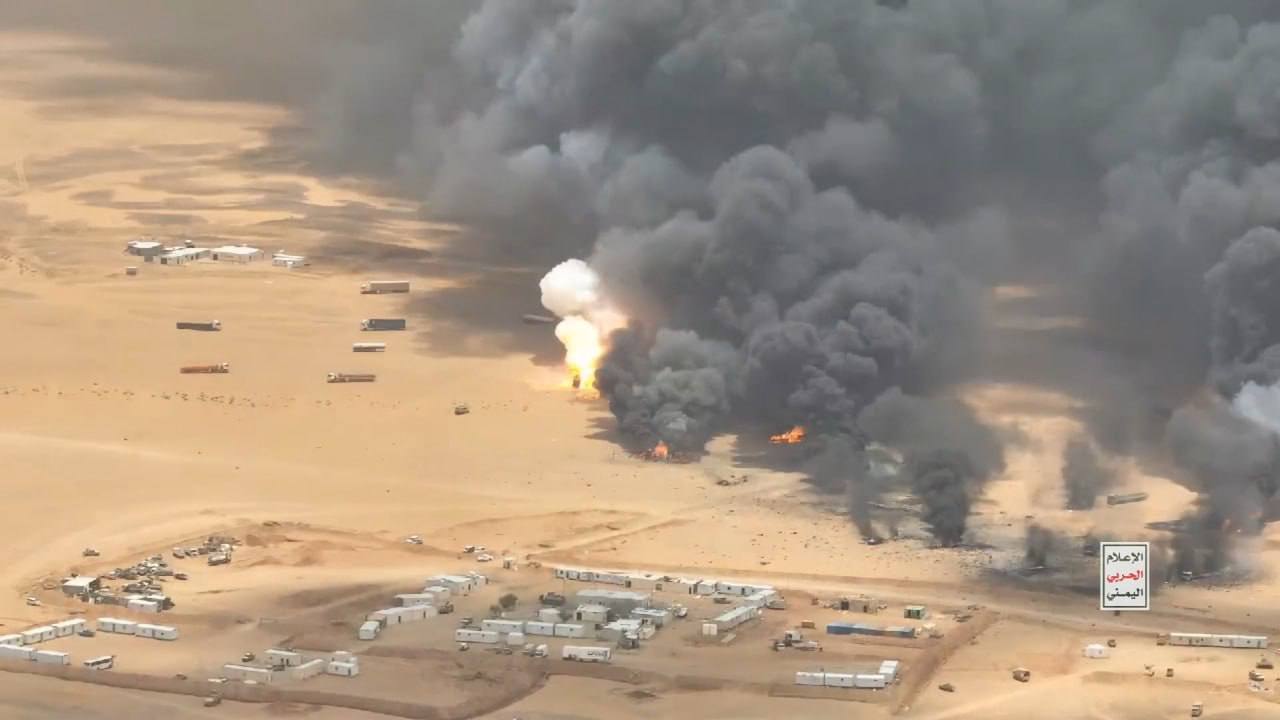
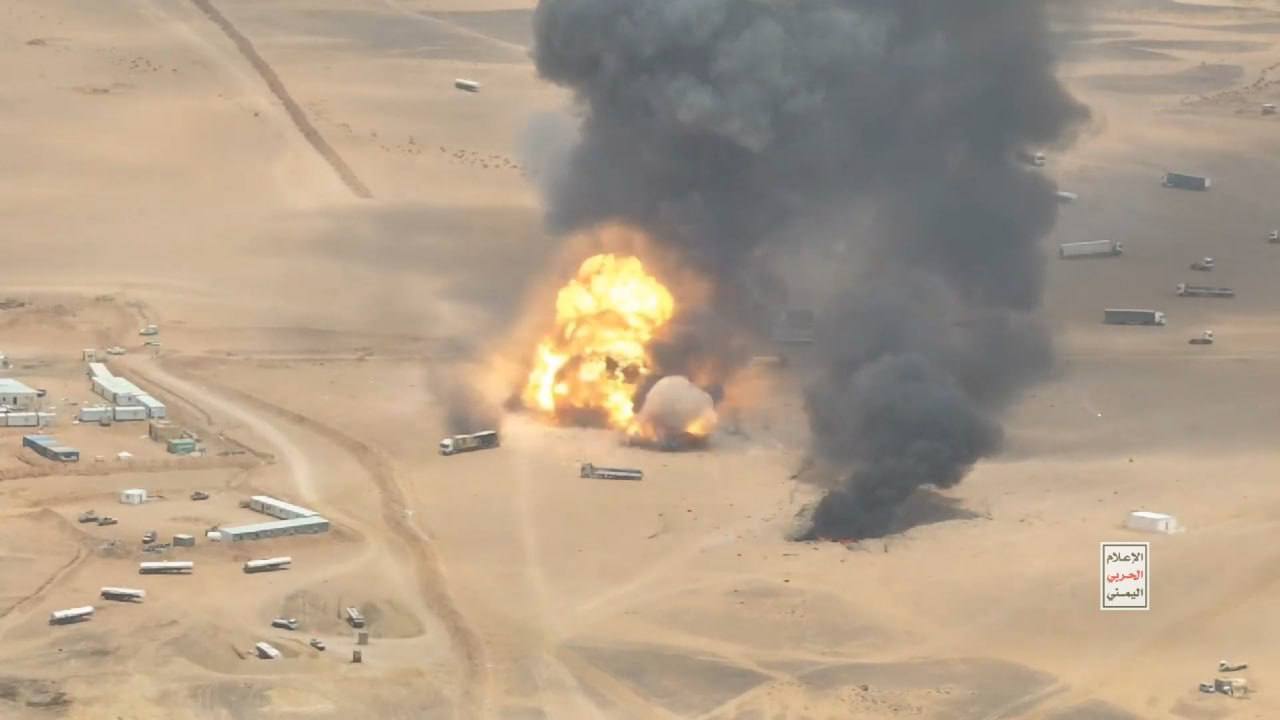
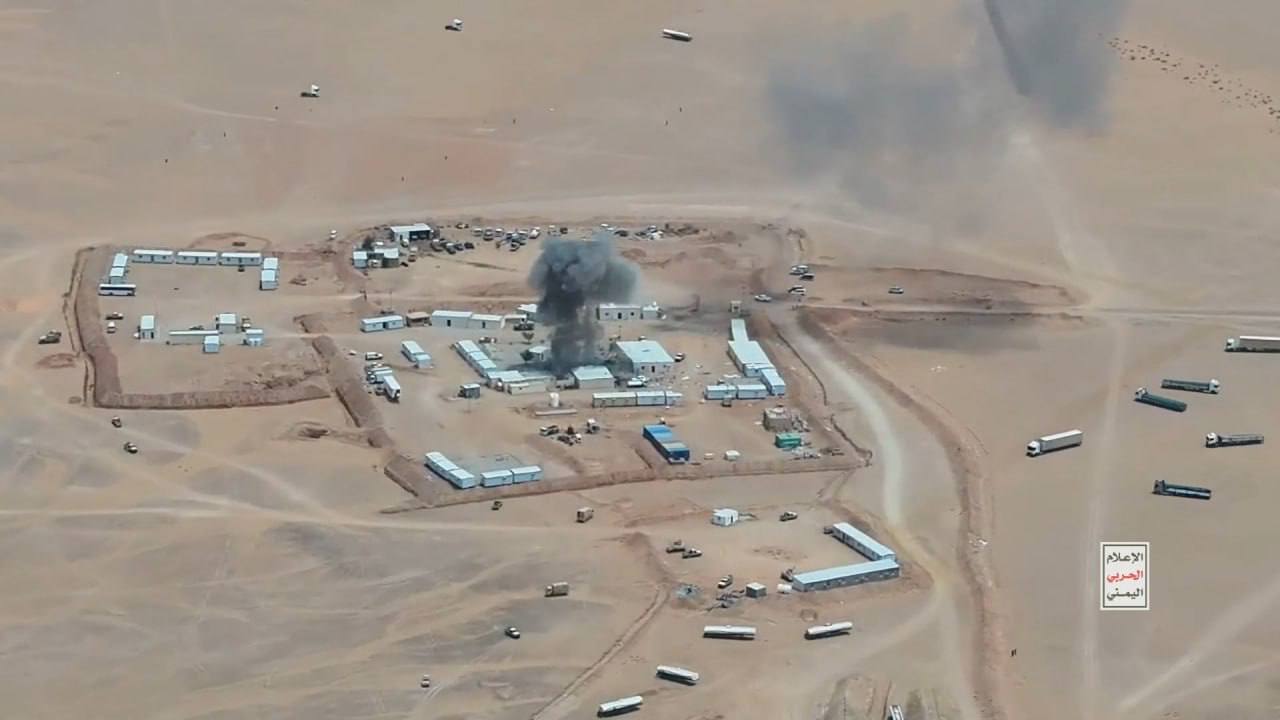
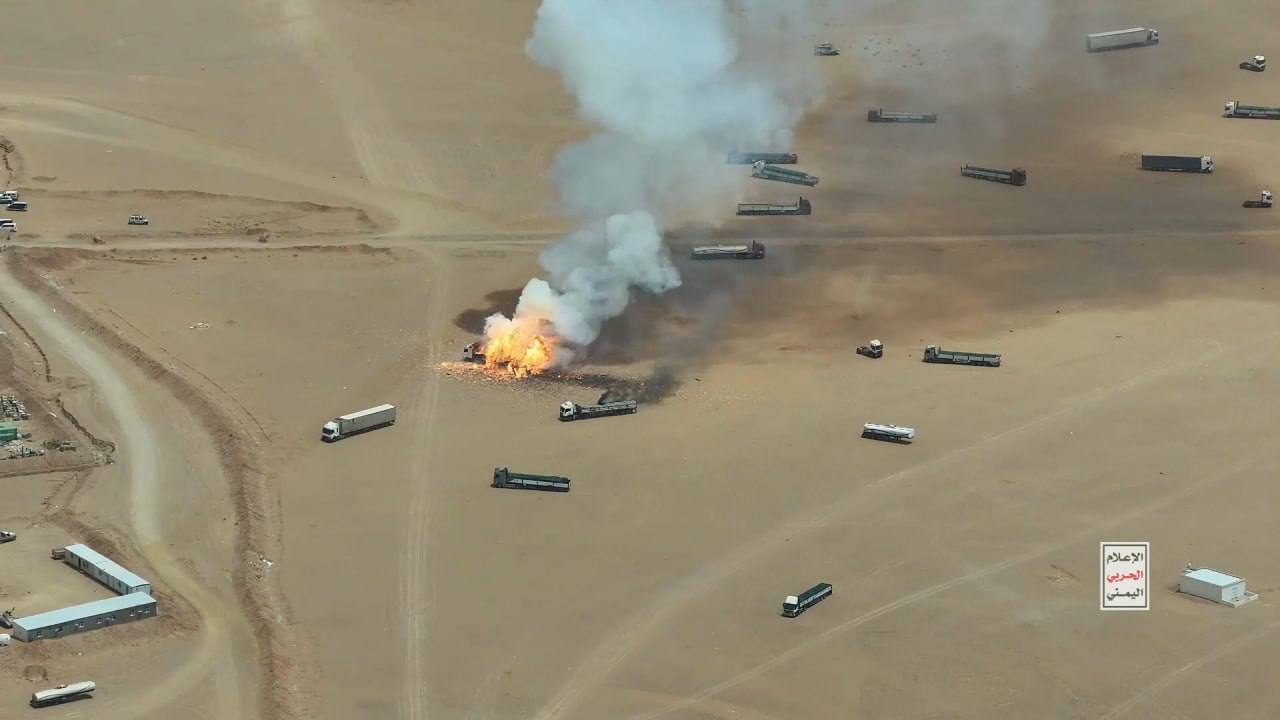
The Houthis employed locally manufactured ballistic missiles against Saudi‑backed PLC trucks at Al‑Wadeea camp, as reported by BellumActaNews (17:05:51 UTC). The strike targeted military equipment convoys, underscoring the militia’s capability to field indigenous missile systems.
Separate rocket attacks struck Saudi Aramco facilities in Abha (06:29:39 UTC) and Jazan (06:22:34 UTC), igniting oil tanks and causing visible burn scars, according to GeoPWatch. These attacks demonstrate a broader Houthi strategy to pressure Saudi energy assets while advancing on the Red Sea coast.
UAV interceptions and aerial contest
Ansarallah claimed the downing of a Saudi‑operated Wing Loong II UAV over Al Bayda Governorate (16:51:38 UTC, BellumActaNews) and a Saudi Karayel armed reconnaissance drone over Hajjah Governorate (08:19:49 UTC, monitor_the_situation). These interceptions reflect an escalating aerial contest, with both sides deploying increasingly sophisticated unmanned platforms.
Strategic implications for the Bab al‑Mandeb
The capture of Mocha, the subsequent seizure of coastal heights, and the control of islands such as Zuqar and the Hanish group place the Houthis within a narrow corridor of the Bab al‑Mandeb strait. monitor_the_situation (16:39:55 UTC) linked Iranian Revolutionary Guard Corps (IRGC) guidance and arms to the Houthi advance, suggesting external support that could sustain the offensive.
Control of the strait would enable the Houthis to threaten international shipping lanes, potentially prompting a recalibration of Saudi and U.S. naval deployments in the Red Sea. The coalition’s reliance on airpower, as evidenced by the dense strike schedule, indicates an attempt to blunt Houthi momentum without committing large ground forces, which remain stretched across multiple fronts.
While casualty figures for the Yemeni kinetic events remain limited in open‑source reports, the rapid territorial shifts and the intensity of air and missile operations underscore a heightened phase of the conflict. Continued monitoring of satellite imagery, UAV activity, and on‑the‑ground reports will be essential to assess whether the Houthis can consolidate their Red Sea gains or if the coalition’s air campaign will reverse the tide.