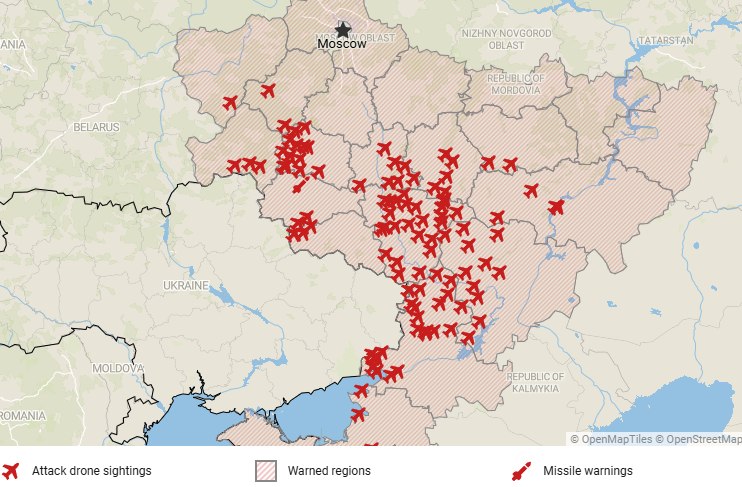
In the early hours of 8 September 2026, Ukraine executed a large‑scale aerial operation that involved hundreds of attack drones and a substantial missile barrage directed at military and civilian infrastructure deep within western Russia. The raid, reported by the Telegram channel monitor_the_situation, represents the most extensive kinetic engagement recorded in the region for the day and underscores a heightened escalation in cross‑border hostilities.
Ukrainian Drone and Missile Offensive
The operation commenced at approximately 01:27 UTC, with Ukrainian forces launching a coordinated swarm of attack drones accompanied by a missile salvo aimed at a range of undisclosed targets in the Russian Federation’s western districts. According to the source, the drones were equipped with loitering munitions capable of precision strikes, while the missiles included both cruise and short‑range variants. The exact number of drones and missiles has not been disclosed, but the description of “hundreds” suggests a significant concentration of aerial assets.
Ukraine launched a large‑scale overnight raid using hundreds of attack drones and missiles against military and infrastructure targets in western Russia.
The choice of targets appears to focus on both strategic military installations and critical infrastructure, a pattern consistent with Ukraine’s recent doctrine of degrading Russian command‑and‑control capabilities while imposing economic pressure. While casualty figures remain unverified, the scale of the attack raises concerns about potential damage to power grids, communication nodes, and transport corridors that serve civilian populations.
From an operational perspective, the deployment of such a large drone swarm indicates a maturation of Ukraine’s unmanned aerial capabilities, likely supported by Western-supplied technology and training. The integration of drones with missile strikes suggests a layered approach designed to overwhelm Russian air‑defence systems, which have been strained by previous high‑intensity engagements.
Russian Kh‑101 Missile Transit Over Domestic Airspace
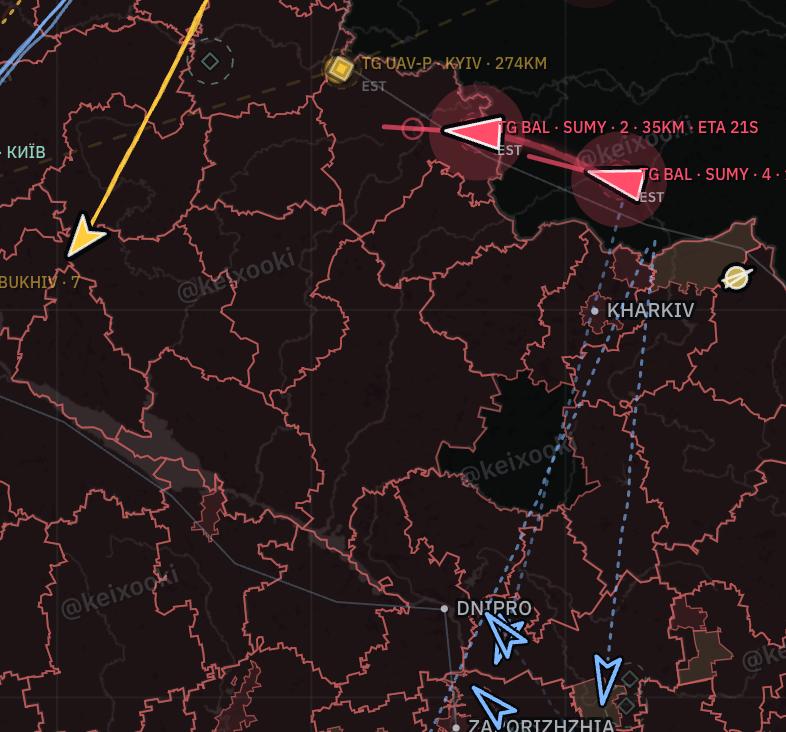
At 01:03 UTC, the Telegram channel GeoPWatch reported that up to thirty Russian air‑launched Kh‑101 cruise missiles were observed traversing Russian airspace en route to targets in Ukraine. The Kh‑101 is a long‑range, low‑observable cruise missile capable of delivering conventional or nuclear payloads. The presence of these missiles over Russian territory highlights the complexity of air‑space management in a conflict where both belligerents operate long‑range strike platforms.
Up to 30 air‑launched Kh‑101 missiles could be airborne on Russian airspace flying towards Ukraine.
While the missiles were not intercepted, their flight path through domestic airspace raises questions about the adequacy of Russia’s own air‑defence coverage and the potential risk of accidental engagement by Russian forces. The event also illustrates the logistical challenges of launching long‑range weapons from within Russia without compromising operational security.
Russian Ballistic Missile Launches Toward Ukraine
Earlier, at 00:27 UTC, GeoPWatch documented a separate salvo of multiple ballistic missiles launched by Russia toward Ukrainian territory. The specific type of ballistic missile was not identified, but the launch aligns with Russia’s recent pattern of employing short‑ and medium‑range ballistic systems to strike deep‑strike targets across the front line.
Multiple ballistic missile launches!
Photographic evidence accompanying the report confirms the launch activity, though details on launch sites, trajectories, or impact assessments remain unavailable. The use of ballistic missiles, which have limited maneuverability compared to cruise missiles, suggests a strategic intent to target fixed installations such as command centres, ammunition depots, or air‑defence nodes.
Collectively, these three kinetic events illustrate a rapid escalation in the use of high‑precision, long‑range weaponry by both sides. The Ukrainian drone and missile raid represents a significant offensive capability, while the Russian missile movements demonstrate a continued reliance on both cruise and ballistic platforms to project power across the contested border.
Analysts note that the simultaneity of these actions may strain existing command‑and‑control structures, increase the probability of mis‑identification, and elevate the risk of inadvertent escalation. The lack of publicly disclosed casualty figures or damage assessments limits the ability to gauge the immediate humanitarian impact, but the scale of the engagements suggests a potential for substantial disruption to civilian infrastructure and heightened security concerns for populations in the affected zones.