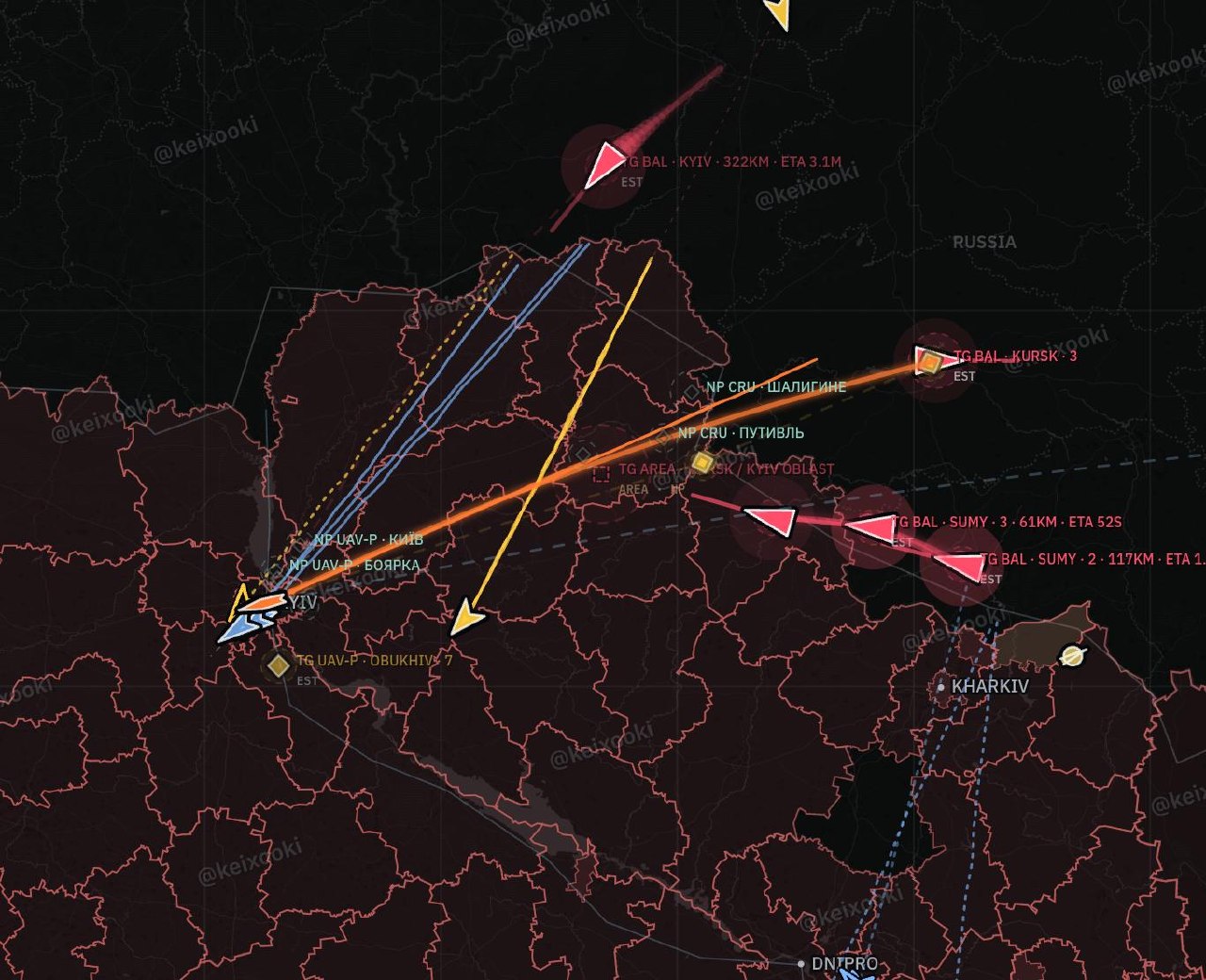
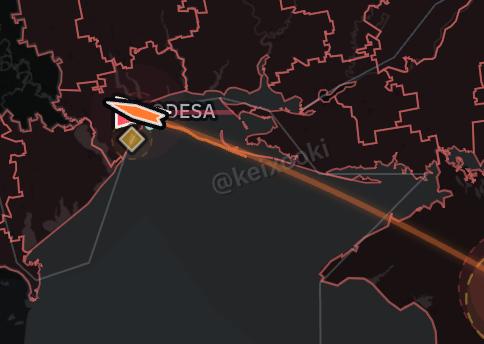
On 8 September 2026, Russian forces launched a coordinated missile barrage targeting Kyiv and nearby cities, marking the most intensive kinetic episode in Ukraine for the day. The operation began shortly after midnight, with Russian state media and unofficial channels reporting the launch of Zircon nuclear‑capable ballistic missiles toward the Ukrainian capital. Within the next two hours, additional missiles—including Iskander‑K, Iskander‑M, KH‑101 cruise missiles, and Onik supersonic cruise missiles—were detected over multiple oblasts, resulting in a series of impacts, interceptions, and fires across Kyiv, Bila Tserkva, Sumy, and Odesa.
Initial Zircon Launch Claims
At 00:29:09 UTC, the Telegram channel GeoPWatch posted a breaking‑news alert stating:
"#BREAKING **🇷🇺❌🇺🇦❗️ - Russian Zircon nuclear‑capable ballistic missiles to Kyiv!"The claim indicated that Russia had deployed its hypersonic Zircon (3M22) missiles, which are advertised as capable of reaching speeds exceeding Mach 8 and carrying nuclear or conventional warheads. No independent verification of the launch was available at the time, and Ukrainian officials did not immediately confirm the presence of Zircon missiles in their air‑defence radar picture.
Subsequent Missile Activity Over Kyiv
Within minutes, GeoPWatch reported a series of additional missile detections:
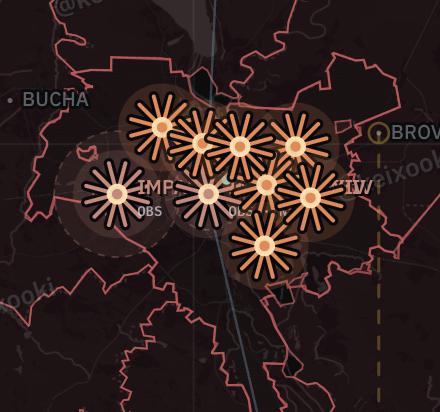
- 00:30:35 UTC – Impacts in East Kyiv, with reports of Zircon missiles expected to follow.
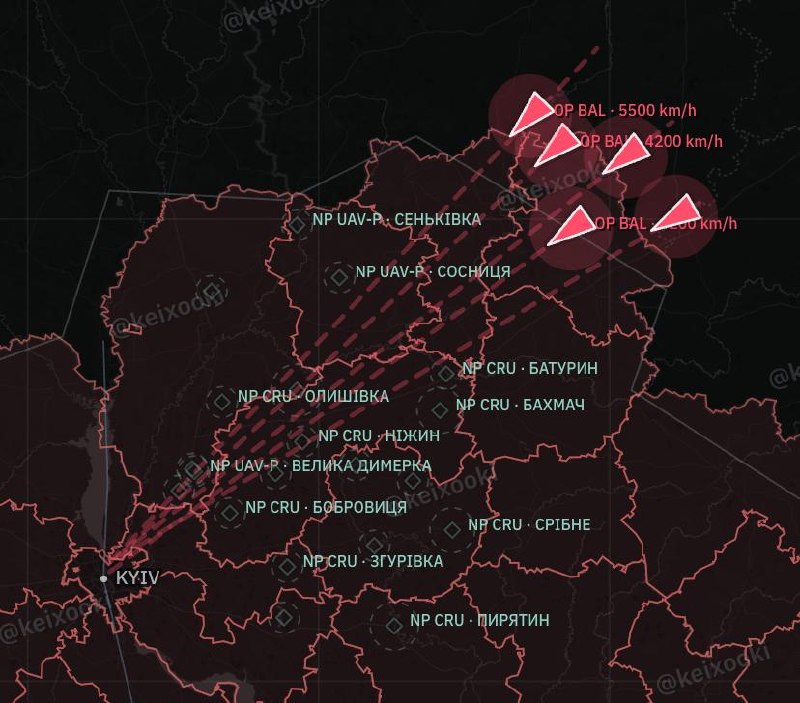
- 00:32:25 UTC – Four Iskander‑M ballistic missiles heading toward Kyiv.
- 00:36:02 UTC – Patriot air‑defence systems intercepted some incoming threats over Kyiv, though impacts continued.
- 00:54:30 UTC – A Russian Iskander‑M/KN‑23 missile struck Kyiv, confirmed by intelslava video.
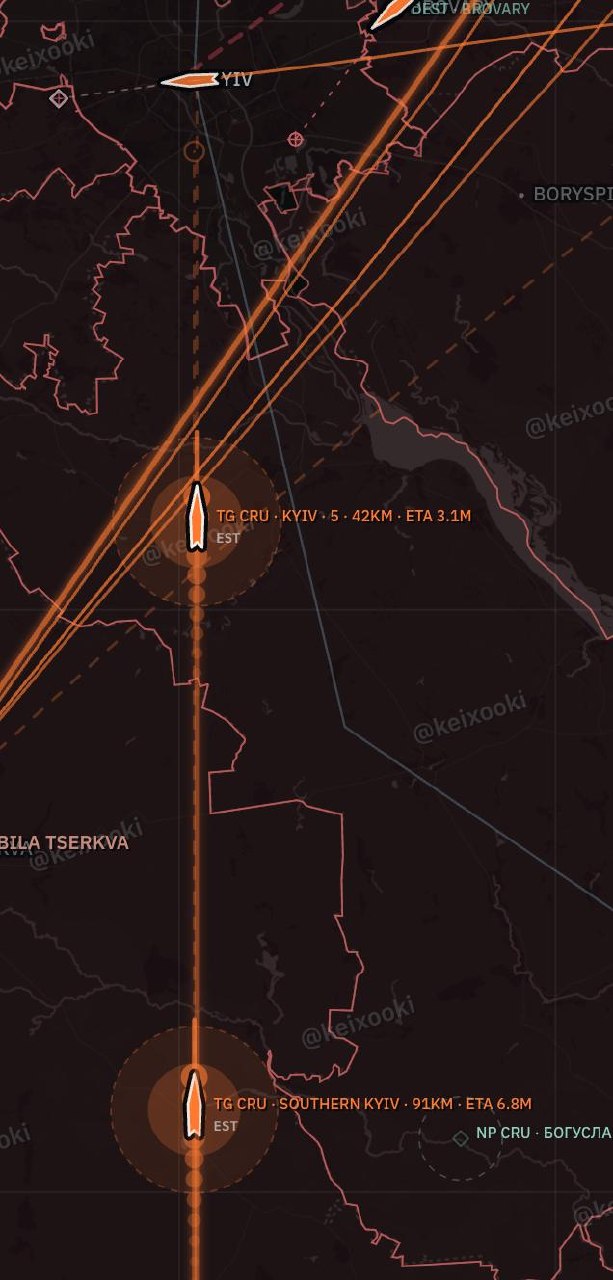
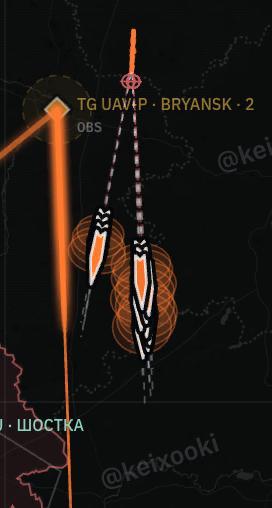
- 01:06:21 UTC – Two Iskander missiles launched from Bryansk, Russia, toward Kyiv.
- 01:08:59 UTC – Additional Iskander missile en route to Kyiv.
- 01:12:00 UTC – Ukrainian fighter jets intercepted Iskander missiles over Sumy Oblast.
- 01:15:42 UTC – Nine missile impacts reported in Kyiv.
- 01:45:58 UTC – Dawn raids in East Jerusalem (non‑Ukrainian event, noted for context).
These reports illustrate a sustained, multi‑vector attack pattern, with missiles launched from the south, west, and north‑west, attempting to overwhelm Ukrainian air‑defence layers.
Kh‑101 Cruise Missile Wave Through Central Ukraine
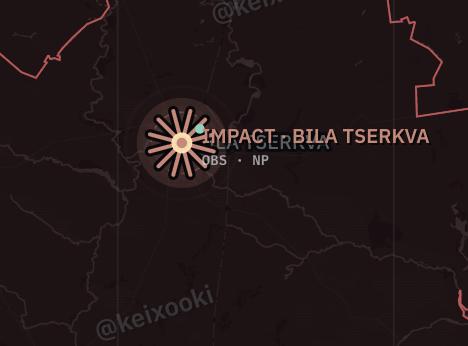
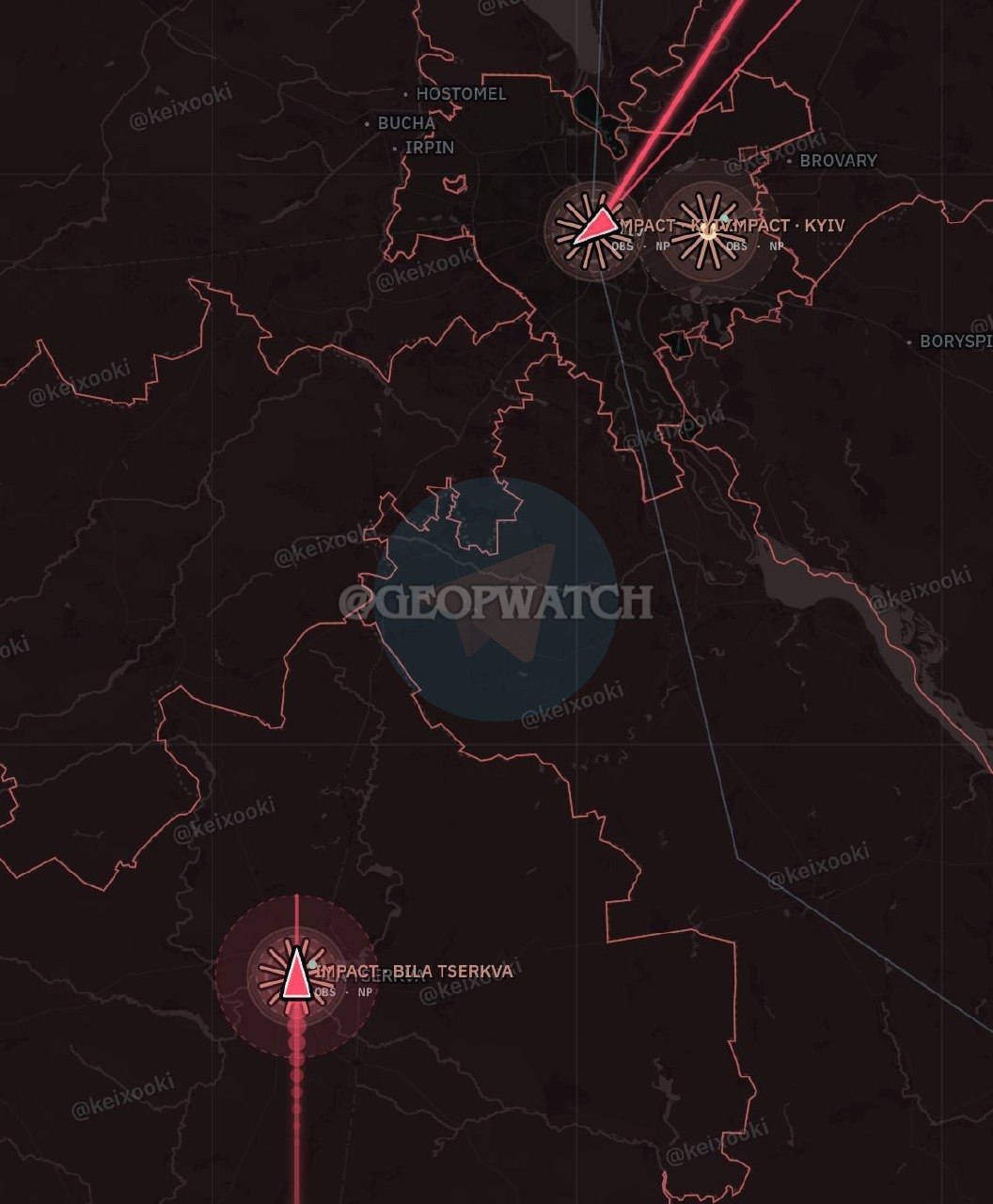
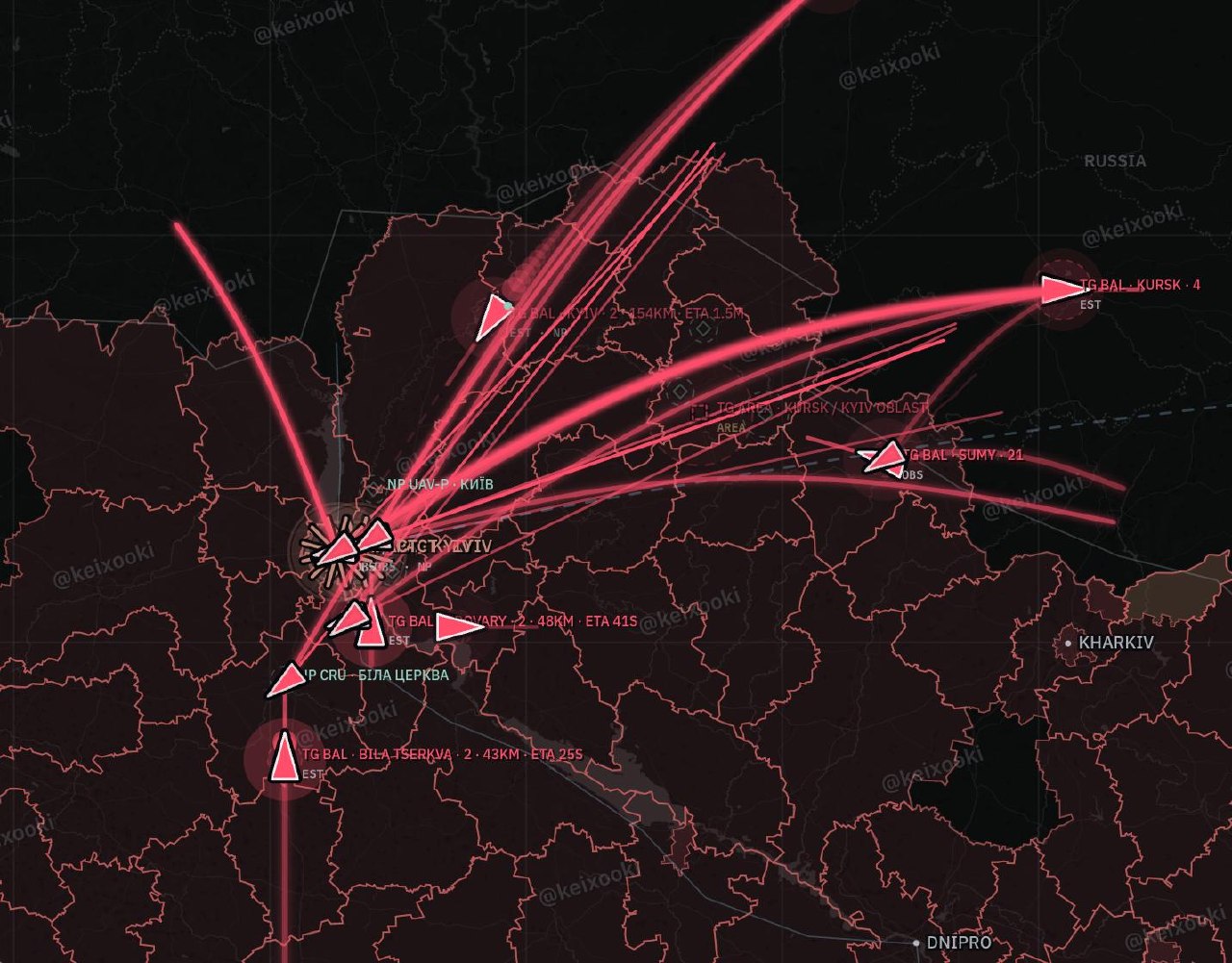
At 01:50:56 UTC, GeoPWatch tracked a convoy of more than 20 Russian Kh‑101 cruise missiles moving through Sumy, then Chernasy, before turning toward Kyiv. Interceptions by Ukrainian air‑defence (AD) and the Ukrainian Air Force (UAF) reduced the salvo, but 11 missiles remained airborne after initial engagements. Subsequent updates indicated that some Kh‑101 missiles were redirected to hit Bila Tserkva, a city 80 km south‑south‑west of Kyiv. GeoPWatch confirmed the impact at 02:00:54 UTC, noting that the KH‑101s had changed course and struck the city.
Later, at 03:08:28 UTC, Al Jazeera reported a separate Russian strike on Kyiv that ended a three‑day pause in hostilities coinciding with a U.S. envoy’s visit. While the article did not specify missile types, it reinforced the perception that the Russian offensive intensified precisely as diplomatic engagement unfolded.
Onik Supersonic Cruise Missiles Target Odesa
At 00:25:33 UTC, GeoPWatch identified two Onik supersonic cruise missiles launched toward Odesa, a strategic Black Sea port. The Onik system, known for its high speed and low radar cross‑section, poses a significant challenge to conventional air‑defence assets. No immediate impact reports were available, but the launch underscores Russia’s effort to strike multiple fronts simultaneously.
Ukrainian Air‑Defence Response
Ukrainian forces employed a layered air‑defence architecture, including Patriot missile batteries, S‑300 systems, and indigenous anti‑aircraft artillery. The Patriot interceptors successfully engaged several inbound threats over Kyiv, as noted at 00:36:02 UTC. However, the sheer volume and diversity of missile types—ballistic, hypersonic, and cruise—limited the overall interception rate. Ukrainian fighter jets also engaged Iskander missiles over Sumy Oblast at 01:12:00 UTC, demonstrating the integration of air‑to‑air capabilities with ground‑based AD.
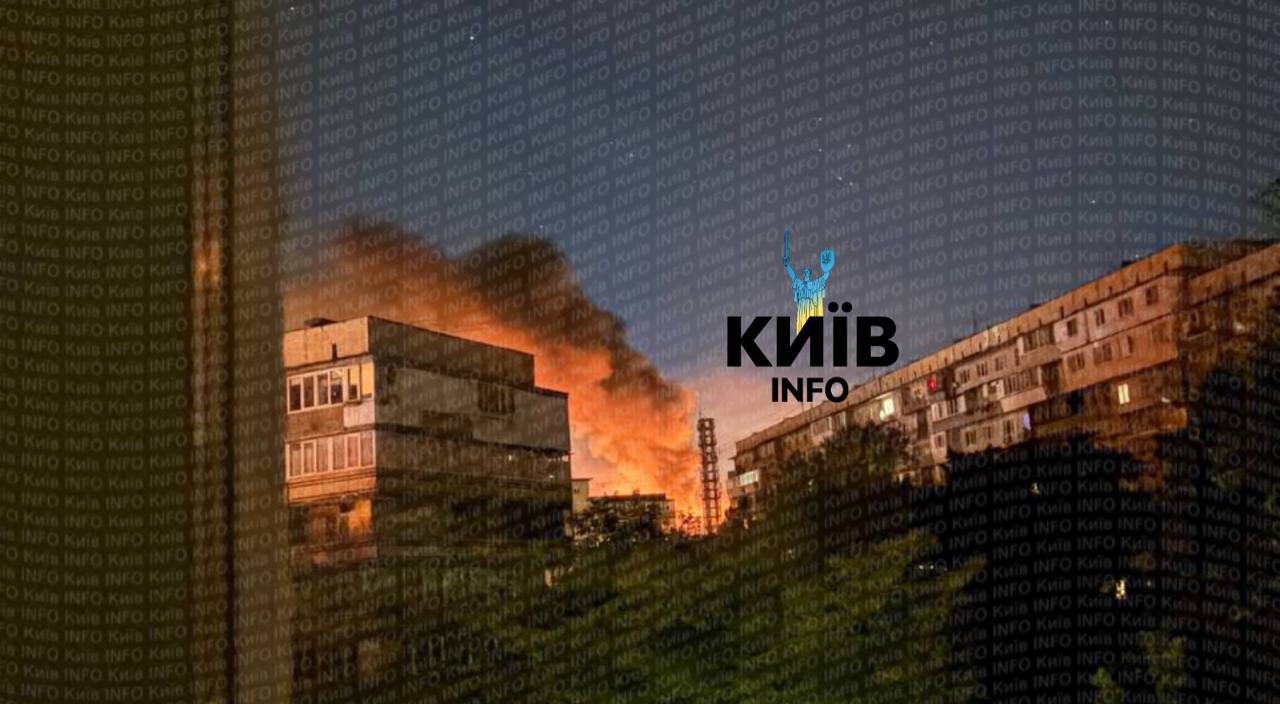
Despite these efforts, multiple impacts were confirmed in Kyiv, Bila Tserkva, and surrounding suburbs. Fires ignited at impact sites, including a documented blaze at a missile impact location in Kyiv at 01:02:42 UTC (intelslava). The lack of reported civilian casualties suggests that early warning alerts and civil defence measures mitigated loss of life, but infrastructure damage and psychological effects are likely significant.
Operational Assessment
The 8 September barrage reflects a shift toward high‑tempo, multi‑type missile operations by Russian forces. Key observations include:
- Weapon diversification: Use of hypersonic Zircon (claimed), ballistic Iskander‑K/M, long‑range Kh‑101 cruise missiles, and supersonic Onik missiles indicates an intent to test the full spectrum of Ukrainian air‑defence capabilities.
- Geographic dispersion: Launch vectors originated from Bryansk (west), Sumy (north‑east), and southern corridors, creating simultaneous threats across several sectors.
- Air‑defence strain: Patriot systems intercepted some threats, but the persistence of impacts demonstrates that current AD assets are challenged by the volume and speed of incoming missiles.
- Information operations: The Zircon claim, unverified by independent sources, may serve a strategic messaging purpose, signaling capability without confirming deployment.
From a tactical perspective, the barrage achieved limited physical damage relative to the resources expended, but it succeeded in demonstrating Russia’s capacity to coordinate complex missile attacks and to pressure Ukrainian defensive postures during a diplomatic window.
Implications for Future Operations
Ukrainian authorities are likely to reassess air‑defence allocation, prioritising high‑altitude, high‑speed interceptors capable of engaging hypersonic threats. International partners may accelerate delivery of advanced systems, such as the European MEADS or additional Patriot batteries, to bolster coverage over Kyiv and other strategic hubs.
Continued monitoring of Russian missile launch patterns will be essential. The integration of open‑source intelligence (OSINT) platforms like GeoPWatch and intelslava provides near‑real‑time situational awareness, but verification challenges remain, especially for claims involving classified weapon systems.
Overall, the 8 September kinetic episode underscores the evolving nature of the Ukraine conflict, where missile warfare, air‑defence resilience, and information warfare intersect to shape the operational environment.