On 6 September 2026, a series of high‑tempo kinetic events were documented across several conflict zones, underscoring an escalation in the use of ballistic missiles, cruise missiles, and unmanned aerial systems (UAS). The most consequential incident, reported by the open‑source monitoring channel GeoPWatch, involved the Ansarullah (Houthis) claiming a successful ballistic‑missile strike on a meeting of Mine‑Resistant Ambush Protected (MRAP) vehicles. The claim, accompanied by video footage, suggests a direct targeting of Saudi‑aligned ground assets in the Red Sea corridor.
High‑Impact Houthi Missile Strike
At 14:04 UTC, GeoPWatch released a video that the Houthis described as “accurate targeting of a PLC‑commander meetup of MRAPs using a ballistic missile.” The footage shows a missile launch followed by a bright flash and subsequent explosions near a convoy of armored vehicles. While casualty figures were not disclosed, the visual evidence indicates significant vehicle damage. The Houthis, operating under the banner of Ansarullah, have repeatedly emphasized their capability to strike Saudi and allied forces with long‑range ballistic systems, a claim that aligns with their broader strategic messaging in the Yemen‑Saudi theater.
"We have precisely hit the MRAP gathering with our ballistic missile, demonstrating our reach and resolve," a Houthi spokesperson said in the accompanying statement. (Source: GeoPWatch, https://t.me/GeoPWatch/39561)
Russian UAV‑Delivered Cruise Missiles Target Ukrainian Deployments
Later that afternoon, at 17:42 UTC, the Telegram channel intelslava posted video evidence of Russian Orion unmanned aerial vehicles releasing S8000 “Banderol” small cruise missiles against Ukrainian temporary deployment points. The S8000 is a low‑observable, precision‑guided munition designed for rapid strike missions. The footage shows multiple missiles descending on dispersed Ukrainian positions, with at least two impact sites producing visible fireballs and secondary explosions. No official casualty numbers were released, but the strikes appear to have been aimed at disrupting Ukrainian force mobility and logistics.
"Orion UAVs equipped with S8000 Banderol missiles are now a routine part of our offensive toolkit," the channel noted. (Source: intelslava, https://t.me/intelslava/94075)
Drone‑Dropped Munitions by Russian Ground Forces
At 17:11 UTC, intelslava also documented combat operations conducted by the 144th Motor Rifle Division of the Russian Armed Forces. Operators employed drones to deliver munitions directly onto Ukrainian targets. The video shows a drone loitering over a battlefield before releasing a payload that detonates on impact, producing a localized blast. This method reflects a growing Russian doctrine that integrates low‑cost UAVs with kinetic payloads to supplement conventional artillery.
"Our drone teams are providing precise, on‑demand fire support to ground units," a Russian source claimed. (Source: intelslava, https://t.me/intelslava/94074)
Ukrainian Air‑Defense Interceptions
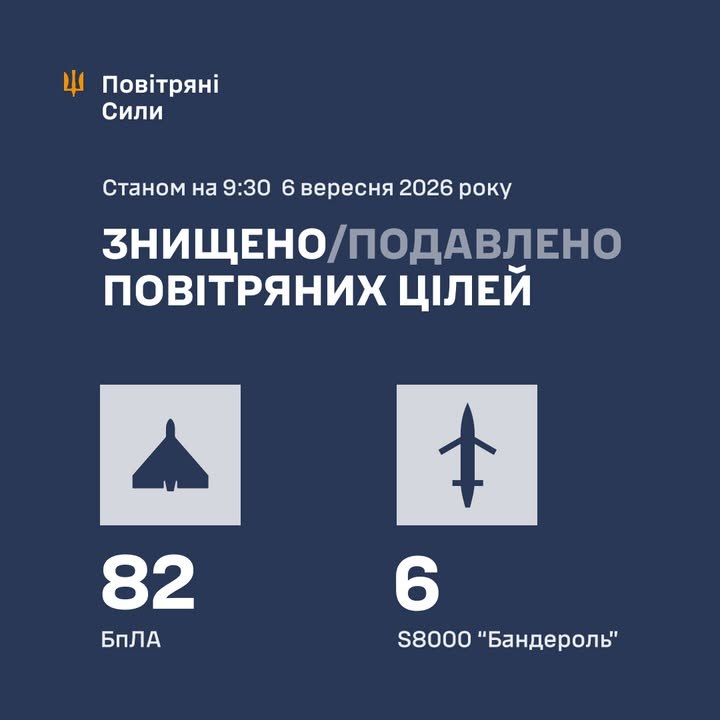
Ukrainian air‑defense forces reported extensive interception activity throughout the night of 5–6 September. According to the channel monitor_the_situation, at 06:35 UTC Ukrainian systems shot down 128 of 167 Russian drones, including Shahed loitering munitions, and launched Iskander‑M and KN‑23 rockets at 23 identified launch sites. A subsequent report at 08:14 UTC added that 88 of 108 Russian drones and S8000 Banderol missiles were neutralized, with debris falling across seven locations and strikes recorded at eleven sites. These figures illustrate a high operational tempo on both sides, with Ukraine’s layered air‑defense architecture—comprising medium‑range surface‑to‑air missiles, short‑range systems, and electronic warfare—effectively degrading Russian aerial threats.
"Our forces have successfully intercepted the majority of hostile UAVs and cruise missiles, protecting critical infrastructure," a Ukrainian defense spokesperson said. (Source: monitor_the_situation, https://t.me/monitor_the_situation/29587; https://t.me/monitor_the_situation/29596)
Additional Houthi Missile Claims
In a separate claim published by the Jerusalem Post on 6 September, the Houthis asserted that domestically produced missiles struck Saudi vehicles, destroying three transport assets. The Yemeni Military Media outlet released video footage that appears to show the aftermath of the strike, with three vehicles visibly damaged. While independent verification is pending, the claim reinforces the Houthis’ narrative of expanding indigenous missile production capabilities.
"Our missiles, built at home, have hit and destroyed three Saudi vehicles," the Houthi statement read. (Source: JPost, https://www.jpost.com/middle-east/article-907718)
Collectively, these events demonstrate a pattern of increased reliance on precision‑guided munitions and unmanned platforms across multiple theaters. The Houthis continue to leverage ballistic and missile capabilities to pressure Saudi-aligned forces, while Russian forces employ a blend of UAV‑launched cruise missiles and drone‑delivered ordnance to sustain pressure on Ukrainian frontlines. Ukraine’s robust air‑defense response, however, indicates a growing proficiency in counter‑UAV and counter‑cruise missile operations, potentially limiting the strategic impact of Russian aerial attacks.