On September 5, 2026, Iran employed an anti‑ship ballistic missile against the U.S. aircraft carrier USS George Washington, marking the first known use of the Khalije Fars system against a carrier group. The launch, reported by the CIG_telegram channel, did not strike the carrier, but it prompted an immediate U.S. response that disabled multiple Iranian tankers in the Persian Gulf and the Strait of Hormuz. The incident sits within a broader pattern of kinetic actions across Iran and adjacent waters.
Iran’s Anti‑Ship Missile Launch
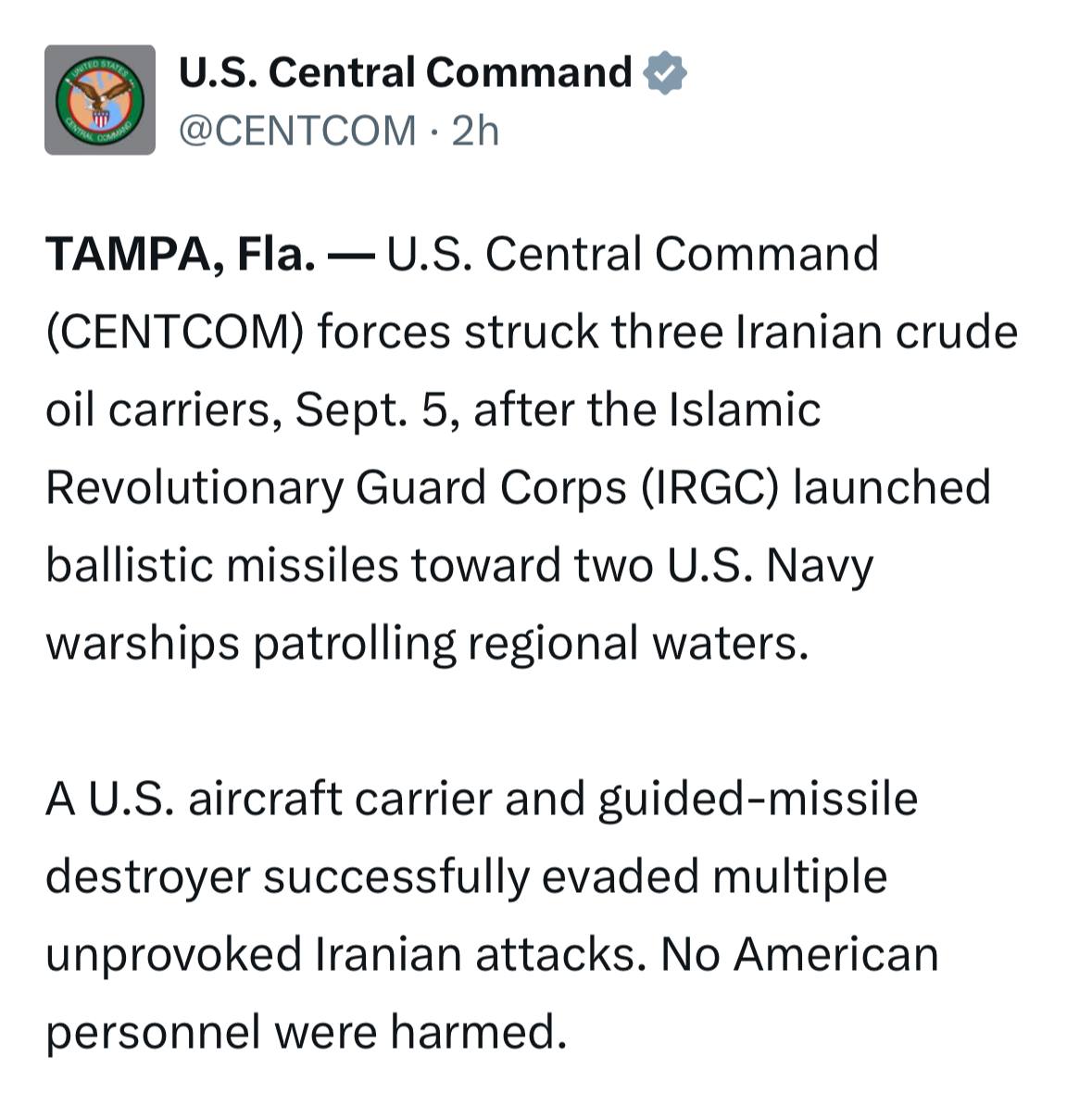
At 15:58 UTC, Iran fired a Khalije Fars anti‑ship ballistic missile from the Persian Gulf toward the USS George Washington. The missile, designed to travel at high velocity and maneuver during descent, was intercepted by U.S. defensive systems, and no damage was reported on the carrier. The launch was confirmed by a CIG_telegram post that quoted a U.S. Central Command (CENTCOM) briefing:
We now know what the target of yesterday’s launches was; Iran targeted a U.S. aircraft carrier with anti‑ship ballistic missiles for the first time.The same briefing noted that the United States responded by disabling three Iranian oil tankers—NOXEN, and two others—using naval assets in the Persian Gulf and Gulf of Oman. The weapons involved were high‑end ballistic missiles, and the organizations cited were CENTCOM and the U.S. Navy.
Fuel Tanker Explosion in Kermanshah Province
Earlier in the day, at 16:12 UTC, a fuel tanker involved in a traffic accident detonated in Kermanshah Province, western Iran. State media reported ten fatalities, with no additional injuries confirmed. The incident, documented by the monitor_the_situation channel, did not involve weaponry; the explosion resulted from the tanker’s cargo igniting after the crash. The event underscores the domestic safety risks that coexist with the broader geopolitical confrontations.
Escalation in the Strait of Hormuz
Following the missile launch, U.S. forces intensified operations in the strategic Strait of Hormuz. At 14:48 UTC, CENTCOM announced a strike on the Iranian tanker NOXEN after its crew was evacuated, warning the Islamic Revolutionary Guard Corps (IRGC) of further retaliation. The strike, reported by monitor_the_situation, employed conventional naval firepower rather than missiles. Later, at 16:36 UTC, the rnintel channel confirmed that two additional Iranian tankers were disabled in the strait, bringing the total number of interdicted vessels to five on the same day.
Additional Naval Engagements
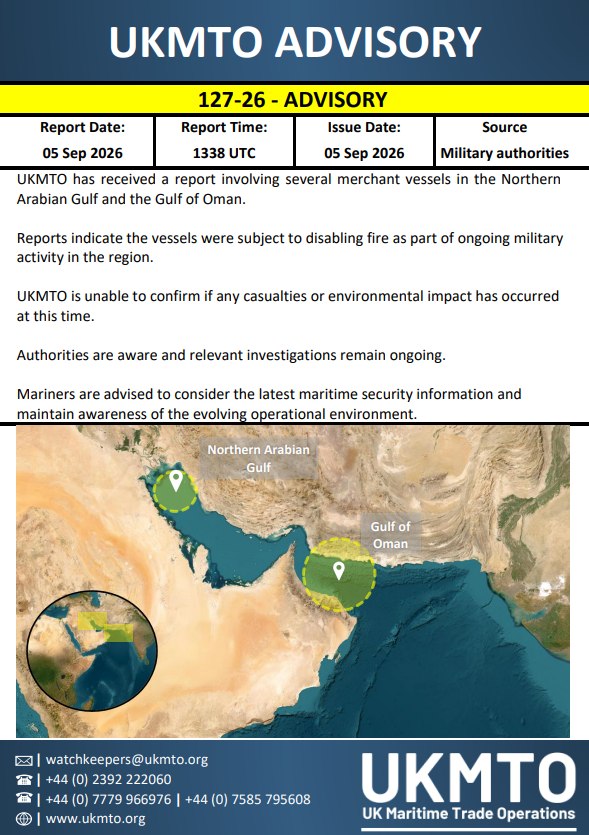
Multiple reports indicated a pattern of disabling fires and missile strikes on merchant and oil tankers. The United Kingdom Maritime Trade Operations (UKMTO) advisory 127‑26, cited by monitor_the_situation, recorded several merchant vessels hit by disabling fire in the Northern Arabian Gulf and Gulf of Oman, with no casualties or environmental damage confirmed. Al Jazeera reported that U.S. strikes also hit Iranian oil tankers near Kharg Island and in the Gulf of Oman, describing the targets as “helping finance regional proxies.” These actions involved missile weapons and were attributed to United States forces.
Assassination of Suspects in Sistan and Baluchestan
In a separate kinetic event, the IRGC announced the killing of two suspects alleged to be linked to U.S. and Israeli intelligence agencies. The operation, carried out in Sistan and Baluchestan Province at 11:31 UTC, was reported by monitor_the_situation and included a video of the aftermath. No weapons were disclosed, but the incident reflects the IRGC’s domestic counter‑intelligence activities amid heightened external pressure.
Airstrike and Missile Attack Near Kharg Island
U.S. warplanes conducted an airstrike on an Iranian oil tanker anchored near Kharg Island at 09:48 UTC, as reported by CIG_telegram. The strike employed conventional projectiles from fighter aircraft. Earlier, at 06:51 UTC, a missile struck another Iranian oil tanker near the same island, a development documented by monitor_the_situation. Both incidents illustrate the layered nature of the conflict, with air and missile assets employed in close proximity to Iranian territorial waters.
Collectively, these events demonstrate a rapid escalation of kinetic engagements involving Iran, the United States, and allied maritime actors. The use of high‑end ballistic missiles against a carrier group, combined with a series of naval interdictions and targeted strikes on oil infrastructure, raises the risk of further confrontation in the strategically vital Persian Gulf corridor.