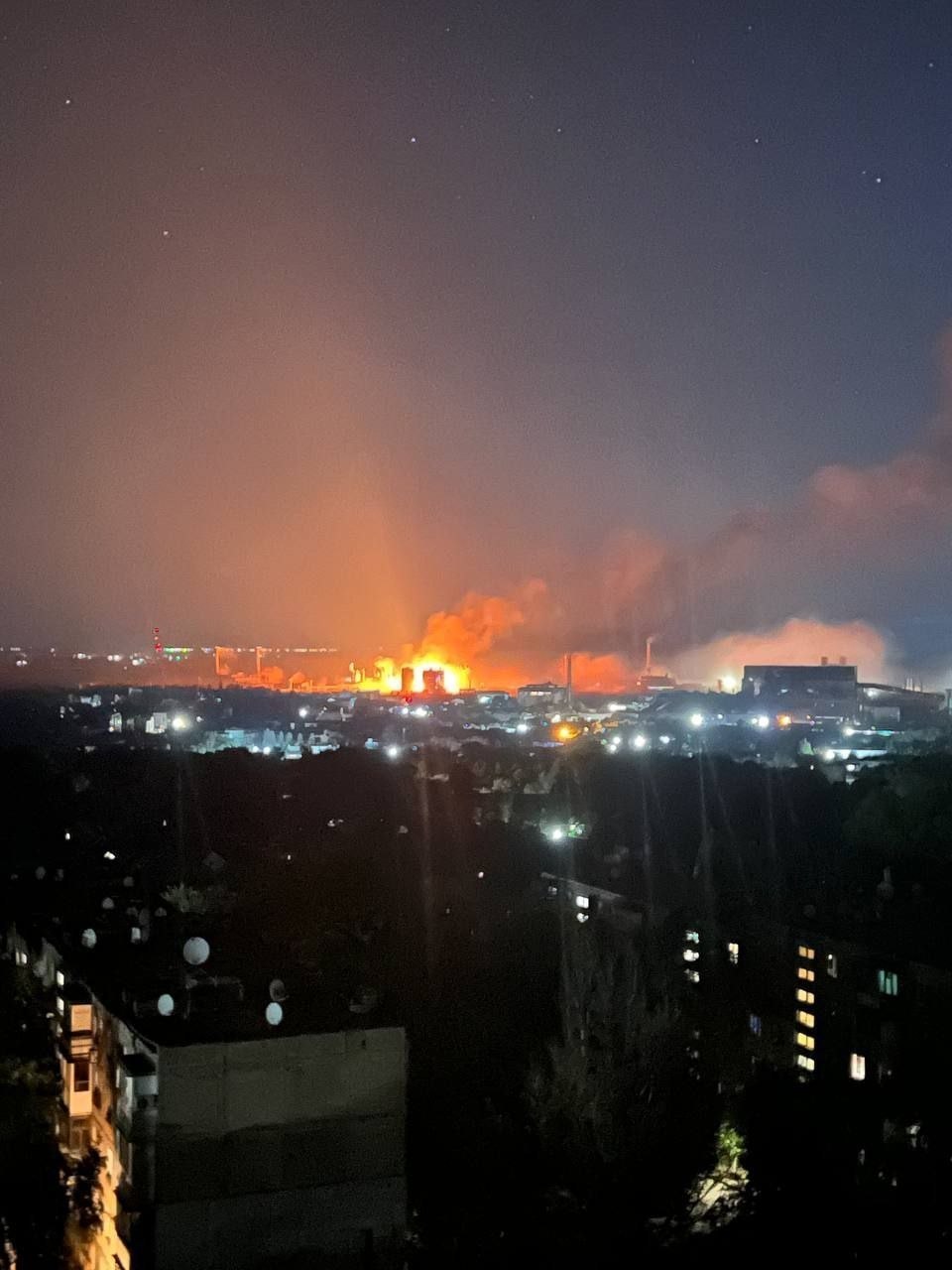
On the night of 5 September 2026, Russian forces launched a high‑intensity ballistic missile strike against an industrial facility in Kamianske, Dnipropetrovsk Oblast, igniting a large fire and underscoring a sharp escalation of hostilities in Ukraine’s eastern and southern theatres.
Kamianske Industrial Facility Hit by Ballistic Missiles
At 00:26:35 UTC, several Russian ballistic missiles impacted a manufacturing complex on the banks of the Dnipro River in Kamianske. The strike produced a massive conflagration that engulfed the plant’s storage warehouses and auxiliary structures. According to the Telegram channel intelslava, no immediate casualty figures were released, but local emergency services reported extensive material damage and a prolonged firefighting effort that continued into the early morning hours. The missiles, identified as short‑range ballistic projectiles, were launched from positions in occupied territories and represent a deliberate targeting of Ukraine’s industrial base.
"Russian ballistic missiles hit an industrial facility in Kamianske, Ukraine, causing a large fire." – intelslava, 2026‑09‑05
The attack aligns with a broader pattern of Russian strikes on critical infrastructure, aiming to disrupt production capacity and erode civilian morale. The facility, which processes metal alloys for regional manufacturers, is a key node in the supply chain for both civilian and defense industries. Its temporary loss may reverberate through downstream factories in the Dnipropetrovsk region, potentially affecting output for several weeks.
Geran‑4 Jet‑Drones Ignite Fire at Mykolaiv Shopping Centre
Five hours later, at 05:55:23 UTC, Russian‑equipped Geran‑4 jet‑drones struck the Epicentr shopping centre in Mykolaiv, Mykolaiv Oblast. The unmanned aerial systems, modified to carry high‑explosive payloads, penetrated the building’s roof and detonated, igniting a large fire that engulfed retail floors and caused extensive damage to the commercial complex. The Telegram channel monitor_the_situation posted video footage of the blaze, noting that the incident occurred overnight and that emergency crews responded promptly.
While official casualty numbers remain unconfirmed, the rapid spread of flames forced the evacuation of shoppers and staff, and the fire was only contained after several hours of coordinated firefighting. The use of Geran‑4 jet‑drones, a relatively new Russian weapon system that combines the flight characteristics of a cruise missile with the loitering capability of a drone, signals an evolution in aerial attack tactics, allowing Russian forces to strike high‑value civilian targets with precision while minimizing exposure of manned aircraft.
Russian Ground Advance Near Dobropillya and Ukrainian Drone Counter‑fire
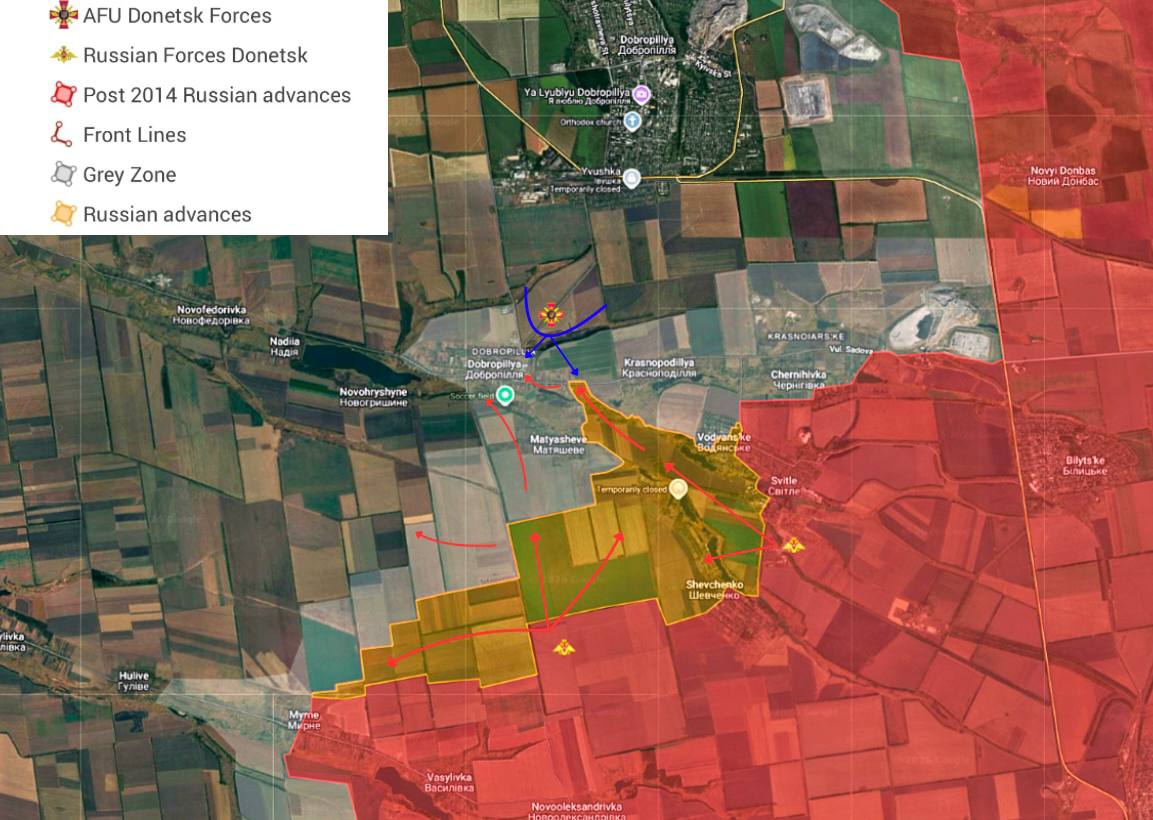
At 01:21:56 UTC, the open‑source monitoring group GeoPWatch reported a ground movement in the Donetsk Oblast. Russian troops captured the remaining northern residential districts of Shevchenko and pushed northward into Vodyanske, eventually reaching the village of Dobropillya. The advance was accompanied by the deployment of Ukrainian‑operated drones, which engaged Russian positions on the outskirts of Dobropillya, delivering targeted strikes that reportedly disrupted Russian logistics and command elements.
The engagement illustrated a classic combined‑arms approach: Russian infantry and mechanized units exploiting a breach in the front line, while Ukrainian forces leveraged aerial reconnaissance and strike drones to impose attrition. Photographic evidence posted by GeoPWatch showed Russian personnel under fire, confirming the intensity of the skirmish. No definitive casualty figures were released, but the presence of active drone fire suggests a contested environment with ongoing risk to both combatants and nearby civilians.
These three incidents, occurring within a six‑hour window, demonstrate a coordinated escalation across disparate fronts. The ballistic missile strike in Kamianske targeted industrial capacity, the Geran‑4 drone attack focused on a civilian commercial hub, and the ground offensive near Dobropillya highlighted renewed Russian momentum in the Donetsk sector. Together, they reflect a multi‑dimensional strategy that blends long‑range precision strikes, loitering munitions, and conventional ground maneuvers.
Operational implications are evident. The destruction of the Kamianske facility will likely impair regional metal production, affecting both civilian manufacturing and the supply of components for Ukrainian defense equipment. The Mykolaiv shopping centre attack underscores the vulnerability of urban centers to aerial loitering munitions, raising concerns about civilian safety and the capacity of local fire services to respond to high‑intensity fires caused by modern weaponry. Meanwhile, the Dobropillya advance signals that Russian forces remain capable of exploiting gaps in Ukrainian defensive lines, even as Ukrainian drone assets continue to impose tactical costs on the aggressor.
From a strategic perspective, the synchronized timing of these events suggests a deliberate effort by Russian command to stretch Ukrainian response capabilities across multiple axes. By striking both industrial and civilian targets while simultaneously pressing a ground offensive, Moscow may be seeking to force the Ukrainian Armed Forces to allocate resources away from the front line to address emergency response, infrastructure repair, and civilian protection. This “force‑multiplication” approach could degrade Ukrainian operational tempo and create opportunities for further territorial gains.
International observers have noted the heightened risk of civilian casualties, particularly in densely populated urban areas like Mykolaiv. The use of Geran‑4 jet‑drones, which can loiter for extended periods before striking, raises legal and ethical questions under international humanitarian law, especially when deployed against non‑military structures. Similarly, the ballistic missile strike on an industrial site, while arguably a legitimate military target, carries the inherent danger of secondary explosions and environmental contamination, potentially affecting nearby residential zones.
In the coming days, monitoring agencies will likely focus on assessing the full extent of damage to the Kamianske plant, the recovery timeline for the Mykolaiv shopping centre, and the stability of the front line around Dobropillya. Continued open‑source verification, satellite imagery analysis, and on‑the‑ground reporting will be essential to gauge the longer‑term impact of these coordinated attacks on Ukraine’s warfighting capacity and civilian resilience.