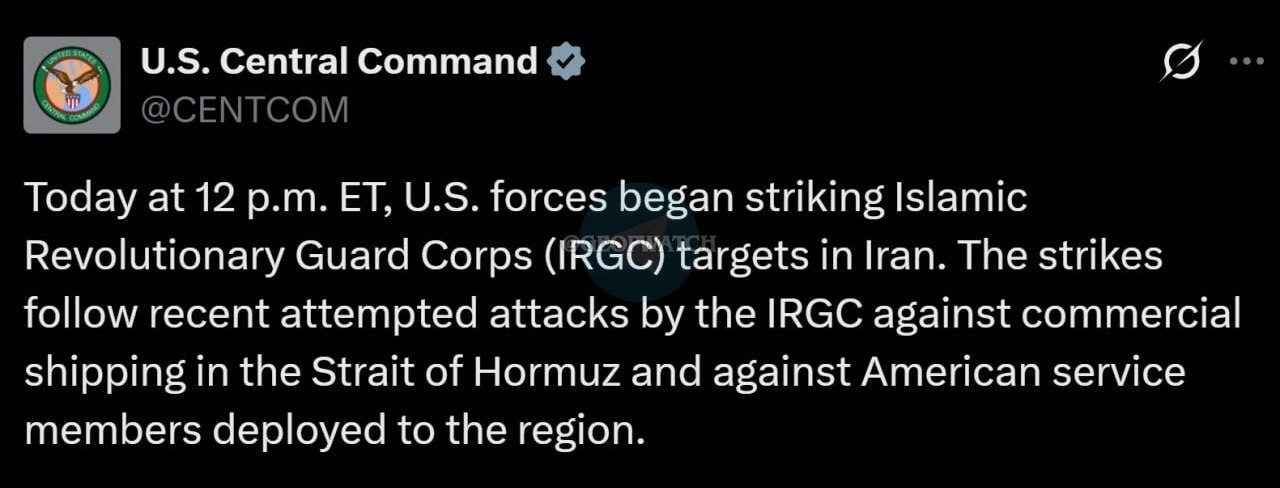
At 12:00 p.m. ET on 1 September 2026, the United States launched a coordinated air campaign against Iran, employing fighter jets, unmanned aerial systems and Tomahawk cruise missiles. The strikes, confirmed by GeoPWatch, were directed at Islamic Revolutionary Guard Corps (IRGC) installations and represent the most significant kinetic event reported on this date.
US‑Iran escalation
The operation, described by GeoPWatch as a “wave of retaliatory strikes,” was initiated in response to recent IRGC attacks on commercial shipping in the Strait of Hormuz and alleged assaults on U.S. service members in Jordan. According to CENTCOM, the United States targeted multiple IRGC command‑and‑control sites, though casualty figures have not been released.
"🇺🇸❌🇮🇷 – CENTCOM confirmed the wave of retaliatory strikes, in response to Iranian strikes in the Strait of Hormuz and Jordan. Today at 12 p.m. ET, U.S. forces began striking Islamic Revolutionary Guard Corps (IRGC) targets in Iran." – CIG_telegram
Weapons employed included fighter jets, armed drones and Tomahawk cruise missiles. The operation involved assets from the U.S. Air Force, Navy and Marine Corps, coordinated under the U.S. Central Command (CENTCOM). No independent verification of damage or personnel losses has been published, and Iranian state media have not yet issued an official response.
Parallel developments in Europe
While the U.S. campaign unfolded, a series of incidents in Europe highlighted the continent’s exposure to hybrid warfare tactics. German authorities classified a drone incident at Leipzig/Halle Airport involving a Ukrainian cargo aircraft as a “Russian hybrid attack.” The German Ministry of the Interior summoned the Russian foreign minister and closed the Russian House in Bonn, prompting statements of solidarity from the European Commission President and NATO Secretary‑General.
In the Baltic region, Russian drones penetrated NATO airspace over Estonia and Latvia, prompting the Turkish Air Force to scramble fighter jets in defense of allied airspace. The incursions underscore ongoing Russian attempts to test NATO’s integrated air‑defence posture.
Further north, a drone strike on the port of Ust‑Luga in Russia’s Leningrad region ignited a fire and caused localized damage to port infrastructure. Governor Alexander Drozdenko confirmed the incident, attributing it to a hostile UAV, though no claim of responsibility has been made.
Middle‑East covert and conventional actions
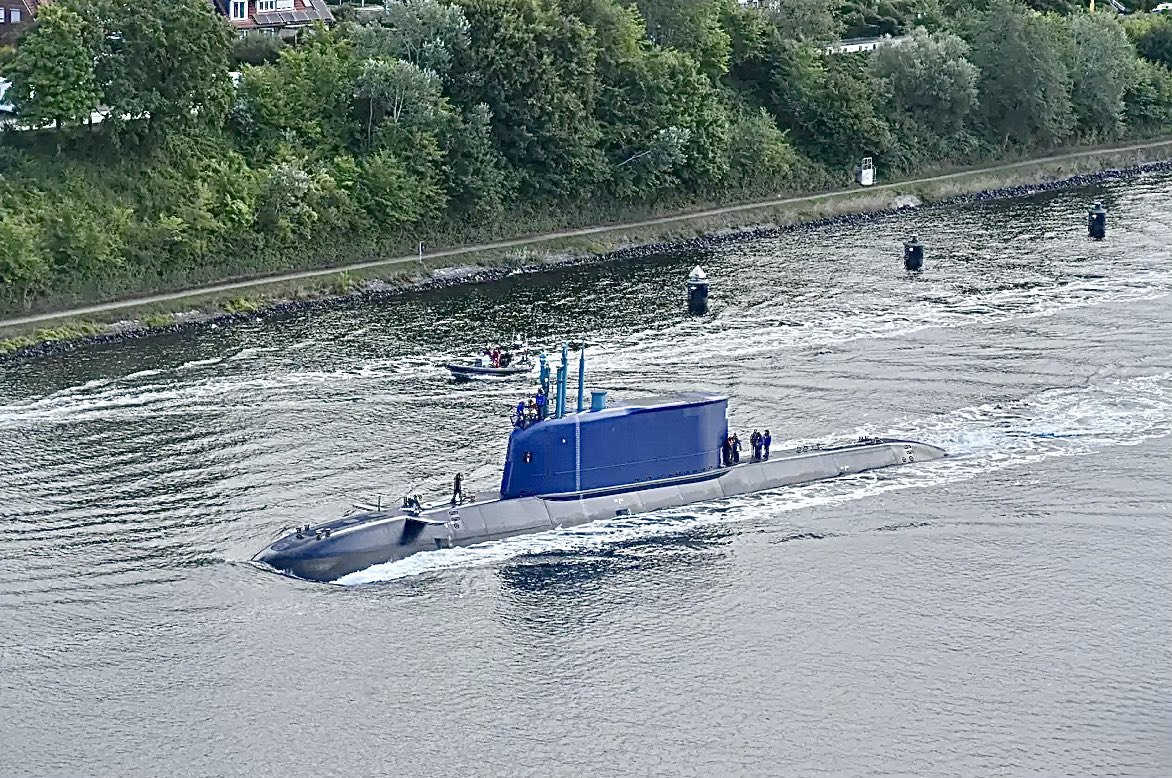
In the maritime domain, the Israeli Navy’s Dolphin‑class submarine INS Drakon transited the Kiel Canal in Germany en route to Israel, marking a notable naval movement through a strategic European waterway. The transit, reported by monitor_the_situation, reflects Israel’s ongoing effort to project naval capability beyond the Eastern Mediterranean.
On the ground, Hamas militants engaged in an exchange of fire while attempting to abduct the head of Israel’s internal security agency, Shin Bet. The operation, captured on video by idkunim_il, ended without the capture of the target but demonstrated Hamas’s willingness to conduct high‑risk kidnapping attempts within Israeli‑controlled territory.
In a separate development, an IRGC commander previously reported killed in an Israeli strike—identified as Moghaddam—has reportedly survived and now leads Unit 4000, a sabotage unit tasked with operations against Iranian adversaries in Asia. The report, sourced from the Jerusalem Post, indicates the commander’s continued operational relevance despite earlier assessments of his death.
Yemen witnessed two high‑profile assassinations of Islamic State (IS) figures. The first, reported by the Jerusalem Post, described a Yemeni anti‑Houthi coalition killing IS spokesperson Abu Hudhayfa al‑Ansari. A subsequent report from rnintel detailed a rapid‑response operation by Yemen’s Quick Rapid Forces (QRF), a UAE‑trained unit, that also eliminated the same IS official. Neither IS media channels have confirmed the deaths.
Implications and next steps
The U.S. airstrike campaign marks a clear escalation in the post‑Hormuz confrontation, raising the risk of broader regional conflict. European incidents illustrate the diffusion of hybrid tactics across multiple fronts, complicating NATO’s collective defence posture. Meanwhile, covert actions by state and non‑state actors in the Middle East suggest a parallel intensification of asymmetric warfare.
Analysts will monitor Iranian retaliatory options, including potential missile launches or asymmetric attacks on U.S. assets in the Gulf. European security services are expected to increase air‑defence readiness and pursue diplomatic channels to de‑escalate Russian UAV incursions. In Yemen, the elimination of senior IS operatives may weaken the group’s propaganda capabilities but could also provoke retaliatory attacks against coalition forces.