On 1 September 2026 a multi‑theater escalation unfolded, beginning with a massive Ukrainian drone operation that penetrated deep into Russian airspace, followed by a maritime projectile strike in the Strait of Hormuz, and an Israeli ground incursion in Syria’s Daraa Governorate. The convergence of these incidents underscores heightened cross‑border volatility and the expanding reach of regional actors.
Ukrainian Drone Raid Over Western Russia and the Urals
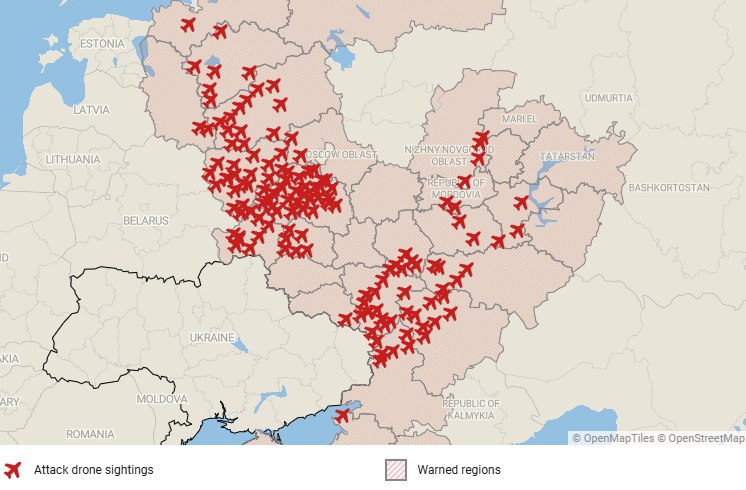
At 00:44:54 UTC, monitoring channel monitor_the_situation reported that more than 500 Ukrainian attack drones entered Russian airspace, targeting installations in Leningrad Oblast and the Ural region. The drones were described as “attack drones” and were part of a coordinated raid that aimed at logistical hubs, communications facilities, and energy infrastructure. No immediate casualty figures were released, but the sheer volume of unmanned systems represents a significant escalation in the aerial dimension of the Russia‑Ukraine conflict.
🟠 **Ukraine Launches Massive Drone Raid on Western Russia and Urals** More than 500 Ukrainian attack drones are reportedly moving in Russian airspace, targeting sites in Leningrad Oblast and deep in the Urals. (Source: https://t.me/monitor_the_situation/28963)
A secondary report from GeoPWatch at 00:20:04 confirmed Ukrainian drones over Leningrad Oblast, corroborating the larger raid. The operation demonstrates Ukraine’s capacity to conduct large‑scale UAV sorties beyond its borders, leveraging commercially available loitering munitions and modified quad‑copter platforms.
Maritime Projectile Attack in the Strait of Hormuz
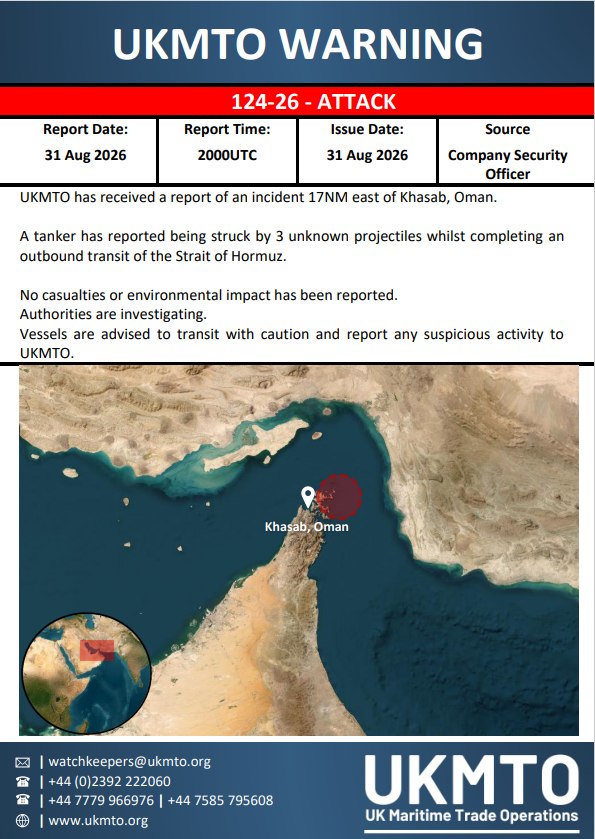
Four minutes after midnight, at 04:10:04 UTC, a commercial tanker transiting the Strait of Hormuz was struck by three projectiles 17 nautical miles east of Khasab, Oman. The incident was logged by the United Kingdom Maritime Trade Operations (UKMTO) under warning 124‑26. No casualties were reported, and the vessel’s cargo and hull integrity remained intact, preventing any immediate environmental impact.
A tanker was hit by three projectiles 17 nautical miles east of Khasab, transiting the Strait of Hormuz; no casualties or environmental impact reported. (Source: https://t.me/monitor_the_situation/28967)
The attack occurred in a chokepoint that handles roughly 20 percent of global oil shipments, raising concerns about the security of maritime trade routes. While the responsible party was not identified in the initial report, the use of projectile weapons suggests a non‑state actor or a proxy force capable of short‑range maritime strikes.
Israeli Ground Movement in Daraa, Syria
At 03:45:11 UTC, Israeli forces advanced a convoy of up to ten vehicles, escorted by aircraft, deeper into Syria’s Daraa Governorate, moving toward the village of Jumla. The movement was documented by GeoPWatch and corroborated by Al‑Jazeera footage. No direct combat was reported during the advance, and casualty figures remain at zero.
Up to 10 Israeli military vehicles, escorted by aircraft, pushed deeper into Syria's Dara'a province today, according to al-Jazeera. The column was seen advancing towards the village of Jumla. (Source: https://t.me/GeoPWatch/39270)
The operation aligns with Israel’s broader strategy of projecting power along its northern frontier, particularly in response to Iranian‑backed militia activity in southern Syria. The presence of air escort indicates a high level of operational security and readiness to respond to potential Syrian or Iranian counter‑actions.
Additional Drone Observations Over Russian Territory
Separate from the large‑scale raid, a brief sighting of Ukrainian drones over Leningrad Oblast was reported at 00:20:04 UTC by GeoPWatch. The observation, while limited in detail, reinforces the pattern of sustained UAV incursions across Russian western regions.
Ukrainian drones are flying above Leningrad Oblast, Russia. (Source: https://t.me/GeoPWatch/39263)
Analysis of Cross‑Border Dynamics
The simultaneity of these events illustrates a widening of conflict zones beyond traditional frontlines. Ukraine’s drone swarm demonstrates an ability to conduct high‑volume, long‑range UAV operations, potentially stretching Russian air‑defence resources. The maritime strike in the Strait of Hormuz, though limited in damage, signals that actors are willing to target critical energy corridors, heightening the risk of broader economic disruption. Meanwhile, Israel’s ground push in Daraa reflects ongoing contestation over Syrian territory and the strategic importance of the border region for both Israeli security and Iranian influence.
Collectively, the incidents underscore three operational trends: (1) the increasing use of swarming UAV tactics to achieve strategic surprise; (2) the targeting of global trade arteries to exert pressure without direct large‑scale kinetic engagement; and (3) the continuation of ground maneuvers by regional powers to shape post‑conflict territorial realities. Monitoring agencies should prioritize real‑time intelligence sharing to anticipate further escalation, especially as drone technology becomes more accessible to state and non‑state actors alike.