The United States initiated a series of airstrikes against Iran on 31 August 2026, marking the most significant kinetic event recorded today. According to Al Jazeera, the attacks were part of a broader "War on Iran" strategy, though the brief report provides no casualty figures or specific weapon systems used. The operation underscores a rapid escalation in a region already strained by multiple flashpoints.
"War on Iran: US bombs Iran" – AlJazeera video feed, 31 August 2026.
Key details: The strikes were launched at 17:22 UTC, involved undisclosed munitions, and were reported by Al Jazeera (source URL: https://www.aljazeera.com/video/newsfeed/2026/8/31/war-on-iran-us-bombs-iran?traffic_source=rss). No official statements from the Pentagon or Iranian authorities have been released at the time of writing.
Israeli Navy Heightens Alert Over Turkish Maritime Moves
At 17:56 UTC, the Israeli Navy announced a heightened state of readiness to counter perceived Turkish aggression in maritime zones adjacent to Greece, Cyprus and Syria. The Jerusalem Post reported that the Israel Defense Forces (IDF) are monitoring Turkish naval activity and are prepared to respond to any incursion by sea, land or air.
"The IDF is on high alert for any new Turkish moves by sea, land, or air, including in areas near Greece, Cyprus, and Syria," – The Jerusalem Post, 31 August 2026.
While no weapons were deployed at the time, the statement signals a potential expansion of the Israel‑Turkey rivalry into the Eastern Mediterranean, a region already contested by multiple state and non‑state actors.
Israeli‑Led Kurdish Training Program Halted After US Intervention
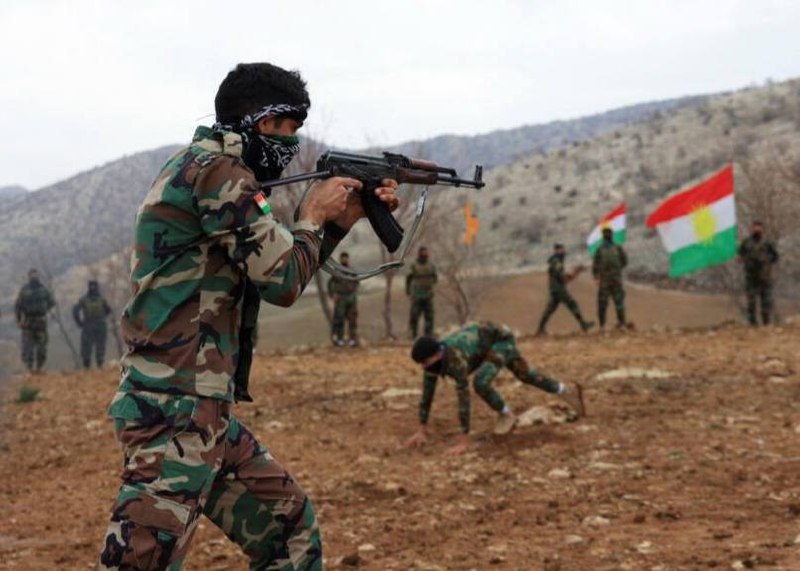
BellumActaNews reported that Israel had been training thousands of Kurdish fighters within its borders as part of a covert plan to destabilise the Iranian regime. The program, which involved extensive combat preparation, was abruptly stopped three days after the US‑Iran war began, following a direct order from Washington.
"🇺🇸🇮🇱☀️🇮🇷 — Israel trained thousands of Kurdish fighters as part of a plan aimed at overthrowing the Iranian government," – BellumActaNews, 31 August 2026.
The cessation reflects US concerns about further escalation and the risk of a broader proxy conflict involving Kurdish forces, Israel and Iran. No casualties were reported, and the source included a single photograph documenting the training facilities.
Ukrainian Drone Misfires in Yekaterinburg, Russia
At 07:13 UTC, a Ukrainian‑operated drone intended for a Wildberries logistics hub in Yekaterinburg struck an adjacent apartment building. The incident, reported by monitor_the_situation, highlights the growing use of unmanned aerial systems in the Russia‑Ukraine war and the potential for collateral damage in densely populated urban areas.
"Ukrainian Drone Hits Apartment Building in Yekaterinburg" – monitor_the_situation, 31 August 2026.
Casualty numbers remain unclear, and the video footage shared by the source suggests possible interference by Russian electronic‑warfare measures, which may have redirected the drone. The event underscores the expanding geographic reach of the conflict beyond the frontlines.
UAE Intercepts Iranian Drone Over Territorial Waters
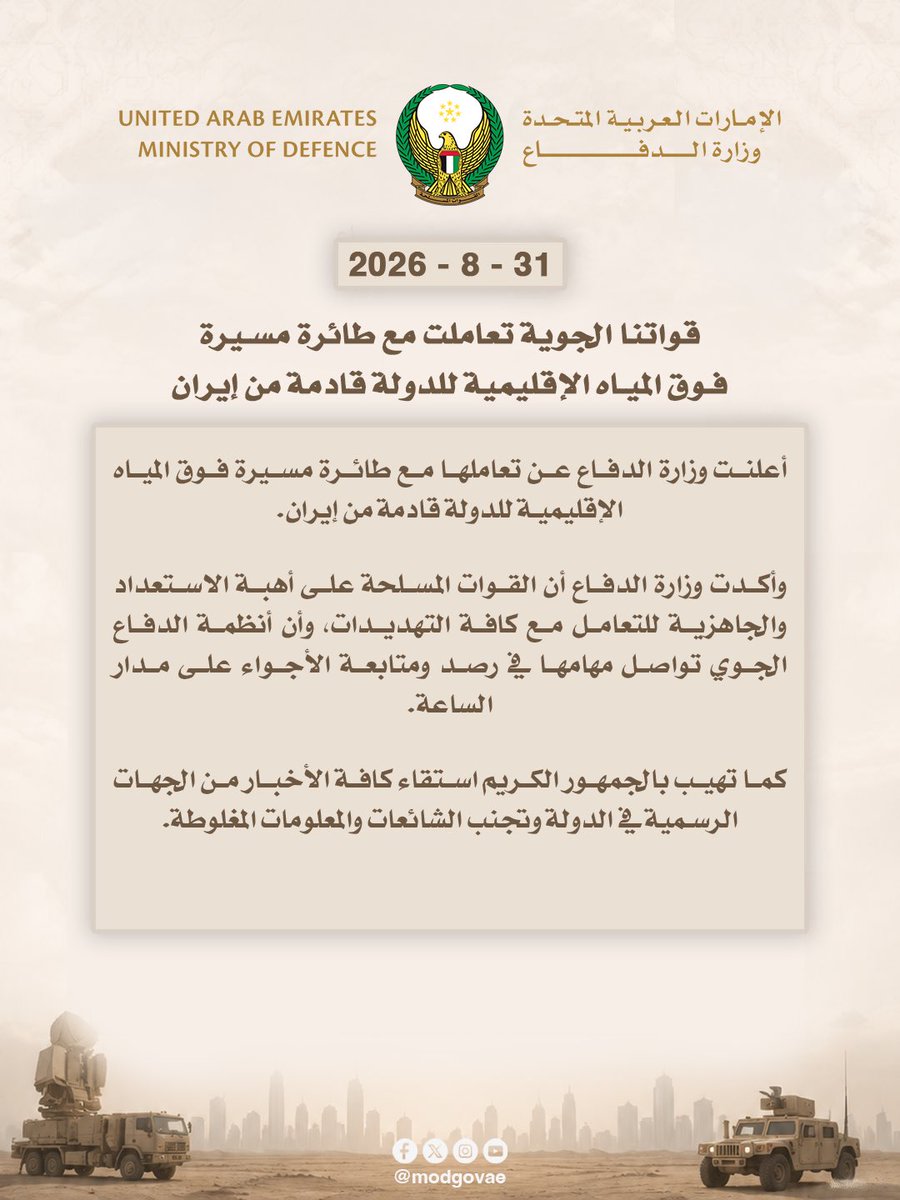
Earlier in the day, at 06:22 UTC, the United Arab Emirates Ministry of Defense announced the successful interception of an Iranian drone over its territorial waters. The interception, also reported by monitor_the_situation, adds another layer to the already complex web of aerial confrontations in the Gulf region.
"UAE Intercepts Iranian Drone Over Territorial Waters" – monitor_the_situation, 31 August 2026.
While the drone’s payload and intended target were not disclosed, the incident reflects heightened vigilance by Gulf states amid the broader US‑Iran confrontation.
Analytical Overview
The convergence of these events on a single day illustrates a multi‑dimensional escalation pattern. The United States’ direct kinetic action against Iran represents a shift from proxy engagements to overt airpower, potentially prompting reciprocal strikes or asymmetric responses. Simultaneously, Israel’s naval posturing against Turkey and the abrupt halt of a Kurdish training program reveal how regional actors are recalibrating their strategies in response to the US‑Iran flare‑up.
In the broader Eurasian context, the Ukrainian drone incident in Yekaterinburg demonstrates the diffusion of conflict technologies into civilian spaces, raising concerns about unintended casualties and the challenges of attribution. The UAE’s interception of an Iranian drone further confirms that aerial threats are no longer confined to the immediate theatre of the US‑Iran confrontation but are spreading across the Gulf, where maritime security is already fragile.
Collectively, these developments suggest a heightened risk of rapid escalation, with multiple state and non‑state actors prepared to respond to perceived threats across land, sea and air domains. Monitoring agencies should track any escalation in weapon deployment, especially the use of precision‑guided munitions by the United States and potential retaliatory measures by Iran, as well as the diplomatic communications that may follow.