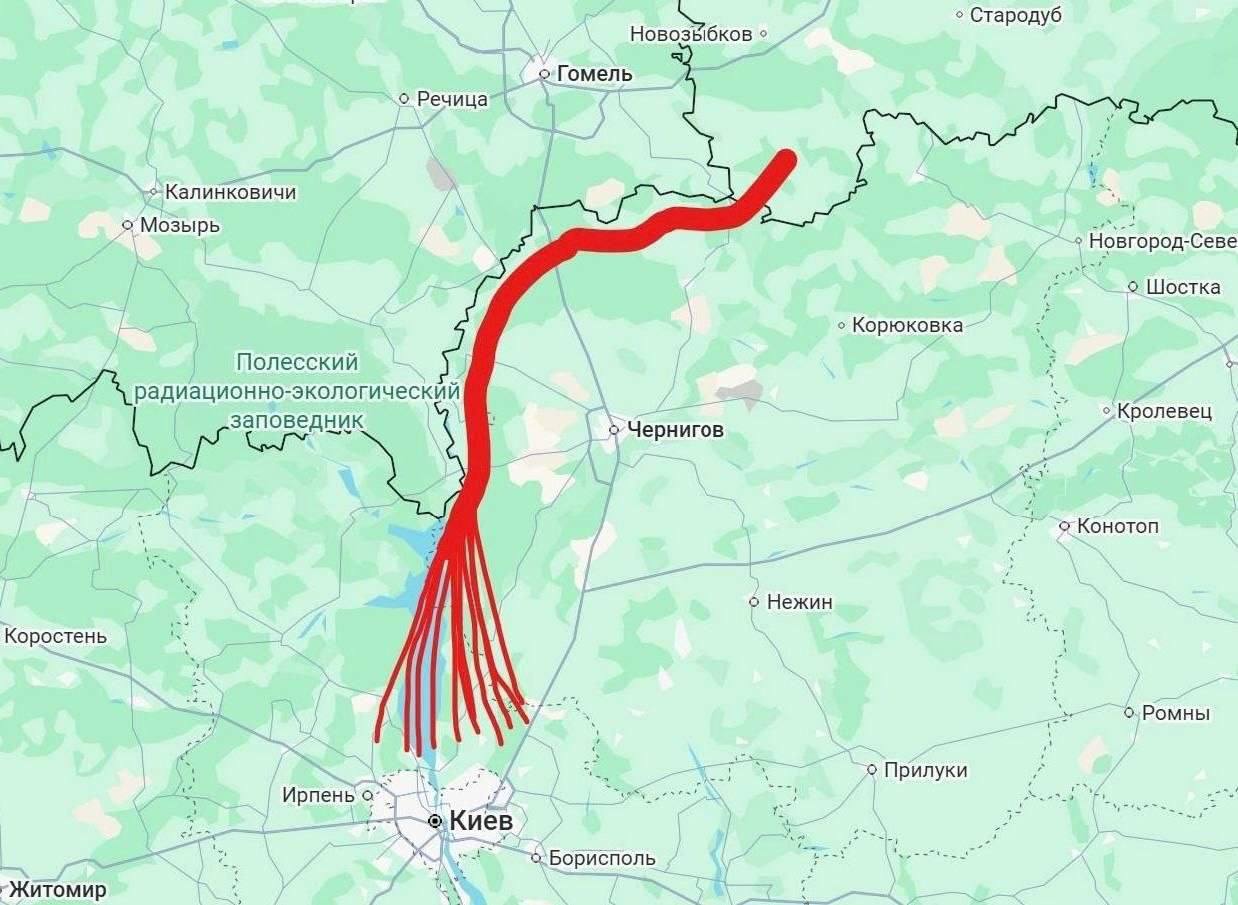
On August 30, 2026, Kyiv entered its 106th consecutive hour under rocket fire, marking the longest uninterrupted assault recorded in the capital since the conflict began. The sustained barrage, reported by the Telegram channel intelslava, underscores a strategic shift toward relentless, high‑tempo kinetic operations by Russian forces.
"⚡🇷🇺🇺🇦 Kiev has been under attack for 106 hours non‑stop." – intelslava, https://t.me/intelslava/93545
The attacks have been characterized by a mixture of unguided rockets and precision‑guided munitions, though specific weapon types were not disclosed for this particular event. No official casualty figures have been released, but the continuous nature of the strikes has strained civil defense resources and prolonged air‑raid alerts throughout the city.
Missile Strikes on Odesa
At 17:20 local time, Odesa suffered a coordinated strike involving Russian‑made Kh‑31 cruise missiles and Banderol missiles, also reported by intelslava. The Kh‑31, a supersonic air‑launched cruise missile, and the Banderol, a newer precision‑guided system, were employed against undisclosed targets within the port city. The strike demonstrates Russia’s continued reliance on a diversified missile inventory to pressure Ukraine’s southern coastline.
"Strikes of Kh‑31 cruise missiles and Banderol missiles in Odesa." – intelslava, https://t.me/intelslava/93548
While casualty numbers remain unconfirmed, the impact on critical infrastructure, including maritime facilities, is a focal point for Ukrainian authorities.
High‑Volume Drone Campaigns Over Kyiv
Two separate reports detail an unprecedented drone offensive targeting the capital. GeoPWatch documented at 12:05 a massive launch of at least 70 Geran‑2 and Geran‑4 loitering munitions, describing the event as an “air raid alert” over Kyiv. These drones, derived from commercial UAV platforms and equipped with explosive payloads, are designed for low‑altitude, high‑precision strikes.
"Russian forces have launched at least 70 Geran 2 and 4 drones." – GeoPWatch, https://t.me/GeoPWatch/39116
Later, at 17:47, monitor_the_situation relayed President Zelensky’s statement that Russia had deployed roughly 1,500 drones over four days, including 800 jet‑powered Shahed models, the most difficult to intercept. Ukrainian defense officials claim an interception rate approaching 90 % thanks to newly fielded interceptor drones from four domestic firms.
"Russia launched about 1,500 drones, including 800 jet‑powered Shahed drones, over four days." – monitor_the_situation, https://t.me/monitor_the_situation/28843
The sheer volume of unmanned systems reflects a tactical emphasis on saturation attacks intended to overwhelm air‑defence networks while probing for vulnerabilities.
Glide‑Bomb Airstrikes in Kharkiv Oblast
In the afternoon, the Russian Aerospace Forces (VKS) executed a series of glide‑bomb strikes in Kharkiv Oblast, targeting temporary deployment points of Ukrainian territorial and assault brigades. According to intelslava, the operation employed one FAB‑3000 and two FAB‑1500 glide bombs against the 113th Territorial Defense Brigade in Prykolotne, followed by four FAB‑250 glide bombs against the 3rd Separate Assault Brigade in Pidsrednie.
"One FAB‑3000 and two FAB‑1500 glide bombs against a temporary deployment point of the 113th Territorial Defense Brigade… Four FAB‑250 glide bombs against a temporary deployment point of the 3rd Separate Assault Brigade…" – intelslava, https://t.me/intelslava/93550
These precision‑guided weapons, released from high altitude, enable Russian aircraft to strike targets with reduced exposure to Ukrainian air‑defences. No casualty data were released, but the targeting of brigade‑level formations suggests an intent to disrupt command and control structures.
Ground Movements in Sumy Oblast
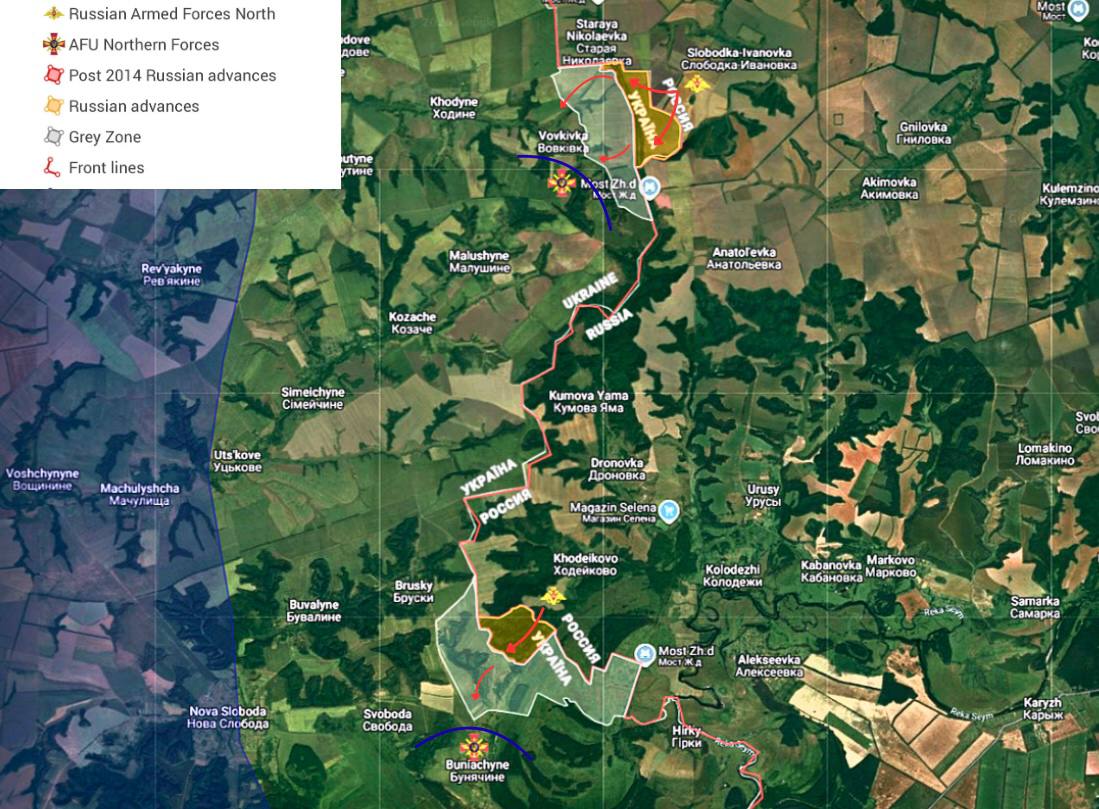
At 07:09, GeoPWatch reported that Russian troops crossed the international border into Sumy Oblast, advancing toward the villages of Vovkivka and Buniachyne. The movement appears to be part of a broader effort to expand a buffer zone along Ukraine’s northeastern frontier, applying additional pressure on the Armed Forces of Ukraine (AFU) in a region already experiencing heightened artillery activity.
"Russian military is continuing the expansion of their buffer zone… advancing toward the villages of Vovkivka and Buniachyne." – GeoPWatch, https://t.me/GeoPWatch/39115
While no direct combat was reported at the time of writing, the incursion raises the risk of further kinetic engagements in the Sumy sector.
Operational Context and Assessment
The events of August 30 illustrate a multi‑domain escalation by Russian forces, combining sustained rocket fire, high‑precision missile strikes, massed drone deployments, glide‑bomb airstrikes, and limited ground incursions. The continuous rocket barrage over Kyiv represents a psychological and logistical strain, forcing civilian populations to remain under alert for extended periods. Simultaneously, the use of advanced cruise missiles and glide‑bombs in Odesa and Kharkiv demonstrates Russia’s capacity to project firepower across diverse theatres.
Ukrainian air‑defence performance, particularly the reported 90 % interception rate against Shahed drones, indicates a resilient defensive posture, yet the sheer volume of incoming threats challenges even the most robust systems. The integration of interceptor drones developed domestically reflects an adaptive approach to countering evolving UAV threats.
Overall, the kinetic tempo on August 30 underscores a strategic intent by Russian forces to maintain pressure on multiple fronts, leveraging both conventional and asymmetric weapons to erode Ukrainian defensive depth.