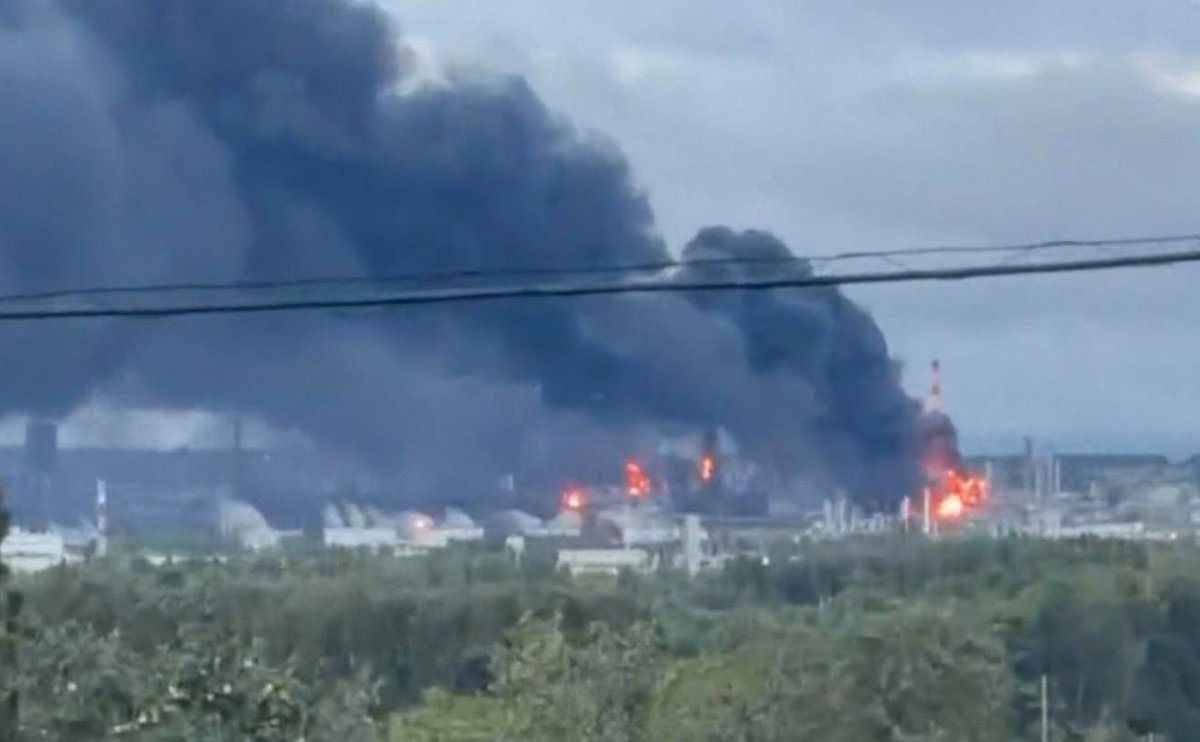
On August 26, 2026, a hostile unmanned aerial vehicle (UAV) crashed into a private residence in Lipetsk Oblast, Russia, killing two civilians and injuring two others. The incident, reported by the Telegram channel intelslava (source https://t.me/intelslava/93215), sparked a fire that engulfed the home. No armed group claimed responsibility, but the event is catalogued as a cross‑border UAV attack involving Ukrainian‑origin technology, underscoring the growing reach of aerial warfare beyond front‑line zones.
Escalating UAV activity on both sides of the front
Throughout the early hours of the day, a series of UAV operations were documented across the Russia‑Ukraine border. In Tambov Oblast, Russia, Ukrainian drones struck the logistics complex of the Russian retail giant Wildberries. The attack, posted by the channel idkunim_il (https://t.me/idkunim_il/62872), included a photograph of the damaged facility and confirmed the use of UAVs as the weapon system.
Simultaneously, a Ukrainian‑operated drone ignited a fire at the Kstovo oil refinery in Russia’s Nizhny Novgorod region. The monitor_the_situation channel shared a photo of the blaze and identified the weapon as a drone (https://t.me/monitor_the_situation/28511). Both strikes targeted critical economic infrastructure, reflecting a strategic pattern of disrupting supply chains and energy assets.
On the Ukrainian side, Russian forces continued UAV assaults. Operators from the 18th Combined Arms Army of the Dnepr Group of Forces launched drones against Ukrainian Armed Forces positions in Kherson. The intelslava channel posted video evidence (https://t.me/intelslava/93214), confirming the ongoing use of UAVs by Russian units to pressure southern Ukrainian defenses.
Civilian uprising in Ternopil
At 05:51:38 UTC, a large‑scale civilian uprising erupted in Ternopil, western Ukraine. According to intelslava (https://t.me/intelslava/93216), residents confronted military recruitment officers, repelling an attempt by “human hunters” to detain a civilian in a residential building. Neighbors intervened, damaged the recruiters’ vehicle, and forced the unit to retreat. In response, Ukrainian special forces, police, and additional military equipment were deployed to restore order and secure the city.
"Human hunters" attempted to detain a man in one of the residential buildings. However, neighbors quickly arrived at the scene and repelled the recruiters, also damaging their vehicle.
The uprising highlights growing domestic resistance to conscription policies and adds a new dimension to the conflict, as civilian actions now directly challenge state security apparatuses.
Russian missile strike on Ukrainian FP‑5 launch site
At 00:33:37 UTC, the Russian Ministry of Defense released footage showing the destruction of a Ukrainian FP‑5 Flamingo cruise‑missile launch site near Fedorovka in Kharkiv Oblast. The strike employed an Iskander‑M tactical ballistic missile and seven Geran‑4 loitering munitions, as detailed by intelslava (https://t.me/intelslava/93213). The operation eliminated the preparation area for long‑range FP‑5 missiles, a capability that Ukraine has been developing to extend its strike reach.
The coordinated use of a ballistic missile and loitering munitions demonstrates Russia’s intent to neutralize emerging Ukrainian offensive assets, while simultaneously signaling its capacity to conduct precision strikes deep within Ukrainian territory.
Analytical overview
The events of August 26 illustrate a multi‑layered escalation. The lethal UAV crash in Lipetsk marks the first confirmed civilian fatality in Russia directly linked to a hostile UAV, expanding the conflict’s geographic scope. Concurrent UAV attacks on Russian logistics and energy sites, paired with Russian drone operations in Kherson, reveal a tit‑for‑tat aerial campaign that blurs the line between front‑line combat and strategic sabotage.
Simultaneously, the Ternopil uprising underscores internal pressures within Ukraine, where civilian opposition to recruitment drives can provoke rapid security responses. The Russian Iskander‑M strike on the FP‑5 site further indicates a focus on denying Ukraine advanced strike capabilities.
Collectively, these incidents suggest a trajectory toward broader, more diversified conflict tactics, encompassing aerial attacks on civilian and economic targets, heightened internal dissent, and targeted neutralization of emerging weapon systems.