On 24 August 2026, Yemen's Houthi movement announced a successful strike against the Saudi oil tanker Amzan using a long‑range ballistic missile. The attack, reported at 17:43 local time, ignited a fire aboard the vessel and forced nearby ships to maneuver away from the blast zone. The incident marks the most severe kinetic event recorded in Saudi waters on this date, underscoring the Houthis' expanding maritime capabilities.
"Houthis say they hit the Saudi oil tanker Amzan with a ballistic missile, causing a fire," OSINTdefender reported via Telegram (https://t.me/OSINTdefender/19989).
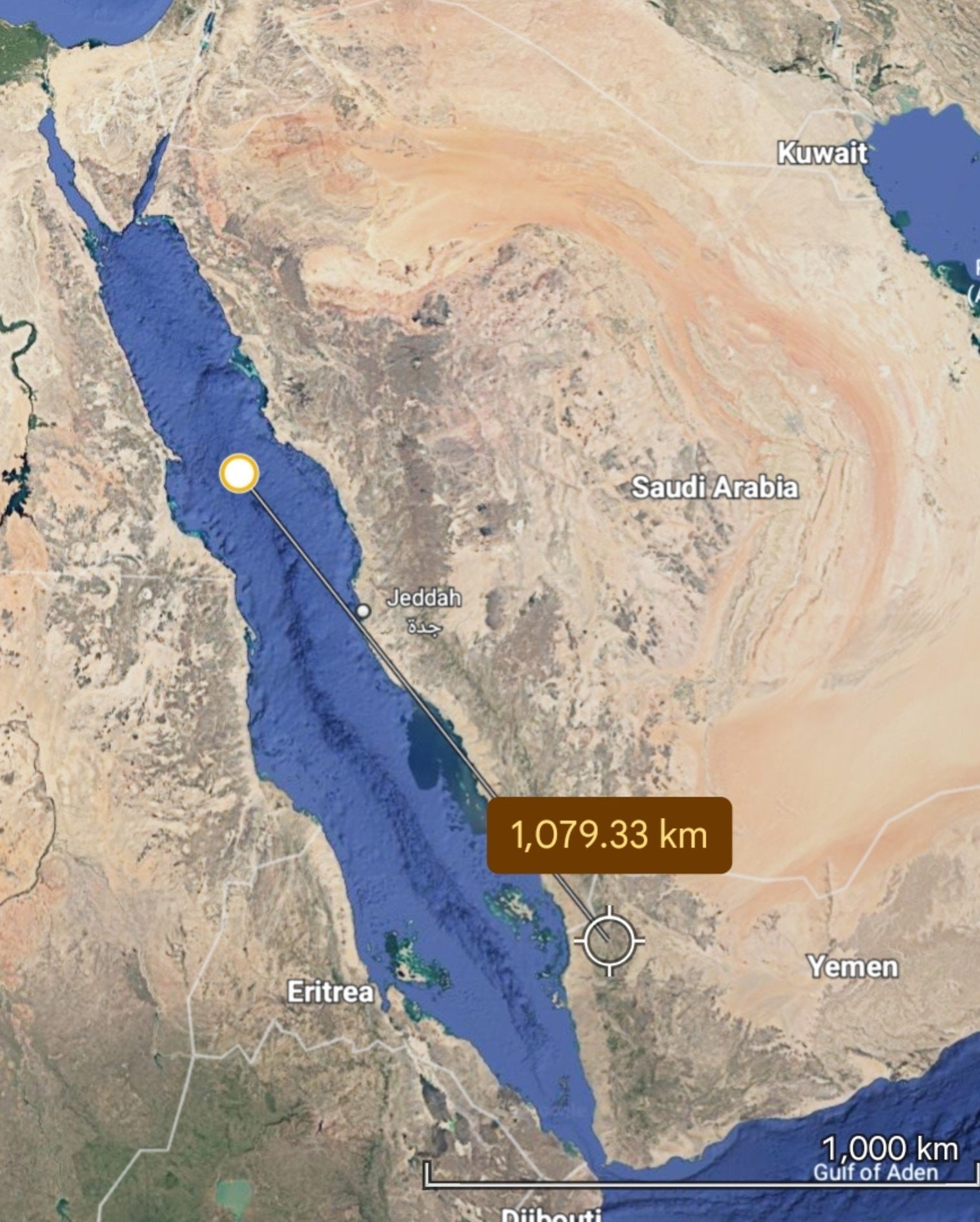
The missile impact occurred in the Red Sea, well beyond the 1,000‑kilometre range traditionally associated with Houthi artillery. According to a military spokesperson cited by GeoPWatch, the strike demonstrated "very high technical knowledge in the use of long‑range missiles" and prompted an immediate evacuation of adjacent vessels.
"The Houthis have claimed responsibility for the strike against the 'Amzan', a Saudi oil tanker. A military spokesperson confirmed it was attacked with a ballistic missile, and that the strike forced other vessels to flee," GeoPWatch noted (https://t.me/GeoPWatch/38773).
Earlier Naval Incidents on 24 August
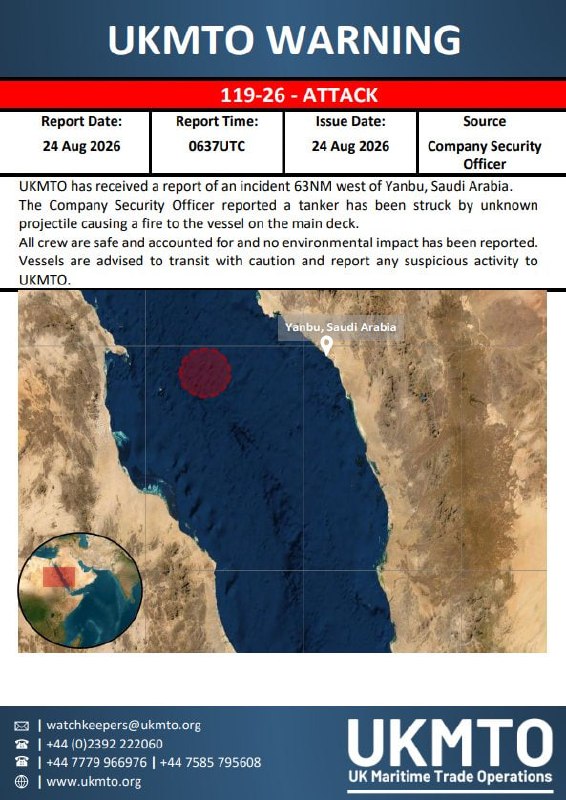
Prior to the Amzan strike, three additional projectile incidents were recorded off Saudi Arabia's western coast. At 12:57, the United Kingdom Maritime Trade Operations (UKMTO) confirmed that a Saudi oil tanker near Yanbu was hit by an unidentified projectile, resulting in a deck fire. The incident was relayed by the CIG_telegram channel, which also supplied photographic evidence of the blaze.
"UKMTO reported an incident off Yanbu coast, a tanker has been struck by a projectile this morning, causing a fire. The Houthis appear to have managed to hit a Saudi oil tanker that was over 1,000 km away from their territory," CIG_telegram posted (https://t.me/CIG_telegram/82678).
Earlier that morning, at 08:04, UKMTO issued a brief alert indicating that an unnamed tanker in the Persian Gulf had been struck by an unknown projectile. The report, shared by monitor_the_situation, included a short video clip showing a flash on the water’s surface, but no further details on damage or casualties were released.
"Tanker Struck by Projectile Off Saudi Arabia," monitor_the_situation reported (https://t.me/monitor_the_situation/28378).
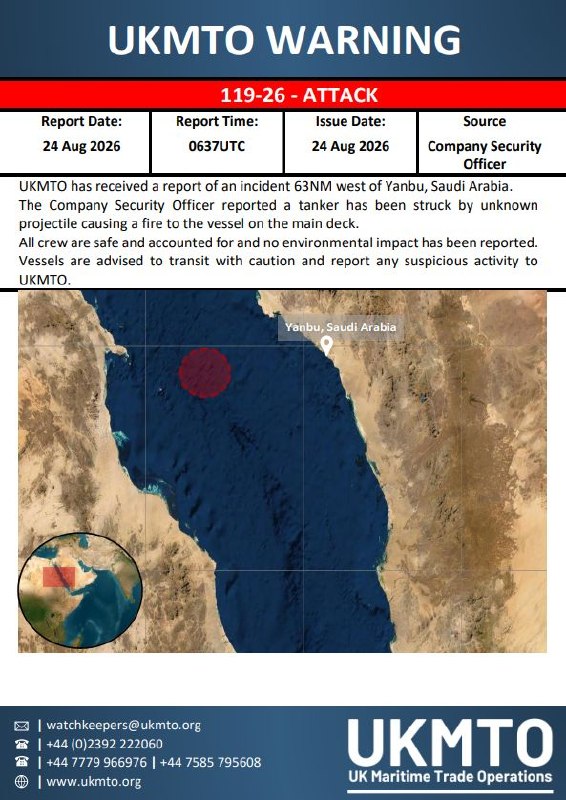
At 08:00, GeoPWatch documented a separate incident 63 nautical miles west of Yanbu, where an unknown projectile impacted a tanker’s deck, igniting a fire. Photographic material accompanying the report displayed flames licking the vessel’s superstructure.
"An unknown projectile struck a tanker 63 nautical miles west of Yanbu, Saudi Arabia, causing a fire on the vessel deck," GeoPWatch noted (https://t.me/GeoPWatch/38767).
Weapon Types and Attribution
The events of 24 August feature two distinct weapon categories: ballistic missiles and unspecified projectiles. The ballistic missile attacks on the Amzan tanker are directly attributed to the Houthis, a Yemeni rebel group that has intensified its maritime campaign since 2015. The projectile incidents, while not definitively claimed, are widely suspected to involve Houthi‑supplied munitions, given the pattern of recent attacks and the proximity of the launch points to Houthi‑controlled coastal areas.
Ballistic missiles employed in the Amzan strikes are believed to be variants of the Iranian‑made Qiam or Burkan‑2H systems, both capable of exceeding 1,000 km range. The projectile attacks likely involve smaller, unguided munitions such as artillery shells or improvised explosive devices launched from small craft, a tactic the Houthis have used to target commercial shipping in the Red Sea and Gulf of Aden.
Casualties and Damage Assessment
None of the reported incidents on 24 August listed confirmed fatalities or injuries among crew members. The primary impact has been material damage: fires on deck, potential oil leakage, and temporary disruption of maritime traffic. The Amzan’s fire was contained by the vessel’s onboard firefighting systems, and no oil spillage was reported at the time of the statements. However, the repeated targeting of tankers raises concerns about cumulative environmental risk and the safety of crew operating in contested waters.
Operational Context and Strategic Implications
The clustering of attacks on a single day reflects a coordinated escalation by the Houthis, likely intended to pressure Saudi Arabia and its allies amid ongoing regional tensions. By demonstrating the ability to strike vessels at extreme distances, the Houthis aim to challenge the effectiveness of existing naval patrols and the broader maritime security framework overseen by the multinational coalition operating in the Red Sea.
From a strategic perspective, the attacks serve multiple objectives: disrupting Saudi oil logistics, signaling solidarity with Iranian allies, and leveraging maritime insecurity to extract political concessions. The use of ballistic missiles against high‑value commercial assets also signals a shift from earlier, more opportunistic attacks on smaller fishing boats toward high‑profile, economically significant targets.
International response mechanisms, such as the UKMTO alerts and real‑time monitoring by open‑source platforms (OSINTdefender, GeoPWatch), illustrate the growing reliance on civilian and semi‑official channels to disseminate situational awareness. These platforms provide near‑instantaneous verification of incidents, enabling shipping companies to adjust routes and mitigate risk.
Conclusion
The series of kinetic events on 24 August 2026 underscores a heightened threat environment for Saudi maritime assets. While no casualties have been confirmed, the material damage and operational disruptions highlight the Houthis' evolving capability to project force across the Red Sea and Persian Gulf. Continued vigilance, enhanced naval patrols, and diplomatic engagement remain essential to deter further escalation and safeguard critical energy infrastructure.