On August 23, a Russian jet‑powered Shahed drone struck the locomotive of passenger train No. 147 in Donetsk Oblast, prompting the evacuation of all 593 passengers, including 15 children. Early warning systems allowed a safe evacuation, and no casualties were reported. The incident underscores the expanding use of unmanned aerial systems against civilian infrastructure and highlights the vulnerability of rail transport in contested zones. Source: monitor_the_situation (link).
Escalation of Ground Operations in Donetsk Oblast
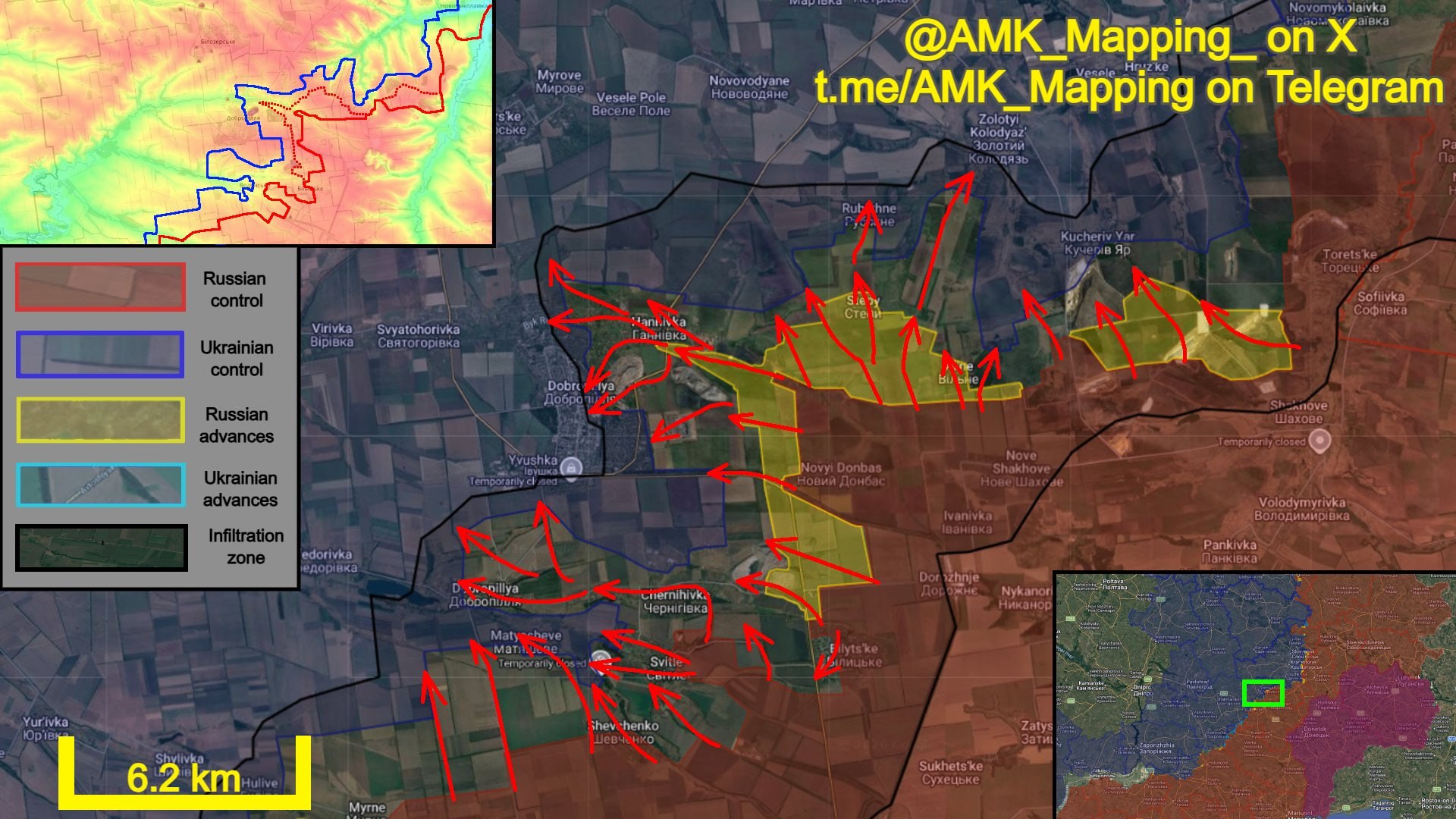
Concurrent with the aerial strike, Russian forces reported a series of tactical breakthroughs around Dobropolye in Donetsk Oblast. According to the CIG Telegram channel, multiple villages and strategic positions were captured during high‑intensity assaults, extending the front line southwest toward the Vodianskoye agglomeration and northward to Matyashevo and Novogrishino. The report notes that Russian units have consolidated control over previously contested settlements, though precise casualty figures were not disclosed. Source: CIG_telegram (link).
Advances Along the Donetsk‑Dnipropetrovsk Border
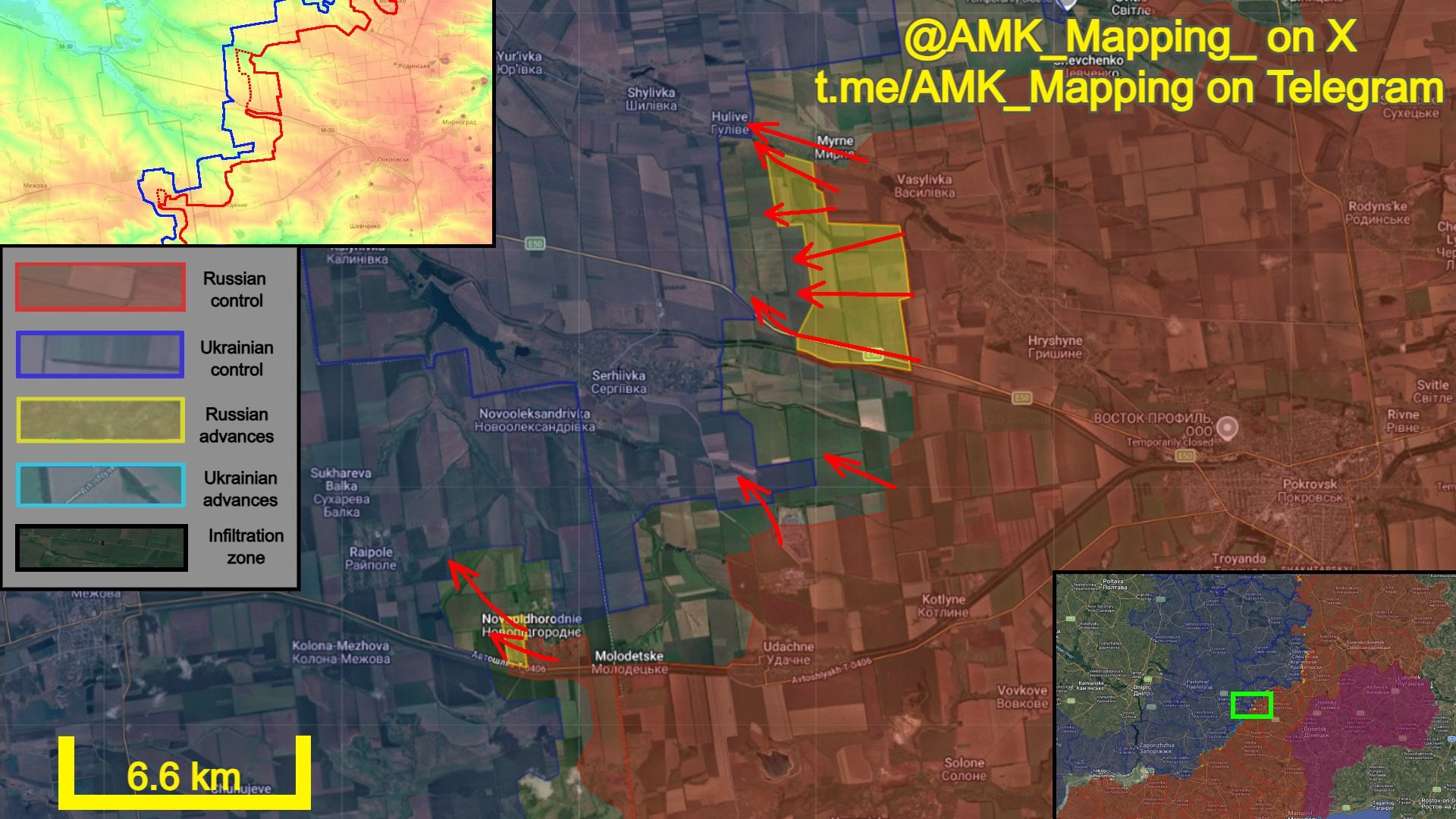
Further north, Russian troops advanced near the Donetsk‑Dnipropetrovsk regional border, recapturing positions around the Pokrovsk coal mine. The CIG Telegram briefing detailed renewed fighting in Novopodgornoye, Raipolye, Sergeevka, Grishino, Mirnoe and Gulove, indicating a coordinated push to secure resource‑rich areas and disrupt Ukrainian defensive lines. While the report does not specify equipment losses, the intensity of combat suggests a significant allocation of artillery and mechanized units. Source: CIG_telegram (link).
Infiltration Efforts in Zaporozhye Oblast
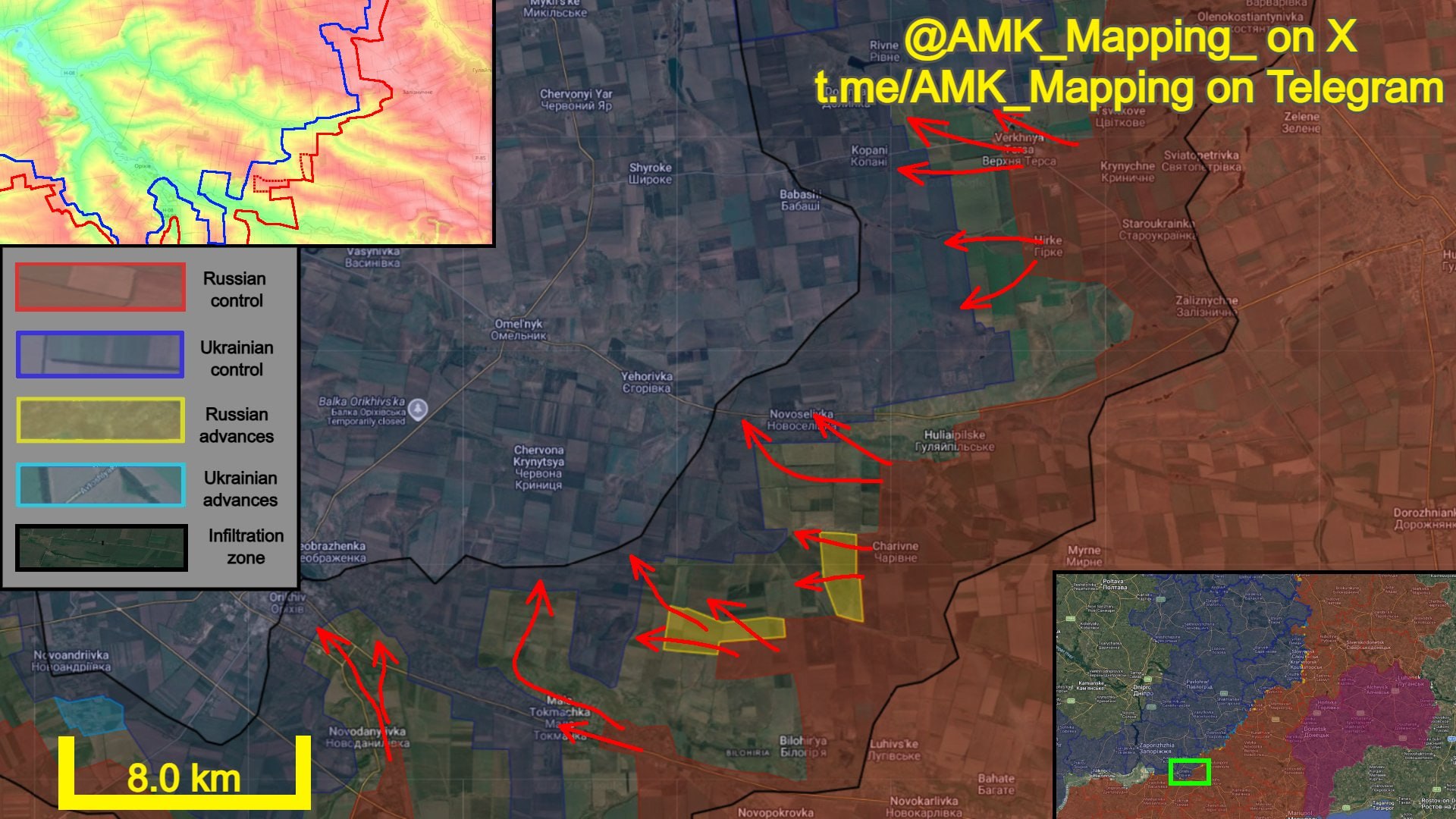
In the south‑eastern theater, Russian forces continued infiltration operations around Orekhov in Zaporozhye Oblast. The CIG Telegram channel reported that units moved through Novodanylivka, encountering stiff Ukrainian resistance as they attempted to encircle the city. The narrative emphasizes a gradual shift of fighting toward Orekhov’s urban core, suggesting a possible preparatory phase for a larger assault. Ukrainian defensive measures, including counter‑attacks and fortified positions, have reportedly slowed Russian momentum, but the situation remains fluid. Source: CIG_telegram (link).
Industrial Targeting in Sumy Oblast
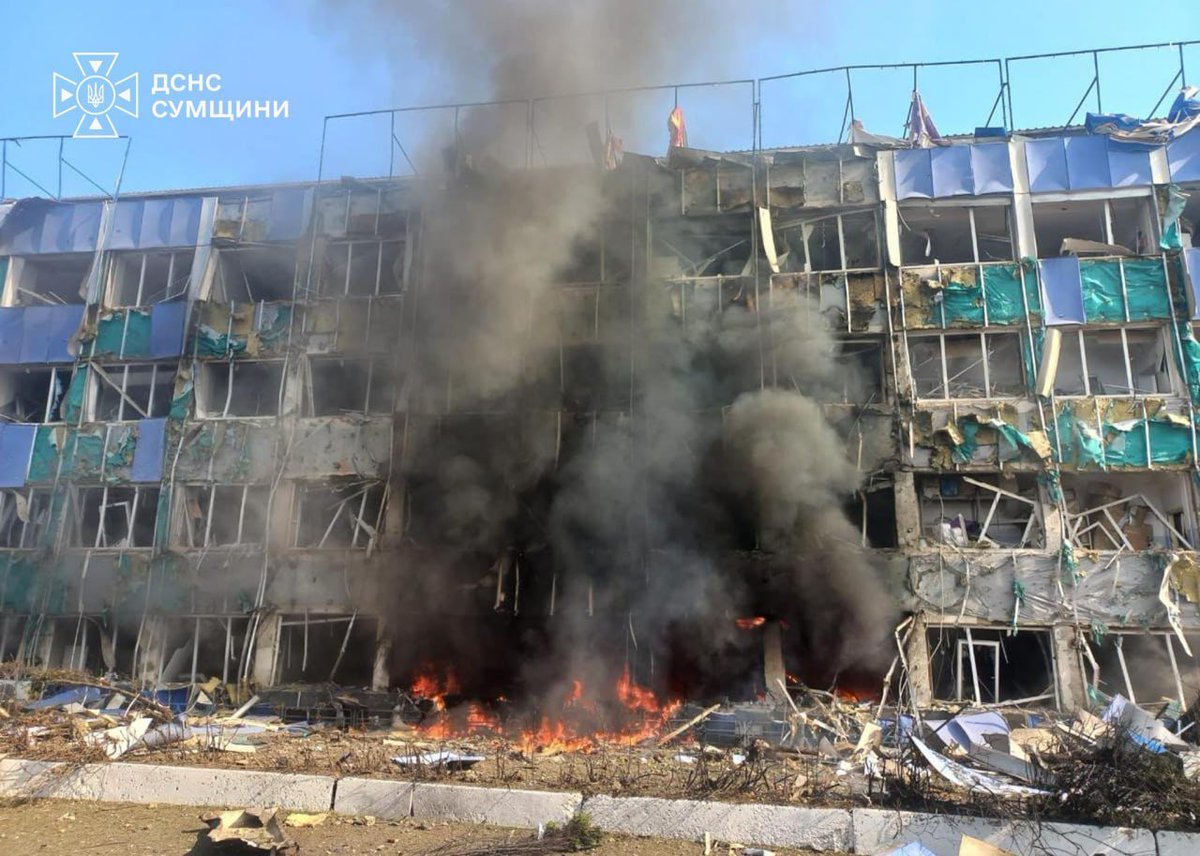
At 16:24 local time, two Russian drones struck a Mondelēz production facility in Sumy Oblast, injuring several workers. Ukrainian Foreign Minister Andrii Sybiha warned that attacks on commercial assets threaten U.S. economic interests in Europe and called for enhanced air‑defence coverage and additional sanctions against Russia. The incident illustrates a pattern of targeting critical infrastructure to erode both civilian morale and foreign investment. Source: monitor_the_situation (link).
Unconfirmed Drone Attack on HIMARS System
Intelslava released video footage claiming an FPV drone struck a vehicle identified as an M142 HIMARS near Mykilske, Donetsk Oblast. Analysts note that the visual evidence is inconclusive; the vehicle’s silhouette resembles an Oshkosh MTV-series chassis, which could belong to a HIMARS or another support platform. If confirmed, the strike would represent a rare successful engagement of a high‑value artillery system by a low‑cost UAV, highlighting the evolving threat landscape. Source: intelslava (link).
"The recent Shahed drone attack on a passenger train demonstrates the expanding scope of Russian aerial tactics, targeting both military and civilian nodes to sow disruption," noted a senior analyst at the Institute for Strategic Studies.
Collectively, these events reveal a multi‑dimensional Russian strategy that combines kinetic ground advances with targeted aerial strikes against infrastructure and high‑value assets. The coordination across disparate fronts suggests a concerted effort to stretch Ukrainian defensive resources, exploit gaps in air‑defence coverage, and apply psychological pressure on the civilian population. Continued monitoring of casualty reports, equipment losses, and territorial changes will be essential for assessing the operational tempo and potential escalation pathways.