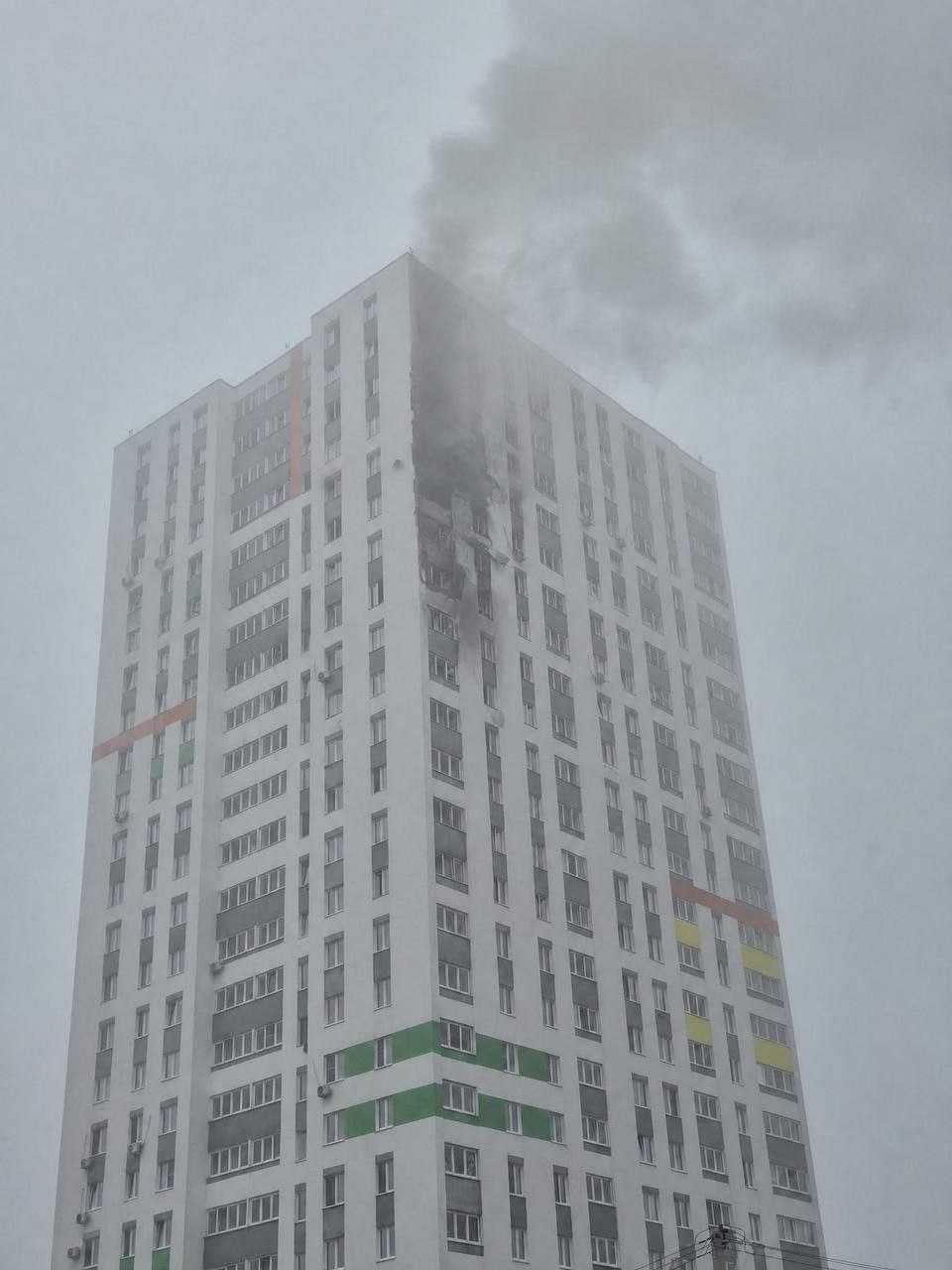
On August 19, a wave of drone and missile incidents unfolded across a broad swath of Eurasia, underscoring the intensifying volatility of the region. From a residential building in Ufa, Russia, to cross‑border raids in the Golan Heights, each event reflects the growing reliance on unmanned systems and precision strikes by state and non‑state actors. The incidents, reported by multiple open‑source channels, illustrate how aerial warfare is reshaping security calculations for Russia, Israel, Iran, and Iraq.
Ufa Drone Attack Highlights Domestic Threats to Russia
At 05:56 UTC, a hostile unmanned aerial vehicle (UAV) struck a residential building in Ufa, the capital of Bashkortostan, Russia. The impact injured a single civilian, who was promptly hospitalized, according to Bashkortostan head Radiy Khabirov. The same drone swarm targeted several industrial enterprises in the city, raising concerns about potential sabotage of critical infrastructure. Six drones were involved in the operation; Russian air defenses succeeded in shooting down four of them, while the remaining two escaped.
"The injured person is currently hospitalized," Radiy Khabirov said, confirming the casualty and emphasizing the need for heightened security measures in the region. (Source: intelslava, https://t.me/intelslava/92805)
While no organization claimed responsibility, the incident marks a rare instance of UAV aggression on Russian soil, suggesting either a domestic extremist element or a proxy operation aimed at testing Russia’s air‑defense readiness. The event also raises questions about the proliferation of commercially available drones that can be weaponized with minimal technical expertise.
Iranian Drone Campaign Extends Into Iraqi Kurdistan
Earlier in the day, at 01:36 UTC, Iranian forces launched a drone attack targeting the Kurdistan Region of Iraq. The strike, reported by the Jerusalem Post, is interpreted as part of Tehran’s broader strategy to project power across its western frontier. Although casualty figures were not disclosed, the attack underscores Iran’s willingness to employ UAVs beyond its borders, potentially to deter Kurdish autonomy movements and to signal resolve against perceived Israeli or U.S. influence in the area.
"Iran's attack on Kurdistan may signal a new phase in Tehran's regional drone warfare," the Jerusalem Post analysis noted, highlighting a shift toward more aggressive aerial tactics. (Source: JPost, https://www.jpost.com/middle-east/article-905943)
The operation aligns with Iran’s documented use of loitering munitions and reconnaissance drones in recent years, reflecting an evolving doctrine that blends conventional missile strikes with low‑cost, high‑impact UAV deployments.
Israeli Cross‑Border Raid in Quneitra Escalates Golan Tensions
At 05:45 UTC, Israeli forces conducted a cross‑border raid in Quneitra, Syria, abducting two individuals from residential homes. The operation, captured on video by monitor_the_situation, represents the latest in a series of Israeli incursions aimed at neutralizing perceived threats near the Golan Heights. No fatalities were reported, but the abductions contribute to a climate of uncertainty for Syrian civilians living along the frontier.
"Israeli forces search homes and abduct two people in Quneitra, Syria, in the latest cross‑border military raid," the source reported, emphasizing the ongoing volatility of the border region. (Source: monitor_the_situation, https://t.me/monitor_the_situation/28014)
The raid follows a pattern of Israeli pre‑emptive actions designed to disrupt hostile networks, but it also risks provoking retaliatory strikes from Syrian or allied forces, potentially widening the conflict.
Israeli Airstrike Targets Syrian Airfield to Counter Turkish Deployment
At 04:29 UTC, Israel’s Prime Minister Benjamin Netanyahu’s office announced a precision strike on a Syrian airfield. According to OSINTdefender, the operation aimed to prevent Turkey from establishing a troop presence that Israel perceives as a direct security threat. While the strike did not result in reported casualties, its strategic intent was to curtail Turkish military expansion in Syria, a development that could alter the balance of power in the Levant.
"The strike was intended to prevent Turkey from deploying troops that would threaten Israel's security," Netanyahu's office stated, underscoring the pre‑emptive nature of the operation. (Source: OSINTdefender, https://t.me/OSINTdefender/19900)
The incident illustrates the complex interplay of regional actors—Israel, Turkey, and Syria—each leveraging air power to advance geopolitical objectives. It also highlights Israel’s willingness to conduct strikes beyond its immediate borders to shape the security environment.
Implications for Regional Stability
Collectively, these events reveal a pattern of increasing reliance on unmanned and precision strike capabilities across the Middle East and Eurasia. The Ufa drone attack demonstrates that even nations with robust air‑defense systems remain vulnerable to low‑cost aerial threats. Iran’s foray into Iraqi airspace signals a willingness to extend its drone campaign beyond traditional theaters, potentially destabilizing the already fragile Kurdish‑Iraqi relationship.
Israel’s simultaneous use of ground raids and airstrikes underscores a multi‑dimensional approach to counter perceived threats from neighboring states and non‑state actors. The coordination of these actions, often conducted within hours of each other, suggests a heightened state of alert and a readiness to employ kinetic force pre‑emptively.
For observers, the convergence of drone technology, cross‑border operations, and strategic airstrikes on a single day serves as a bellwether for future conflict dynamics. As UAVs become more accessible, the threshold for initiating hostilities lowers, increasing the risk of rapid escalation. Monitoring these trends will be essential for anticipating flashpoints and informing diplomatic interventions.