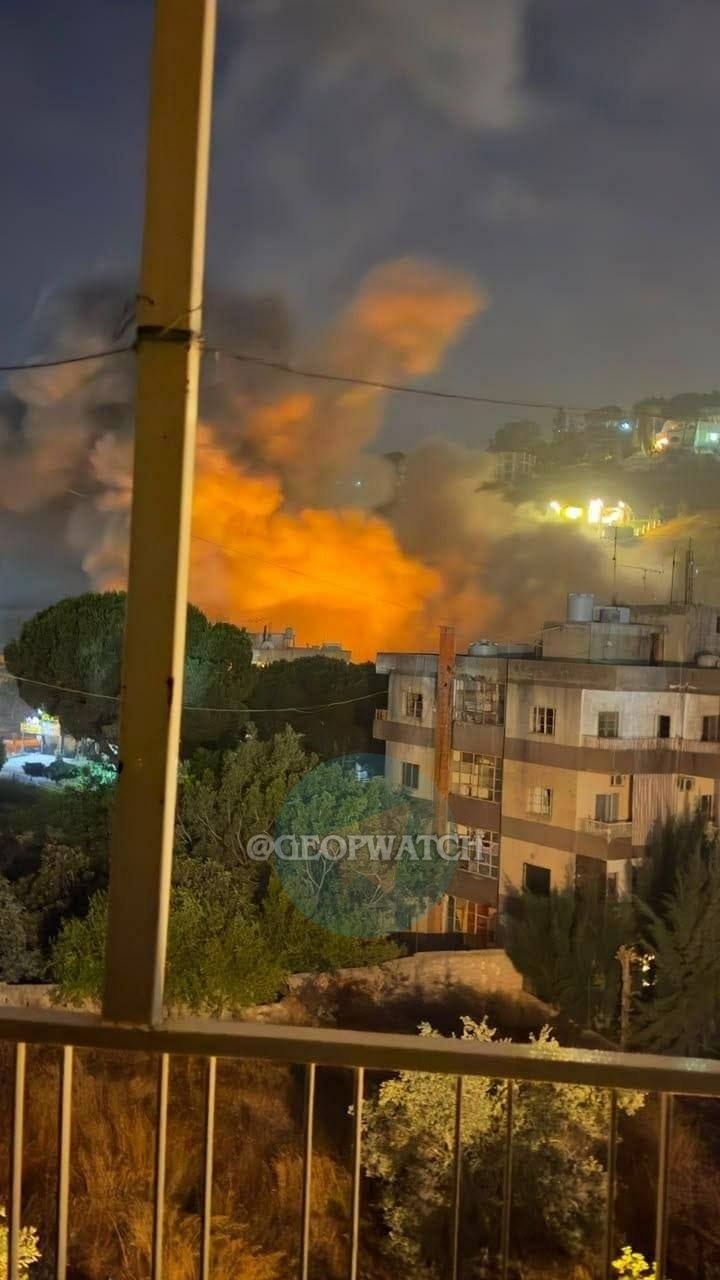
On August 15, 2026, a series of coordinated hostilities escalated across the Middle East, affecting both land and maritime domains. The most lethal incident occurred in the Lebanese village of Ansar, where Israeli Defense Forces (IDF) shelling resulted in seven civilian deaths.
Shelling in Ansar, Lebanon
At 04:15 local time, IDF artillery fire struck the village of Ansar in southern Lebanon, killing seven individuals, according to reports from GeoPWatch. The incident was documented in a photo released by the monitoring channel, and the source URL is https://t.me/GeoPWatch/38502. No weapons other than standard artillery were reported, and the engagement involved the IDF on the Israeli side and Lebanese civilians on the ground.
“Seven people died in the Lebanese village of Ansar following IDF bombardment, Israeli media report.” – GeoPWatch
The casualty figure underscores the heightened risk of cross‑border retaliation following recent exchanges between Israel and Hezbollah‑affiliated groups. Analysts note that the timing coincides with broader regional tensions, but the report does not attribute the strike to any specific provocation.
Ballistic Missile Interception near Diego Garcia
Earlier in the day, at 00:19 UTC, Iran launched two ballistic missiles targeting the U.S. logistics hub on Diego Garcia, a strategic outpost in the Indian Ocean. The United States Navy intercepted one missile, while the second fell into the Indian Ocean without causing damage. The incident was reported by the Telegram channel monitor_the_situation, with the source URL https://t.me/monitor_the_situation/27752.
“Iran launches two ballistic missiles at Diego Garcia, US Navy intercepts one.” – monitor_the_situation
The weapons involved were ballistic missiles, a class of long‑range projectiles capable of delivering conventional or non‑conventional payloads. The engagement involved the Iranian Revolutionary Guard Corps (IRGC) missile units and the United States Navy’s Aegis Ballistic Missile Defense system. No casualties were reported, but the event marks a significant escalation, extending the conflict’s reach beyond the immediate Middle Eastern theater.
Attack on ADNOC Vessel in the Strait of Hormuz
At 03:42 UTC, the Abu Dhabi National Oil Company (ADNOC) confirmed an attack on one of its commercial vessels transiting the Strait of Hormuz, a critical chokepoint for global oil shipments. The incident, reported by monitor_the_situation (https://t.me/monitor_the_situation/27758), resulted in no injuries but raised concerns about maritime security. The United Arab Emirates and several Arab states publicly condemned Iran, accusing it of destabilizing the waterway.
“ADNOC confirmed an attack on one of its vessels in the Strait of Hormuz, with no injuries reported. The UAE and Arab states condemned Iran, emphasizing maritime security and freedom of navigation.” – monitor_the_situation
While the specific weapon used was not identified, the incident aligns with a pattern of asymmetric threats targeting commercial shipping in the region. The involvement of Iran, as alleged by the UAE, reflects ongoing disputes over navigation rights and the broader geopolitical contest for control of energy routes.
Analytical Overview
The three incidents illustrate a multi‑dimensional escalation that combines conventional ground fire, strategic missile deployment, and maritime harassment. The shelling in Ansar demonstrates the persistent volatility of the Israel‑Lebanon frontier, where civilian populations remain vulnerable to artillery exchanges. The missile launch toward Diego Garcia signals Iran’s willingness to project power far beyond its borders, potentially drawing the United States into a direct defensive response. Finally, the attack on the ADNOC vessel underscores the strategic importance of the Strait of Hormuz and the risk that commercial shipping could become a flashpoint for broader conflict.
All three events were reported by open‑source monitoring channels, highlighting the role of social media and Telegram in disseminating real‑time conflict data. While the sources are unverified by official state actors, they provide a consistent narrative of heightened hostilities across land and sea.
Regional actors, including the United Arab Emirates, Saudi Arabia, and European partners, have called for de‑escalation and the protection of international navigation routes. The United Nations has yet to issue a formal statement, but the Security Council is expected to convene an emergency session within the next 48 hours to assess the implications for global energy markets and maritime safety.
In the absence of diplomatic breakthroughs, the risk of further incidents remains elevated. Monitoring agencies will continue to track developments, particularly any escalation in missile activity or additional attacks on commercial vessels, which could trigger broader international responses.