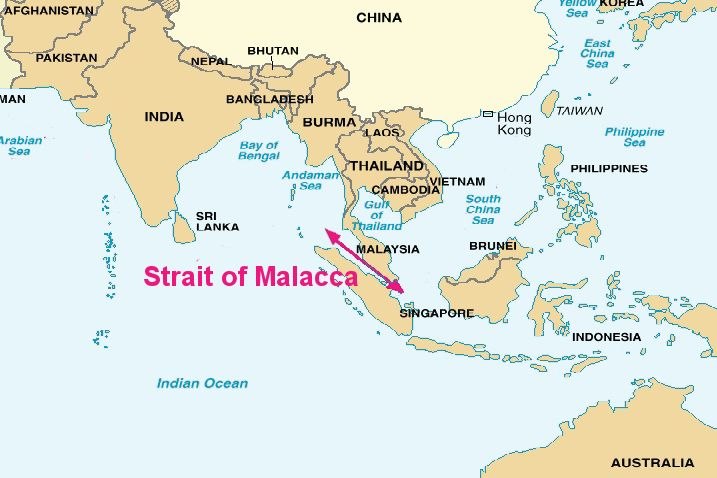
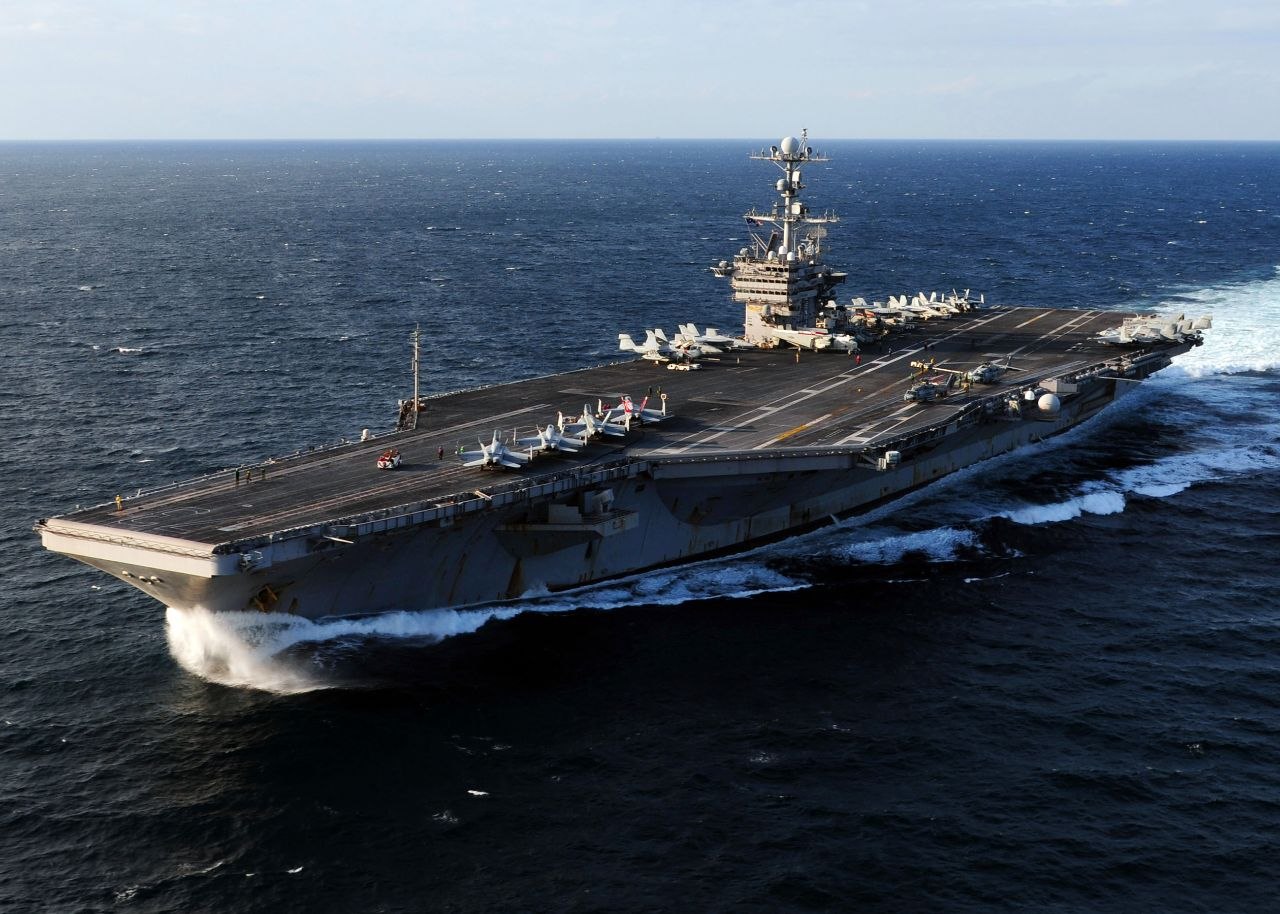
The United States Navy began a strategic redeployment on August 5, 2026, when the Carrier Strike Group (CSG) George Washington left Danang, Vietnam, and entered the Strait of Malacca en route to the Middle East. The move is intended to relieve the USS Abraham Lincoln, which has been reported to be experiencing deteriorating operational conditions. The relocation underscores Washington’s intent to maintain a robust carrier presence in the Gulf region amid heightened geopolitical friction involving Iran and its allies.
US Carrier Strike Group George Washington redeploys to the Middle East
According to GeoPWatch, the CSG George Washington, comprising the nuclear‑powered aircraft carrier, two guided‑missile destroyers, a cruiser, and an embarked air wing, departed Danang on August 5 and transited the heavily trafficked Strait of Malacca before heading northward. The group is expected to arrive in the Arabian Sea by early September, where it will assume the primary carrier‑based deterrence role previously held by the USS Abraham Lincoln. No weapons were reported as being employed during the transit, and no incidents were recorded. The redeployment follows internal Navy assessments that the Abraham Lincoln’s propulsion and flight‑deck systems require extensive maintenance, prompting the decision to rotate a fresh carrier into the theater. Sources cited by GeoPWatch note that this will be the fourth U.S. carrier to operate in the Iran‑related conflict zone since the war began in early 2026.
"The George Washington will replace the Abraham Lincoln to ensure uninterrupted carrier‑based power projection in the Gulf," GeoPWatch reported (https://t.me/GeoPWatch/38480).
UAE accuses Iran of piracy in Strait of Hormuz
On August 14, the United Arab Emirates publicly accused Iran of conducting piracy‑style attacks on two Abu Dhabi National Oil Company (ADNOC) tankers in the Strait of Hormuz, a narrow waterway that separates Oman and Iran and serves as a critical conduit for global oil shipments. The UAE statement, relayed by Al Jazeera, described the incidents as “piracy” and framed them as a direct threat to international energy security. No injuries were reported, and the vessels sustained only minor damage. Iran denied involvement, characterizing the UAE’s claim as unfounded. The incident occurred amid a broader pattern of maritime confrontations in the strait, where both state and non‑state actors have previously threatened the free flow of commerce.
"These attacks constitute piracy and jeopardize the stability of global energy markets," the UAE Ministry of Foreign Affairs said, as cited by Al Jazeera (https://www.aljazeera.com/news/2026/8/14/uae-accuses-iran-of-attacks-on-two-adnoc-vessels-in-strait-of-hormuz).
Coordinated settler attacks in Taybeh, West Bank
In the occupied West Bank, the historic Christian town of Taybeh experienced a series of coordinated attacks by Israeli settlers on the morning of August 14, according to Al Jazeera. The assaults, which involved vandalism, intimidation, and the throwing of stones, targeted homes, churches, and local businesses. No fatalities or serious injuries were reported, but the attacks heightened fear among the town’s roughly 2,000 residents, many of whom are Palestinian Christians. The incidents occurred without any reported use of firearms or explosives. International observers have noted a rise in settler‑initiated violence in the area since the start of the year, citing the lack of effective law‑enforcement response as a contributing factor.
"Fear and attacks grip Taybeh, the last all‑Christian town in the West Bank," Al Jazeera reported (https://www.aljazeera.com/features/2026/8/14/fear-and-attacks-grip-taybeh-the-last-all-christian-town-in-the-west-bank?traffic_source=rss).
Analytical overview
The simultaneous occurrence of these three events illustrates the multi‑dimensional nature of regional instability in mid‑2026. The U.S. Navy’s carrier rotation signals a commitment to sustain power projection capabilities in the Gulf, a move that may deter further Iranian escalation but also risks entangling U.S. forces in a protracted maritime standoff. The UAE’s piracy allegation, while unverified, adds diplomatic pressure on Tehran and could justify a broader coalition response if substantiated. In the West Bank, the settler attacks on Taybeh reflect an ongoing pattern of friction between Israeli settlers and Palestinian civilians, contributing to internal security challenges for the Palestinian Authority and complicating any prospective peace negotiations. Collectively, these developments underscore the importance of monitoring both state‑level military maneuvers and non‑state‑level violence, as each can influence the strategic calculus of regional actors.