The Pentagon’s latest assessment, released by the Jerusalem Post, confirms that United States military operations in 2025 resulted in 153 civilian deaths, marking the deadliest civilian toll attributed to U.S. actions in the region in recent years. The report, cited by senior Pentagon officials, underscores the growing humanitarian cost of American involvement in Middle‑East conflicts and comes as Washington continues to target vessels it labels as "narco‑terrorist" in the Eastern Pacific.
"The civilian casualty figure reflects a sobering reality that must inform future operational decisions," a Pentagon spokesperson told the JPost.
Houthi Attack in Bab al‑Mandeb Claims First Shipping Deaths Since US‑Israel War on Iran
At 03:09 UTC, a Houthi‑launched attack on an Egyptian‑owned vessel transiting the Bab al‑Mandeb Strait killed six crew members, according to Yemen’s government and Al Jazeera. The strike represents the first shipping fatalities linked to the Houthis since the broader US‑Israel conflict with Iran began earlier this year. No specific weapon type was disclosed, but the incident highlights the Red Sea’s vulnerability to militant maritime aggression.
Iranian Missiles and Drones Target Kurdish Positions in Erbil
Iranian forces launched a coordinated missile and drone barrage against Kurdish opposition sites in Erbil, Iraq, at 04:31 UTC, as reported by the Telegram channel monitor_the_situation. The attack employed precision‑guided missiles and unmanned aerial vehicles, though casualty figures were not released. The strike signals Tehran’s willingness to extend cross‑border pressure on Kurdish groups it deems hostile.
Escalation in Southern Lebanon: Explosions and Artillery Use
Israeli forces conducted large‑scale explosive detonations in southern Lebanon at 05:31 UTC, captured on video by monitor_the_situation. Simultaneously, the Israel Defense Forces shelled the Ali al‑Taher ridge with artillery shells and white phosphorus, as documented by GeoPWatch. Both actions intensified cross‑border tensions and raised concerns about the use of incendiary weapons in populated areas.
Alleged Israeli Drone‑Induced Wildfires in Khian
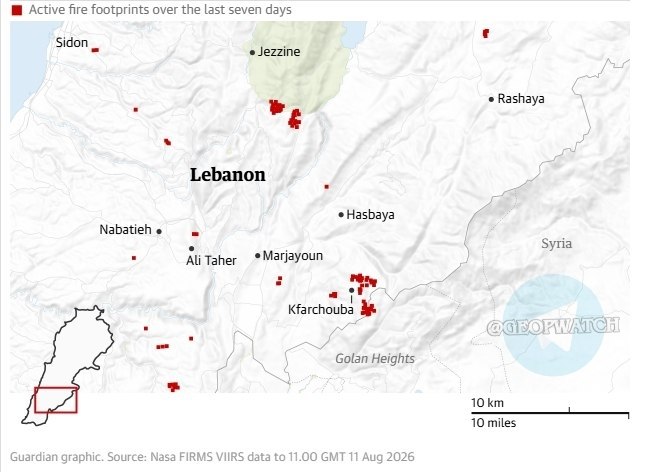
Lebanese sources, cited by GeoPWatch, accused Israeli drones of deliberately igniting wildfires near the town of Khian and subsequently targeting firefighting crews with an armed UAV. The claim, corroborated by local environmental groups and the Lebanese Army’s deconfliction unit, underscores the expanding role of unmanned systems in the conflict’s low‑intensity theater.
West Bank Raids and UN Warning of Breaking Point
Israeli security units carried out simultaneous raids across the West Bank at 04:59 UTC, arresting 23 Palestinians and demolishing the home of a man killed in a July settler confrontation, as reported by Al Jazeera. The United Nations warned the territory is approaching a breaking point, citing the cumulative impact of arrests, demolitions, and settler violence on civilian life.
Charity Raid in Nablus and Additional West Bank Operations
At 05:16 UTC, Israeli forces entered Nablus and two neighboring West Bank towns, targeting a local charity organization, according to monitor_the_situation. No weapons were employed, but the operation reflects a broader pattern of Israeli security sweeps aimed at disrupting perceived support networks for militant activity.
Syrian Islamic Resistance Fires Rockets at Israeli Al‑Jazira Base
Militants of the Islamic Resistance in Syria launched a salvo of 107 mm "Radjir‑1" rockets at Israel’s Al‑Jazira base in southern Syria at 03:11 UTC. The attack, captured on video, was framed as retaliation for recent Israeli incursions that resulted in militant casualties.
Ansarallah Drone and Missile Assault on Saudi‑Backed Forces in Yemen
In Al Bayda, Shabwah, and Hadhramaut provinces, Yemen’s Ansarallah movement employed drones and missiles to strike Saudi‑backed forces, targeting weapons depots, troop concentrations, and command centers at 03:09 UTC. The operation, reported by monitor_the_situation, demonstrates the group’s continued capacity to conduct coordinated high‑impact attacks.
US Naval Interventions: Missile Strike on Panama‑Flagged Cargo Ship and PAC‑3 Intercepts
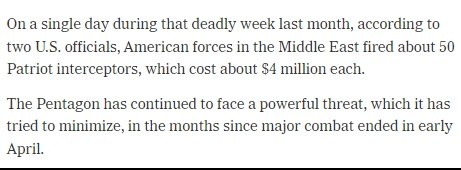
U.S. forces fired missiles to disable a Panama‑flagged cargo vessel attempting to reach an Iranian port, as detailed by Al Jazeera’s live blog. The strike, executed within the Iranian maritime blockade, underscores Washington’s resolve to enforce sanctions and prevent material support to Tehran. Additionally, CENTCOM launched 50 PAC‑3 interceptors on 02 August in response to a recent wave of Iranian ballistic missile launches, highlighting the heightened aerial threat environment.
Implications for Regional Stability
The confluence of Israeli ground and aerial operations, Iranian cross‑border strikes, Houthi maritime aggression, and proactive U.S. naval enforcement creates a multi‑dimensional escalation. Each actor’s actions reinforce a feedback loop of retaliation, raising the risk of broader conflagration across the Levant and the Red Sea corridor.