On 11 August 2026, Ansarullah launched a high‑impact naval attack against a Saudi‑run commercial vessel transiting the Bab el‑Mandeb Strait, killing three crew members, including two Pakistanis. The strike, reported by rnintel at 08:30 UTC, marks the most lethal incident recorded in Yemen’s maritime domain for the day and underscores a widening kinetic envelope that now encompasses aerial, missile, and ground operations.
Maritime Attack and Immediate Aftermath
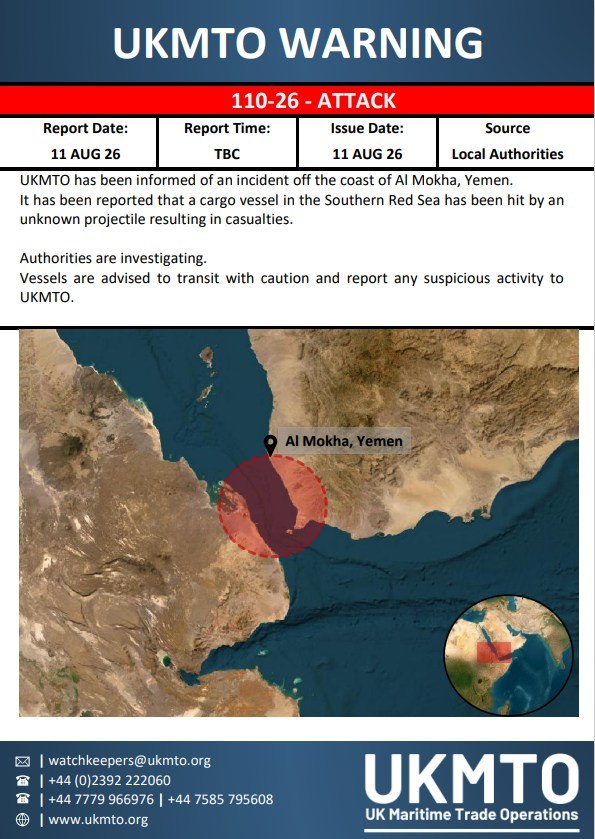
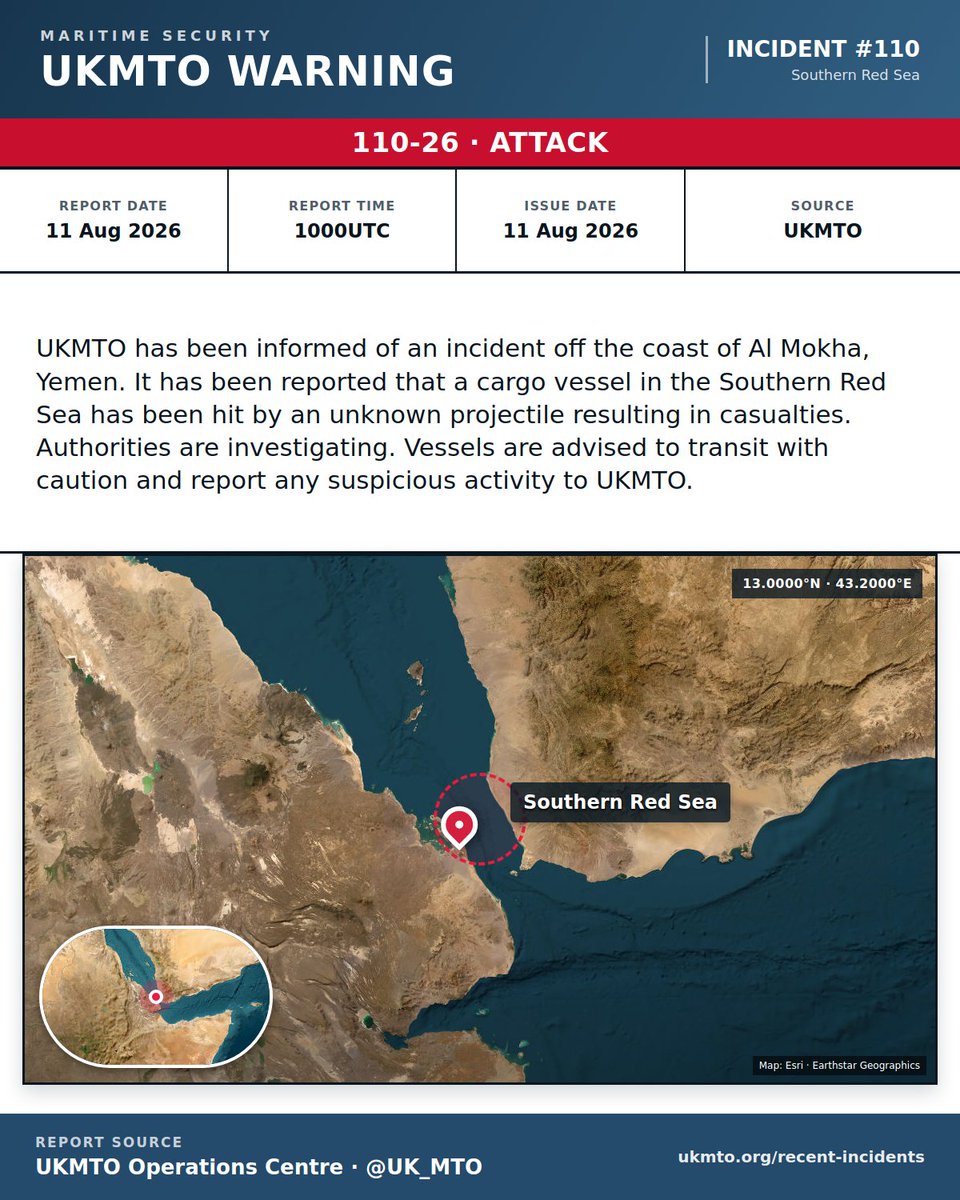
The target, a Saudi‑managed commercial ship, was intercepted in the narrow Bab el‑Mandeb waterway, a chokepoint that handles roughly 20 percent of global oil shipments. According to the source, the vessel suffered no apparent weapon deployment; the attack appears to have been a small‑boat or explosive‑laden craft assault, as no missile or drone was identified in the initial report. The United Kingdom Maritime Trade Operations (UKMTO) later confirmed the incident, noting the death of two Pakistani crew members and one Indonesian national (rnintel, 11:15 UTC). The loss of three seafarers, all foreign nationals, raises immediate concerns for international shipping insurers and underscores the strategic value that non‑state actors place on disrupting Red Sea traffic.
"The vessel 'Tihama' was struck by three ballistic missiles; four crew members were killed," the Yemen Transport Ministry said in a statement regarding a separate incident later that day (GeoPWatch, 14:01 UTC).
While the Bab el‑Mandeb attack was the day’s deadliest, it was quickly followed by a defensive aerial response. At 16:27 UTC, forces of the Yemeni Presidential Leadership Council (PLC), specifically the Tihamah Brigades, reported shooting down an Ansarullah‑operated drone that was attempting a second strike on the same commercial vessel. The drone, described as a loitering munition, was intercepted before it could release its payload, preventing further casualties (rnintel, 16:27 UTC). The PLC’s rapid response demonstrates an evolving capability to counter low‑altitude threats in a congested maritime corridor.
Missile Strikes on Commercial Shipping
Within the same timeframe, the Yemen Transport Ministry confirmed that a Yemeni‑registered commercial ship, the ‘Tihama’, was hit by three Houthi‑launched ballistic missiles in the Bab al‑Mandab area at 14:01 UTC. The strike killed four crew members—three Pakistanis and one Indonesian—and a fourth missile was launched in a “double‑tap” maneuver to hinder rescue operations (GeoPWatch). The use of ballistic missiles against merchant vessels reflects a tactical shift by the Houthi movement, which traditionally relied on anti‑ship missiles and naval mines. The double‑tap tactic, previously observed in the Red Sea, aims to maximize casualties and complicate humanitarian response.
Inland Missile Campaigns
Parallel to the maritime violence, the Houthis expanded their missile campaign inland. At 06:05 UTC, Al Jazeera reported that ballistic missiles were fired at the southern port city of al‑Makha and the central stronghold of Marib. Both locations are strategic: al‑Makha serves as a gateway for humanitarian aid, while Marib hosts the internationally recognized government’s oil infrastructure. No casualty figures were released for these strikes, but the targeting of critical logistics hubs signals an intent to pressure the PLC and its Saudi allies.
Drone Operations Across Eastern Yemen
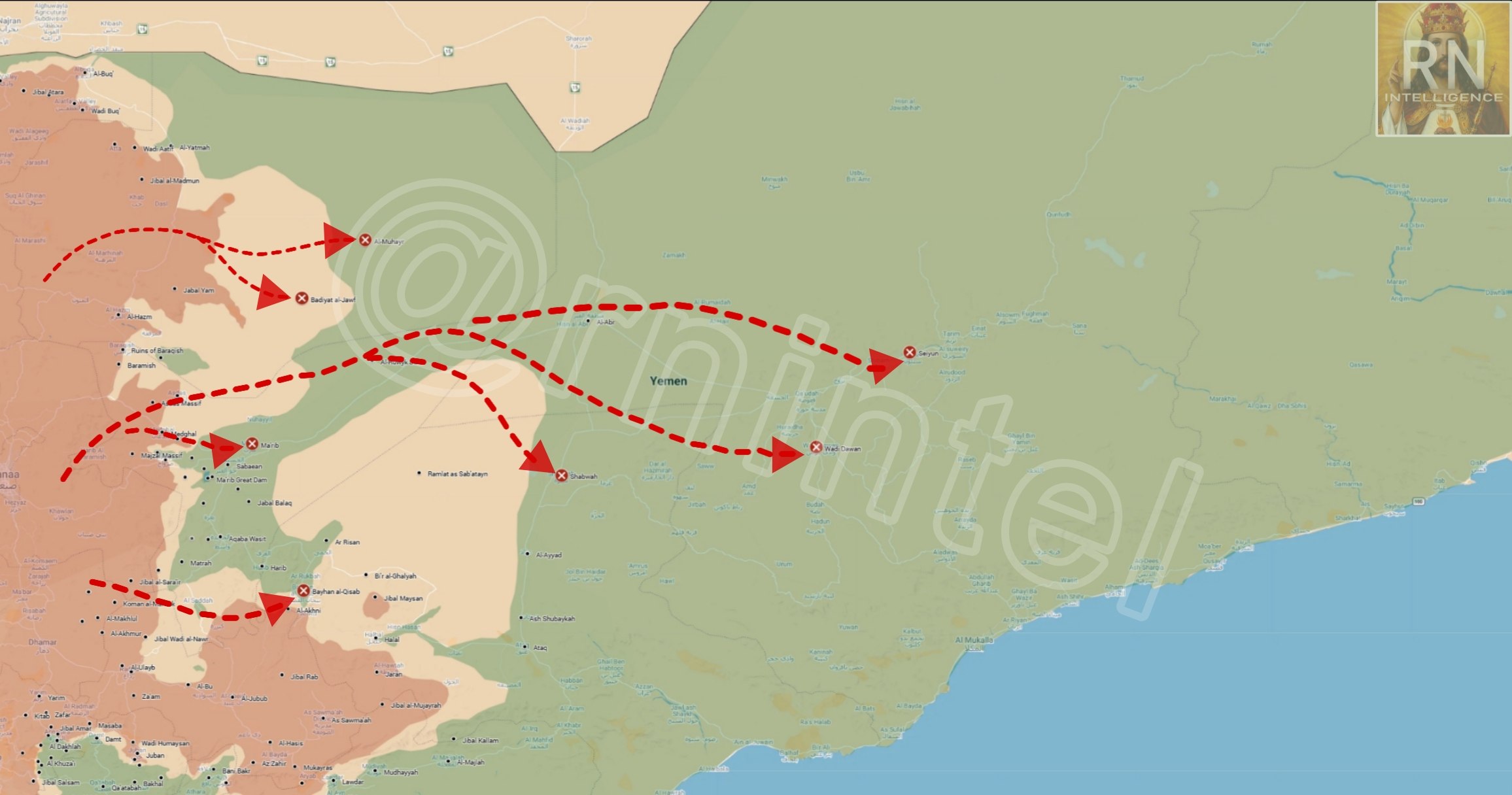
From 12:05 UTC onward, a series of coordinated drone attacks attributed to Ansarullah were observed across eastern Yemen. Drones were reported over Seiyun, Wadi Dawan, the al‑Jawf desert, Shabwah, Maʿrib, and Bayhan al‑Qisab (rnintel, 16:23 UTC). The widespread nature of these incursions suggests a concerted effort to disrupt PLC supply lines and to threaten tribal and government positions in the east. While no direct casualties were reported, the presence of hostile UAVs forced the redeployment of air‑defense assets and limited the movement of ground forces.
Saudi Drone Strikes on Houthi Positions
Saudi Arabia intensified its aerial campaign against Houthi positions in the Saʿda governorate. Two separate drone strikes were launched against al‑Houthi installations in Wadi al‑Mashawwat, Ghumar district, at 12:05 UTC (rnintel) and again at 13:11 UTC (CIG_telegram). Both strikes targeted the same coordinates as attacks conducted two days earlier, indicating a sustained effort to degrade Houthi command and control facilities in a known stronghold. The Saudi strikes were executed using unmanned combat aerial vehicles (UCAVs) equipped with precision‑guided munitions, though casualty numbers were not disclosed.
Ground Engagements and Infiltration Attempts
On the ground, PLC forces reported the capture of several Ansarullah fighters attempting to infiltrate the southern city of Taʿizz from the northeast at 14:11 UTC (rnintel). The operation prevented a potential escalation in the contested Taʿizz region, where control oscillates between PLC and Houthi forces. Later, at 16:34 UTC, an attempted assassination of a senior commander of the Shabwah Emergency Forces was foiled in Shabwah Governorate (rnintel). Although the attack did not result in casualties, it highlights the continued use of targeted killings as a tool of asymmetric warfare.
Assessment of the Day’s Kinetic Landscape
The events of 11 August illustrate a multi‑domain escalation in Yemen’s conflict. Maritime attacks on commercial shipping, combined with aerial interceptions, ballistic missile strikes, and widespread drone activity, demonstrate that both state and non‑state actors are leveraging a broader array of kinetic tools. The Bab el‑Mandeb remains a focal point for strategic disruption, with Ansarullah’s ability to conduct both direct assaults and follow‑up drone attacks indicating a sophisticated operational capacity.
For regional stakeholders, the immediate implications are twofold: first, the heightened risk to international shipping may trigger rerouting of vessels, increased insurance premiums, and potential naval escorts by coalition forces. Second, the inland missile and drone campaigns suggest that the conflict’s intensity is not confined to the Red Sea corridor but is spreading across Yemen’s interior, potentially destabilizing already fragile humanitarian corridors.
Monitoring agencies should prioritize real‑time intelligence sharing on maritime threats, enhance air‑defense coverage in high‑traffic zones, and support PLC ground forces in counter‑infiltration operations. The convergence of naval, aerial, and ground kinetic actions on a single day underscores the need for integrated response mechanisms that can address threats across all domains.