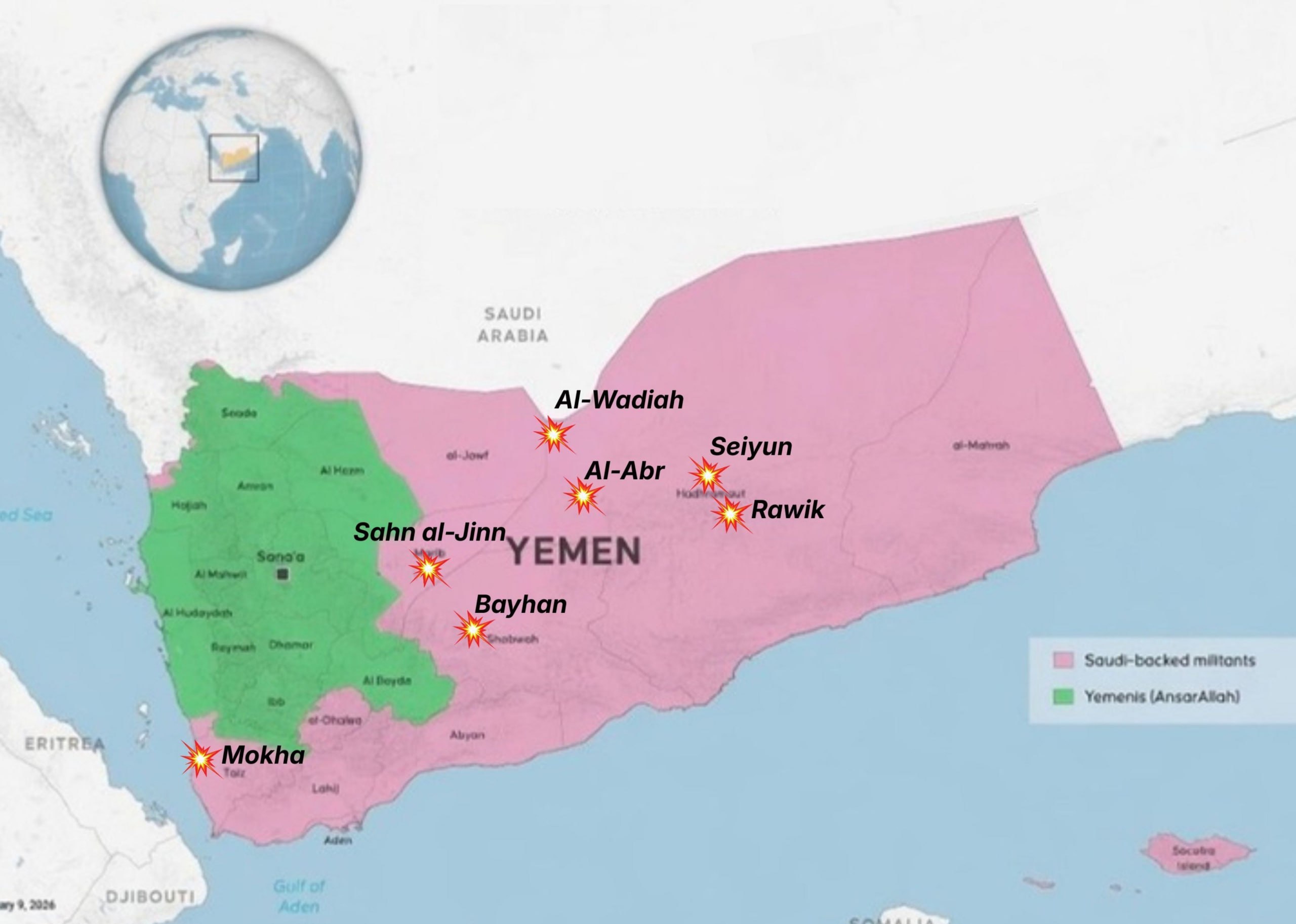
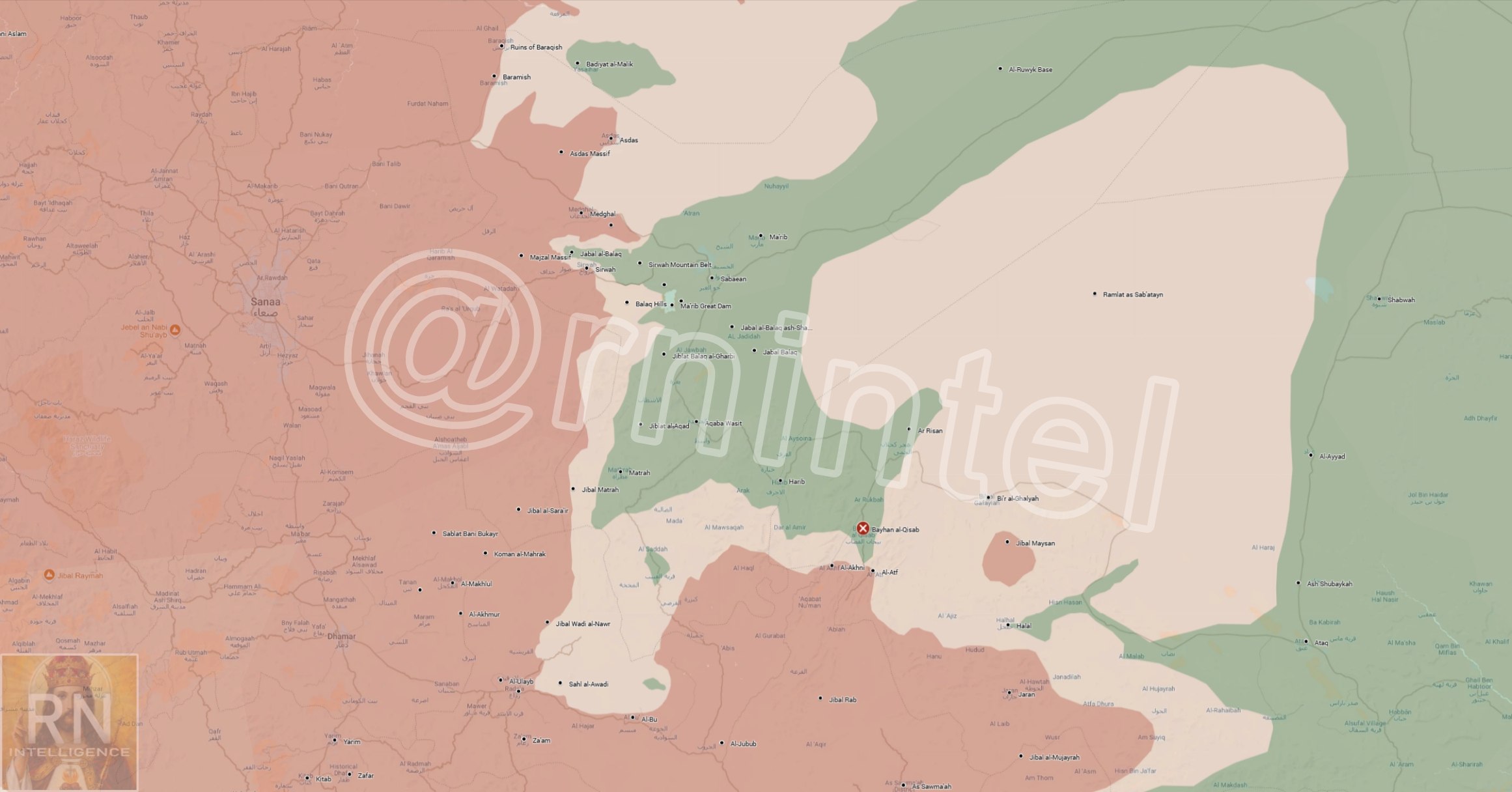
At 17:29 local time on 10 August 2026, forces of Yemen's Presidential Leadership Council (PLC) launched a coordinated rocket and artillery barrage against Ansarullah positions around western Ma'rib, a strategic hub in central Yemen. The strike, reported by rnintel, employed multiple rocket launch systems and conventional artillery, resulting in an estimated 12 combatant casualties among the insurgent ranks, though exact figures remain unverified. The operation underscores the PLC's intent to degrade Ansarullah's foothold in the Ma'rib corridor, a region that has long served as a flashpoint between the PLC and Houthi‑aligned factions.
"Presidential Leadership Council forces attacked Ansarullah positions around western Ma'rib with rockets and artillery," rnintel reported (https://t.me/rnintel/65489).
Air Defense Posturing Over Aden
Within minutes of the Ma'rib strike, at 17:30, the PLC activated air defense systems over Aden, the de‑facto capital of the PLC‑controlled south. Radar installations and surface‑to‑air missile batteries were placed on high alert, a move interpreted as a precaution against potential aerial retaliation from Ansarullah drones that had entered Aden's airspace earlier at 17:17. The rapid succession of these events suggests a tightly coordinated defensive posture aimed at preserving critical infrastructure and civilian safety in the port city.
"Air defenses are active over Aden, Presidential Leadership Council controlled Yemen," rnintel (https://t.me/rnintel/65490).
Ansarullah UAV Incursions
Ansarullah's unmanned aerial vehicles (UAVs) penetrated Aden's airspace at 17:17, a development documented by rnintel. While no hostile payloads were reported, the presence of hostile drones heightened the risk environment and prompted the PLC's immediate air defense activation. The UAVs, likely reconnaissance‑type platforms, signal an expanding operational reach for Ansarullah beyond its traditional strongholds in the north and central highlands.
"Ansarullah drones enter the airspace of Aden, capital of the Presidential Leadership Council controlled Yemen," rnintel (https://t.me/rnintel/65487).
Ground Movements in Southern Yemen
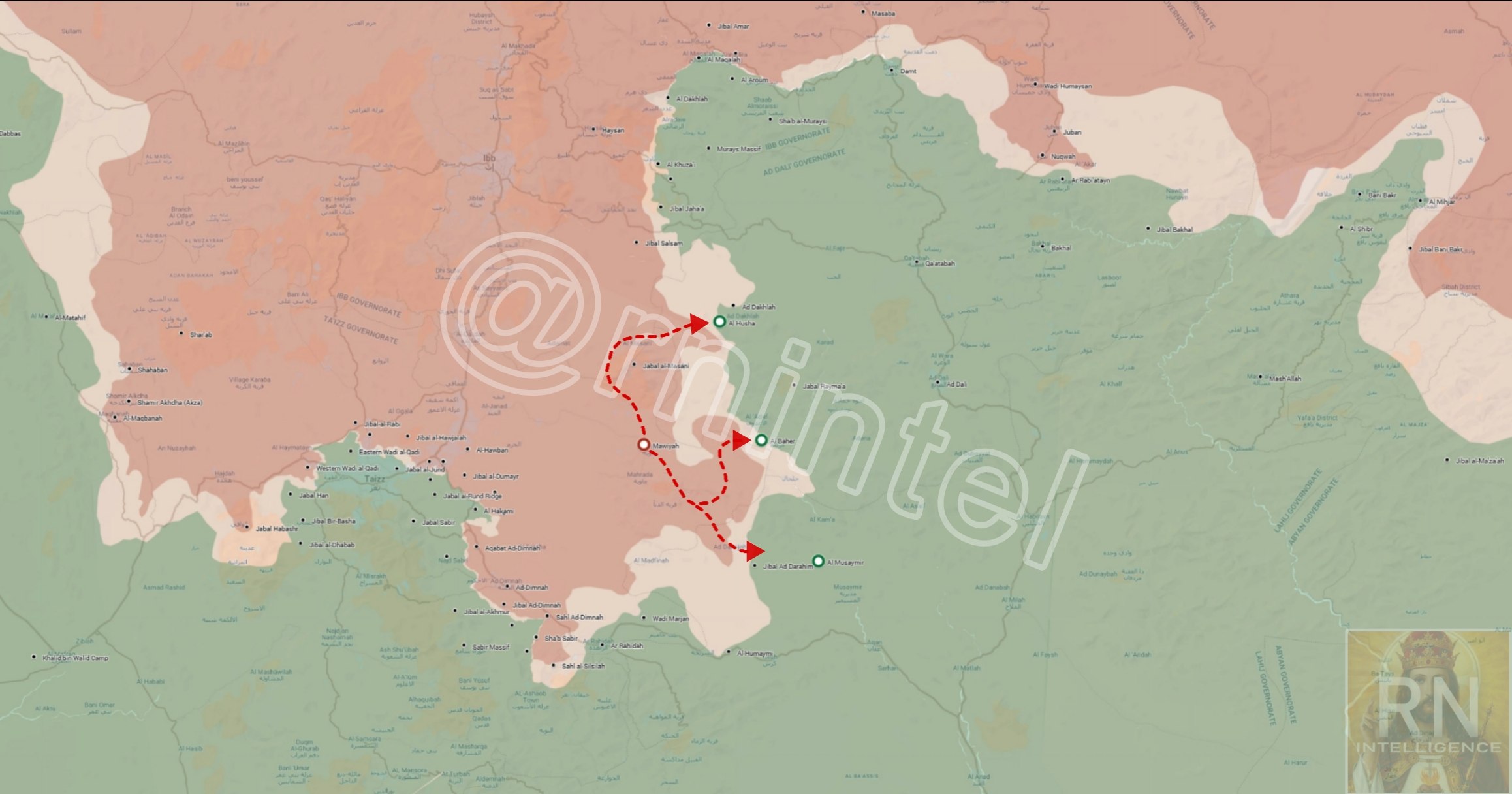
Earlier in the day, at 10:06, large Ansarullah convoys originating from Mawiyah advanced toward frontline positions in al‑Husha, al‑Baher, and al‑Musaymir along the Ad Dali axis. The movement, captured by rnintel, involved multiple vehicle columns but did not include direct combat engagement at the time of reporting. The convoys' trajectory places them in proximity to Southern Transitional Council (STC) controlled territories, raising the prospect of future clashes on the southern front.
"Large Ansarullah convoys from Mawiyah are moving towards the frontline positions in al‑Husha, al‑Baher and al‑Musaymir - Ad Dali direction, Southern Transitional Council controlled southern Yemen," rnintel (https://t.me/rnintel/65475).
Yemeni Armed Forces Counter‑Offensive
At 08:21, the Aden‑based Yemeni Armed Forces (YAF) initiated attacks on Ansarullah positions along both the Ma'rib and Ad Dali fronts. The YAF operation, reported by rnintel, involved infantry assaults supported by indirect fire, though specific weapon systems were not disclosed. This simultaneous pressure on two axes reflects a broader PLC strategy to stretch Ansarullah's defensive capacity and prevent consolidation of insurgent forces in either theater.
Shelling of Bayhan al‑Qisab
Multiple artillery shelling incidents targeted Bayhan al‑Qisab, a locality in the Maʿrib direction of central Yemen, throughout the day. The first reported at 09:13 by rnintel and a second at 10:51 by CIG_telegram both attribute the bombardments to Ansarullah forces against positions held by the pro‑Aden Shabwah Emergency Forces. While casualty numbers were not released, the repeated shelling indicates a sustained effort to disrupt the emergency forces' logistical corridors and command structures in the region.
Both reports note the use of conventional artillery, with no mention of precision‑guided munitions, suggesting reliance on legacy Soviet‑era howitzers and mortars that remain prevalent among Yemen's armed groups.
Attack on Saudi‑Backed Soldiers in Bayhan
At 15:19, Ansarallah (alternative spelling of Ansarullah) carried out a targeted attack in Bayhan, resulting in the death of at least two Saudi‑backed soldiers. The incident, documented by CIG_telegram, underscores the ongoing involvement of Saudi‑aligned forces in Yemen's internal conflicts and highlights the vulnerability of foreign‑supported units operating in contested zones.
"Ansarallah attacked Bayhan in Yemen, killing at least two Saudi-backed soldiers," CIG_telegram (https://t.me/CIG_telegram/82006).
Operational Context and Implications
The clustering of kinetic events on 10 August illustrates a marked escalation in both offensive and defensive postures among Yemen's principal actors. The PLC's use of rockets and artillery against Ansarullah in Ma'rib aligns with a broader campaign to secure the central corridor that links the capital, Sana'a, to the southern port of Aden. Control of this axis is vital for the movement of supplies, personnel, and potential foreign aid.
Ansarullah's UAV incursions and artillery shelling demonstrate an adaptive strategy that blends conventional firepower with emerging aerial capabilities. While the drones observed over Aden did not deliver munitions, their presence serves a reconnaissance function that can inform subsequent targeting cycles.
Ground movements by Ansarullah convoys toward STC‑held territories raise the risk of a multi‑front confrontation that could draw the STC deeper into the conflict, potentially complicating the already fragile power‑sharing arrangement established under the Riyadh Agreement.
Potential Trajectory
Given the intensity of today's engagements, analysts anticipate a continuation of high‑tempo operations across the Ma'rib and Ad Dali fronts. The PLC is likely to sustain artillery and rocket fire to degrade Ansarullah's defensive positions, while Ansarullah may respond with increased UAV activity and targeted shelling of PLC‑aligned forces. The activation of air defenses over Aden suggests that the PLC is prepared to counter any escalation involving aerial assets, which could include more sophisticated drone attacks or, in a worst‑case scenario, low‑altitude aircraft incursions.
Monitoring of casualty reports, ammunition resupply lines, and external support—particularly from Saudi Arabia and the United Arab Emirates—will be essential to gauge the conflict's trajectory over the coming weeks.