On August 6, 2026, a series of coordinated and high‑intensity military actions unfolded across the Middle East, Eastern Europe and the Gulf, marking one of the most volatile days of the year. The incidents ranged from ground combat in southern Lebanon to a massive U.S. missile barrage against Iran, a large‑scale Russian aerial campaign over Kyiv, and renewed naval posturing in the Strait of Hormuz. Collectively, these events illustrate a rapid escalation of hostilities that could reshape regional security calculations.
Israeli Soldiers Killed in Southern Lebanon Triggers Immediate IDF Response
Two Israeli Defense Forces (IDF) soldiers were killed and four more were seriously injured during a cross‑border incident in southern Lebanon, according to the Jerusalem Post. The IDF confirmed that the casualties occurred during a Hezbollah‑initiated attack that violated a fragile cease‑fire. Within hours, Israeli air assets struck multiple Hezbollah positions in the area, targeting command‑and‑control facilities and ammunition depots. The rapid retaliation underscores Israel’s doctrine of swift, proportional response to any breach of its northern frontier.
"The IDF has struck Hezbollah targets in response to the terror group’s ceasefire violations," the Israeli military statement read, emphasizing the need to restore deterrence.
Casualties on the Lebanese side were not disclosed, but the incident raises the risk of a broader escalation between Israel and Hezbollah, a dynamic closely monitored by regional actors and international observers.
Fragmentation Grenade Explosion in Northern Tel Aviv
At approximately 05:41 local time, a suspected fragmentation grenade was thrown at a residential tower in northern Tel Aviv, causing a localized explosion that rattled nearby neighborhoods. Israeli police opened a criminal investigation, treating the incident as a terrorist act. No fatalities were reported, but several residents sustained minor injuries and the building suffered structural damage. The Jerusalem Post noted that the incident reflects a growing pattern of low‑level attacks within Israeli urban centers, complicating domestic security efforts.
U.S. Army Launches Over 1,300 Tactical Ballistic Missiles at Iran
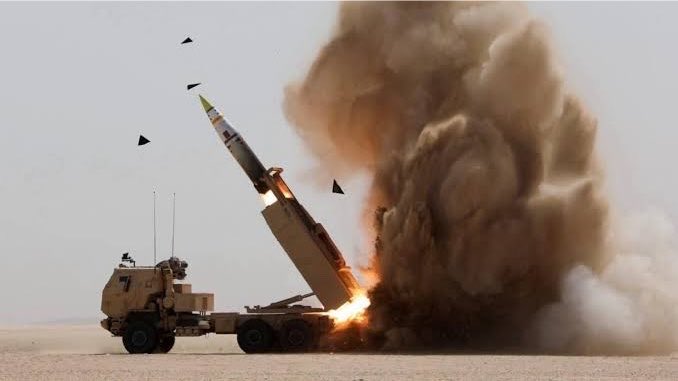
In a unprecedented display of firepower, the United States Army reportedly fired more than 1,300 tactical ballistic missiles at Iranian targets, as detailed by the Telegram channel monitor_the_situation (source). The missile salvo, described as part of a broader campaign against Iran’s missile infrastructure, was executed from multiple launch sites across the Middle East. While official U.S. defense spokespeople have not yet released a formal statement, the scale of the operation suggests an intent to degrade Iran’s strategic missile capabilities and to signal resolve amid ongoing tensions over Tehran’s regional activities.
"The Army launched more than 1,300 tactical ballistic missiles at Iran during the war, highlighting the scale of the campaign," a U.S. official told the Washington Post.
No immediate Iranian casualties were reported, but the strikes are expected to prompt a retaliatory response, potentially heightening the risk of a broader confrontation.
Iran Fires Warning Shots at Tanker in Strait of Hormuz
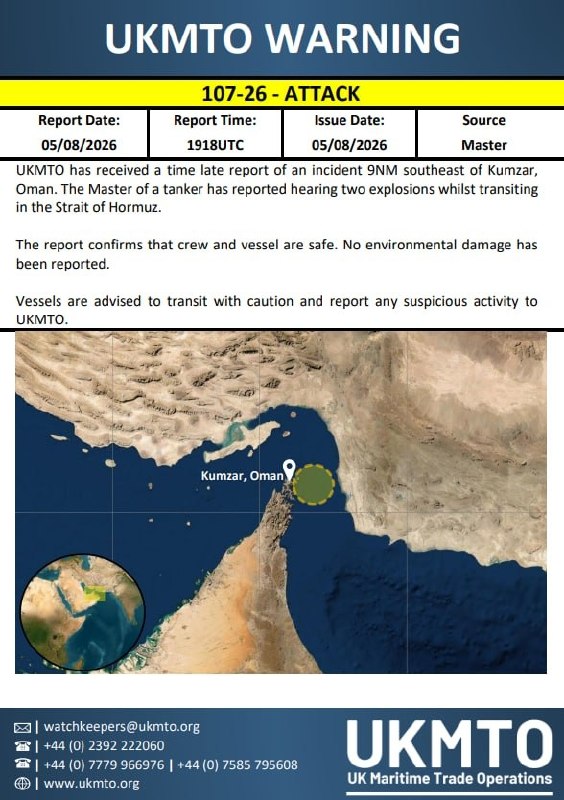
At 01:23 GMT, Iranian forces fired two missile‑like explosions near a commercial tanker transiting the Strait of Hormuz, according to the monitoring channel GeoPWatch (source). The blasts were identified as warning shots; the vessel sustained no damage and the crew remained unharmed. The incident occurred despite diplomatic overtures suggesting a possible breakthrough in negotiations over the strait’s security. Iran’s action underscores its willingness to assert control over this critical maritime chokepoint, a move that could affect global oil flows.
Russia Unleashes Massive Missile and UAV Barrage on Kyiv
Between 00:50 and 02:00 GMT, Russian forces launched a coordinated attack on Kyiv, deploying four 3M22 Zircon/Oniks hypersonic missiles, 24 Iskander‑M missiles, and a fleet of 115 strike UAVs, including Shahed, Gerbera, Italmas and “Parodiya” decoy drones. The Ukrainian Air Force reported that none of the incoming missiles were intercepted (intelslava). While Ukrainian officials confirmed no civilian fatalities, the sheer volume of ordnance caused extensive infrastructure damage, including to power substations and communication nodes.
"This is what Kyiv looked like last night," the source caption read, accompanied by video footage of the city illuminated by missile trails.
The attack reflects Russia’s continued reliance on high‑precision, high‑speed weapons to pressure Ukraine’s capital, while also testing the limits of Kyiv’s air‑defense systems.
Iran‑Oman Agreement on Hormuz Shipping Routes Amid Houthi Attacks
In a parallel diplomatic development, Iran and Oman announced an agreement to formalize shipping lanes through the Strait of Hormuz, aiming to reduce commercial disruptions. The deal was reported by Al Jazeera (source) and coincided with Houthi forces launching attacks on Saudi‑flagged tankers. Simultaneously, Israel conducted airstrikes against Hezbollah positions in Lebanon, adding further complexity to the regional security environment.
The agreement, while limited in scope, signals a willingness among Gulf states to mitigate the economic fallout of ongoing hostilities. However, the concurrent Houthi attacks demonstrate that non‑state actors remain capable of exploiting security gaps.
Ukrainian Drone Strikes Russian Refinery in Yaroslavl
At 03:41 GMT, a Ukrainian‑operated drone reportedly struck a refinery in Yaroslavl, Russia, generating a large plume of smoke visible from satellite imagery (GeoPWatch). Although the exact damage assessment is pending, the incident marks a notable escalation in the use of unmanned aerial systems for deep‑strike operations inside Russian territory. The attack aligns with a broader pattern of Ukrainian drone activity targeting critical energy infrastructure.
While no casualties were confirmed, the visual evidence of a sustained smoke column underscores the potential for environmental and economic impacts.
Collectively, these events illustrate a day of heightened kinetic activity across multiple theaters, with state and non‑state actors employing a range of conventional and advanced weaponry. The convergence of ground combat, urban terrorism, large‑scale missile launches, naval posturing and drone warfare suggests a trajectory toward greater volatility, demanding close monitoring by regional security analysts and policymakers.