On 3 August 2026, Iran and the United States recorded a series of kinetic events that underscore the escalating tension in the Persian Gulf region. The most consequential development was the Islamic Revolutionary Guard Corps (IRGC) claiming to have shot down a United States MQ‑9 Reaper drone over the Strait of Hormuz, a direct engagement that raises the risk of further military confrontation. Within hours, the United States demonstrated its own power projection by deploying an F‑35C stealth fighter from the aircraft carrier USS Abraham Lincoln as part of a broader naval blockade of Iranian maritime traffic. Simultaneously, satellite imagery confirmed that Iran has resumed tunnelling work at the Alborz missile city northwest of Tehran, indicating continued investment in its strategic missile infrastructure.
IRGC Intercepts US MQ‑9 Reaper Drone
At 09:06 UTC, the IRGC announced that its air‑defence units successfully engaged and destroyed a US‑operated MQ‑9 Reaper unmanned aerial vehicle (UAV) over the Strait of Hormuz, a chokepoint that handles roughly one‑fifth of global oil shipments. The drone, a high‑altitude, long‑endurance platform typically used for surveillance and precision strikes, was reportedly intercepted by surface‑to‑air missiles launched from an IRGC‑controlled site on the Iranian side of the strait. No casualties were reported on either side, and the US has not yet issued an official statement confirming the loss.
"Iran's IRGC claims to have shot down a US MQ‑9 Reaper drone over the Strait of Hormuz, marking a direct kinetic engagement between the two nations' assets." – monitor_the_situation, 2026‑08‑03
The incident represents a rare instance of a state‑level kinetic response to a US UAV in the Persian Gulf since the 2020 Khorasan incident. The MQ‑9, equipped with a suite of electro‑optical/infrared sensors and the capacity to carry precision‑guided munitions, is a critical asset for US intelligence, surveillance, and reconnaissance (ISR) operations. Its loss could impair real‑time monitoring of Iranian naval movements and missile tests, potentially prompting the US to reassess its ISR posture in the region.
Strategically, the IRGC’s claim serves multiple purposes: it signals operational capability to domestic audiences, deters further US surveillance flights, and provides a propaganda tool for Tehran’s narrative of resistance against perceived external aggression. The event also raises questions about the rules of engagement governing US UAV flights in contested airspace, especially given the proximity of the strait to Iranian territorial waters.
US Navy Deploys F‑35C from USS Abraham Lincoln
At 11:22 UTC, U.S. Central Command released a video showing an F‑35C Lightning II taking off from the deck of the nuclear‑powered aircraft carrier USS Abraham Lincoln (CVN‑72). The carrier, operating in the Arabian Sea off the Iranian coast, is part of a task force tasked with enforcing a naval blockade of all ship traffic originating from Iran. The F‑35C, the carrier‑based variant of the Joint Strike Fighter, is equipped with advanced stealth coatings and sensor fusion capabilities, enabling it to conduct air‑to‑air, air‑to‑ground, and intelligence missions.
"U.S. Central Command published a video of a F‑35C taking off from the USS Abraham Lincoln (CVN‑72) as part of its task of blockading all ship traffic coming from Iran." – CIG_telegram, 2026‑08‑03
Observers noted visible rust on the aircraft’s skin, attributing it to the corrosive salty environment of the Arabian Sea. While the rust does not immediately compromise flight safety, it highlights the logistical challenges of operating high‑technology stealth platforms in harsh maritime conditions. The presence of the F‑35C underscores the US intent to maintain air superiority and to deter any Iranian attempts to breach the blockade, which aims to restrict the export of oil and dual‑use materials deemed to support Iran’s missile and nuclear programs.
The deployment also reflects the broader US strategy of power projection through carrier strike groups, which combine air, surface, and subsurface assets to enforce maritime security objectives. The F‑35C’s stealth characteristics enable it to operate at low observable levels, complicating Iranian air‑defence detection and response. However, the public release of the launch video serves a dual purpose: it signals resolve to Iranian authorities while also informing domestic and allied audiences of the US commitment to regional stability.
Resumption of Tunnelling at Alborz Missile City
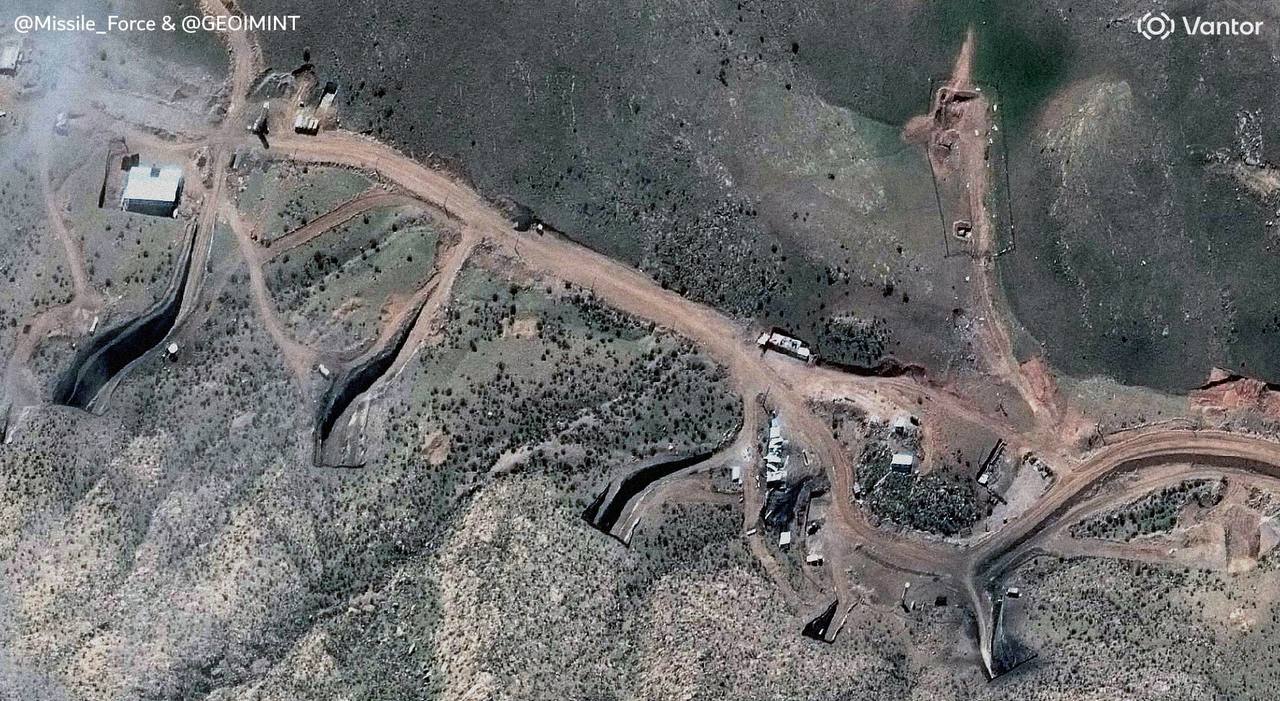
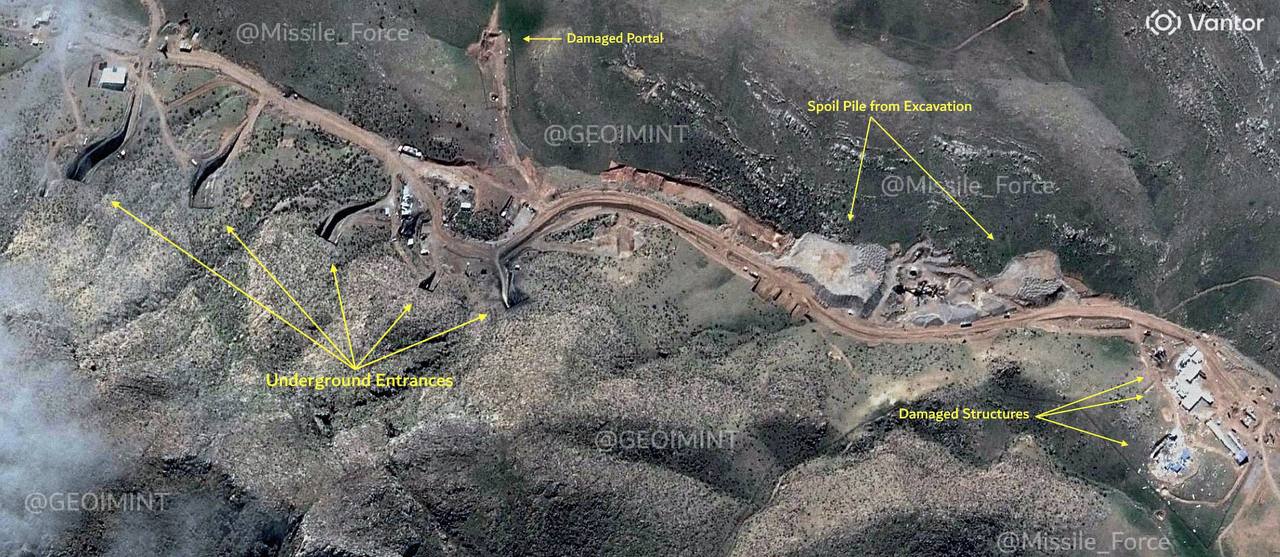
Satellite imagery released at 11:08 UTC by the open‑source monitoring group Vantor shows renewed construction activity at the Alborz missile city, located in the mountainous region northwest of Tehran. The site, first identified in 2024, is Iran’s newest missile development complex, featuring underground tunnels designed to protect launch facilities and missile storage from aerial strikes. The latest images reveal excavation equipment operating within the tunnel network, indicating a restart of tunnelling work after a period of inactivity.
"New satellite imagery revealed Iran has resumed work on the Alborz missile city. Recent imagery published by Vantor shows that Iran has resumed tunnelling work at a missile city northwest of the capital, Tehran." – CIG_telegram, 2026‑08‑03
While no weapons were directly observed in the imagery, the resumption of construction suggests Iran is continuing to expand its ballistic missile capabilities, potentially enhancing the survivability of its arsenal against pre‑emptive strikes. The Alborz complex is believed to support a range of missile types, including short‑range rockets and medium‑range ballistic missiles, which could be integrated into Iran’s layered deterrence strategy.
The timing of the construction activity, coinciding with the US naval blockade and the drone interception, may indicate a coordinated effort by Tehran to reinforce its strategic assets while simultaneously projecting a narrative of resilience. The underground nature of the tunnels complicates external monitoring and raises concerns for regional actors about the opacity of Iran’s missile development program.
Implications and Outlook
The convergence of these three kinetic events on a single day illustrates a heightened state of military readiness on both sides of the Persian Gulf. The IRGC’s claimed drone shootdown demonstrates a willingness to engage US assets directly, while the US carrier‑based F‑35C launch signals a robust response aimed at maintaining maritime dominance and enforcing economic pressure through a blockade. Concurrently, Iran’s continued investment in missile infrastructure underscores a long‑term strategic calculus that prioritizes deterrence and survivability.
For policymakers, the immediate priority is to manage escalation risks. The loss of a high‑value ISR platform could prompt the US to increase aerial patrols or consider retaliatory measures, potentially spiraling into broader conflict. Conversely, Iran may leverage the drone incident domestically to bolster support for its defence posture. Monitoring subsequent statements from the US Department of Defense and the IRGC will be essential to gauge intent.
In the longer term, the resumption of tunnelling at Alborz suggests that Iran’s missile development trajectory remains on schedule, despite international sanctions and previous air strikes. This development may influence future negotiations on Iran’s missile program and could affect the calculus of regional security arrangements, including the role of Gulf Cooperation Council (GCC) states and NATO’s Mediterranean‑Middle East initiatives.