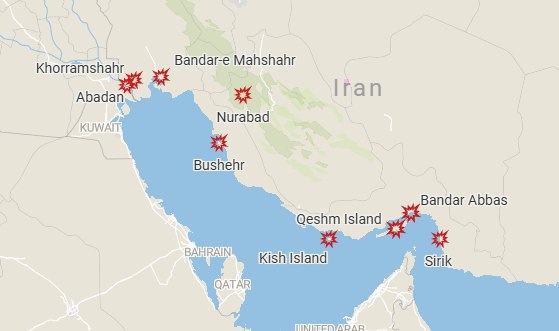
The United States Central Command (CENTCOM) launched a multi‑target airstrike campaign on 30 July 2026, striking Iranian islands and coastal cities including Qeshm, Kish, Bandar Abbas, Bushehr, Noorabad and Sirik. The operation was framed as a direct retaliation for Iran’s ballistic missile launch against U.S. installations in Jordan earlier in the week. No civilian casualties were immediately confirmed, but the breadth of the strikes underscores a significant escalation in kinetic activity within Iran’s territory.
US CENTCOM Airstrike Campaign
At 00:28 UTC, CENTCOM announced the commencement of a “new wave of airstrikes” targeting strategic infrastructure and military installations across the Hormozgan and Bushehr provinces. The strikes employed precision‑guided munitions delivered from carrier‑based aircraft and long‑range bombers. According to the Telegram channel monitor_the_situation, the targets comprised air defense sites, radar installations and logistical hubs on Qeshm Island, Kish Island, the port city of Bandar Abbas, the oil‑rich Bushehr region, the coastal town of Noorabad and the fishing port of Sirik.
"US Launches Airstrikes on Iranian Islands and Cities" – monitor_the_situation, 30 July 2026, https://t.me/monitor_the_situation/26444
While the official statements did not disclose casualty figures, local media reported explosions in Bandar Abbas, Abu Musa, Kish and Qeshm shortly after the strikes began, suggesting the use of high‑explosive bombs. Press TV, cited by the JPost, confirmed audible detonations in the southern cities, though it did not attribute specific damage to any civilian structures.
Strait of Hormuz Rocket Engagement
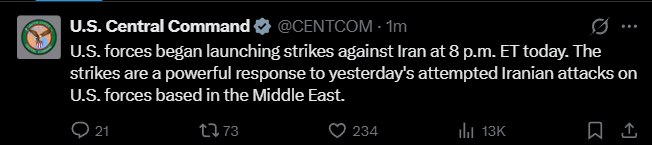
Simultaneously, U.S. forces engaged Iranian assets in the Strait of Hormuz, launching missile strikes from naval platforms at 20:00 ET (00:00 UTC). The engagement, reported by monitor_the_situation, involved the firing of multiple missiles aimed at Iranian vessels and coastal batteries positioned in the narrow waterway separating Iran and Oman. The operation was described as a “powerful response” to an attempted Iranian attack on U.S. forces in the region.
"US Launches Strikes Against Iran in Middle East" – monitor_the_situation, 30 July 2026, https://t.me/monitor_the_situation/26443
No ships were reported sunk, and the Iranian side did not confirm any losses. The incident highlights the strategic importance of the Strait, a chokepoint for global oil shipments, and the willingness of both sides to employ kinetic force to assert control.
Southwest Iran Air and Missile Strikes
Following the initial wave, additional U.S. air and missile attacks were recorded across southwestern Iran. At 00:17 UTC, a coordinated strike hit Ahvaz in Khuzestan Province, employing both air‑delivered bombs and cruise missiles. Subsequent reports from monitor_the_situation and CIG_telegram documented strikes near Arvandkenar, Shadegan and the Golestan Highway corridor in Ahvaz, where explosions caused a localized power outage.
"US Launches Major Airstrikes on Southwest Iran" – monitor_the_situation, 30 July 2026, https://t.me/monitor_the_situation/26441
These operations were described as “near‑simultaneous” and aimed at degrading Iran’s air defense network and command‑and‑control facilities. While Iranian state media did not release casualty numbers, eyewitness accounts on social platforms indicated damage to infrastructure and the trapping of two civilians under rubble in a residential building on Qeshm Island.
"US Strike Traps Two Under Rubble in Iran's Qeshm" – monitor_the_situation, 30 July 2026, https://t.me/monitor_the_situation/26448
Explosions and Ground Impacts Across Southern Iran
Throughout the day, a series of explosions were reported in multiple southern Iranian locales, including Bandar Abbas, Borazjan (Bushehr Province), Lar (Fars Province), and Kish Island. Sources such as intelslava, rnintel and GeoPWatch noted that the blasts were linked to the ongoing U.S. strike campaign, though some reports described the causes as “unknown.” The explosions on Qeshm Island were powerful enough to cause fluctuations in the regional electrical grid, indicating the use of high‑yield ordnance.
"Explosions reported in Kazaroun and Lar in Fars Province and on Qeshm Island, causing electrical grid fluctuations" – intelslava, 30 July 2026, https://t.me/intelslava/91747
In Ahvaz, a large explosion near the Golestan Highway at approximately 04:49 local time resulted in a temporary power outage, corroborated by multiple local observers. No fatalities were confirmed, but the repeated nature of these incidents suggests a sustained kinetic pressure on Iran’s southern infrastructure.
Regional Reactions and Interceptions
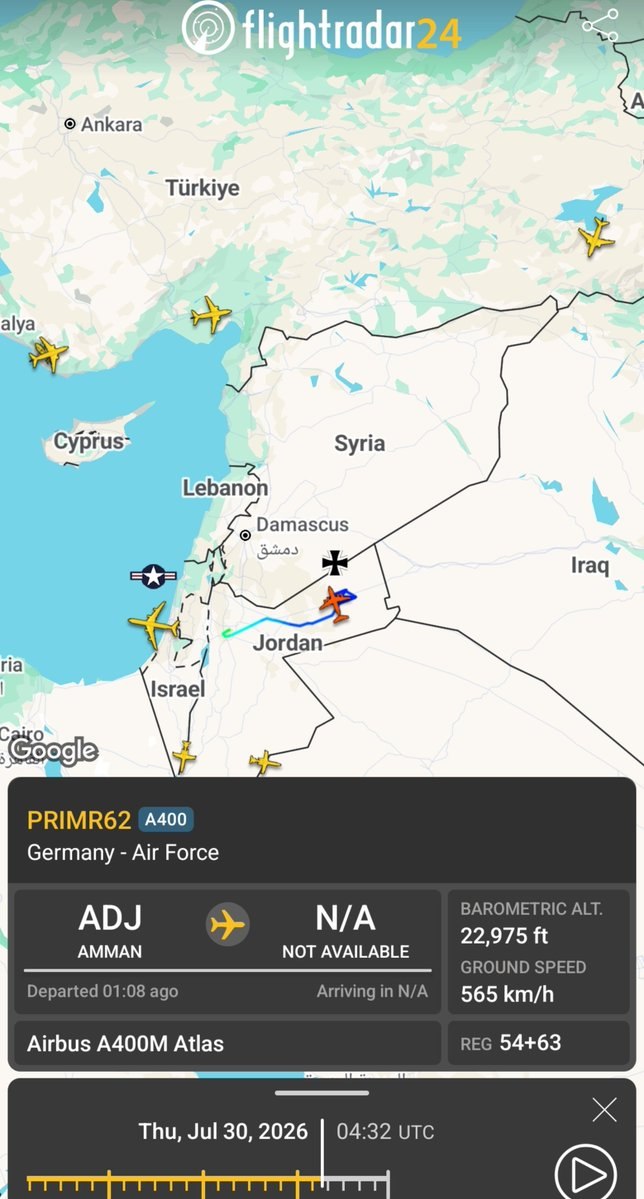
Iran’s missile launches toward Jordan prompted a rapid multinational interception response. German and French fighter jets, refueled by A400M transport aircraft, intercepted ballistic missiles over eastern Jordan, preventing potential strikes on U.S. bases at Muwaffaq Salti Air Base. The interceptions were documented by monitor_the_situation and featured in a photo release showing the allied aircraft in formation.
"German and French fighter jets intercepted ballistic missiles over eastern Jordan" – monitor_the_situation, 30 July 2026, https://t.me/monitor_the_situation/26466
Iran also attempted missile attacks on U.S. installations in Jordan, with several projectiles intercepted by Jordanian air defenses, as reported by the CIG Telegram channel.
"Iranian missiles were intercepted over Jordan as they targeted Muwaffaq Salti Air Base" – CIG_telegram, 30 July 2026, https://t.me/CIG_telegram/81333
These defensive actions underscore the broader regional dimension of the kinetic events, involving NATO allies and highlighting the risk of further escalation.
Overall, the July 30 kinetic episode represents the most concentrated use of airpower and missile systems against Iranian territory in 2026, with multiple domains—air, sea, and land—engaged in a coordinated campaign. While casualty reports remain limited, the extensive damage to infrastructure and the demonstrated capability to strike deep within Iran’s strategic zones mark a notable shift in the operational tempo of the U.S.–Iran confrontation.