The most consequential event of July 30, 2026, was a United States airstrike on Qeshm Island in Hormozgan Province that killed three civilians, including a family of three. The strike, reported by Al Jazeera, is part of the second phase of the ongoing U.S. campaign against Iran and marks a clear escalation in kinetic operations on Iranian territory.
"The US resumes bombing Iran, with a family of three killed in Qeshm Island." – Al Jazeera video feed, 14:56 UTC.
The attack employed conventional bombs delivered from aircraft operating out of undisclosed bases. While the United States has not released an official casualty breakdown beyond the three civilian deaths, the incident underscores the heightened risk to non‑combatants in the vicinity of military targets.
Chronology of Kinetic Events on July 30
Following the Qeshm Island strike at 14:56, a second airstrike was observed over Ahvaz, the capital of Khuzestan Province, at 14:58. Satellite and on‑the‑ground footage captured a large plume of smoke rising from the city, indicating a high‑explosive impact. Al Jazeera reported no immediate casualty figures for this incident, but the visual evidence confirms that the strike caused significant structural damage.
Earlier in the day, at 09:49, the United States launched missile attacks on multiple sites in Iran, including the Bushehr coastal region. Jordanian air defenses intercepted several of the inbound missiles, preventing further damage on Iranian soil. The Islamic Revolutionary Guard Corps (IRGC) publicly vowed retaliation, raising the prospect of a broader regional confrontation.
"Jordan said it intercepted missiles shortly after the US struck Iranian sites including Qeshm and Bushehr." – Al Jazeera report, 09:49 UTC.
At 07:24, a separate airstrike targeted Qeshm Island again, causing extensive damage to infrastructure. While the earlier 14:56 strike focused on a civilian dwelling, the 07:24 operation appears to have been directed at a strategic installation, though the precise target remains unconfirmed.
Naval activity intensified in the Strait of Hormuz at 07:01. Iran admitted to violating Omani territorial waters by blocking two oil tankers, striking one of them and igniting a fire on board. The incident, reported by the Russian‑language intelligence channel rnintel, represents a rare overt use of force against commercial shipping in the narrow waterway.
"Iran has acknowledged violating Oman's territorial sovereignty after preventing two oil tankers from transiting the Strait of Hormuz via Omani water‑spaces. According to Iranian statements, one of the tankers was also struck during the incident, resulting in a fire onboard." – rnintel, 07:01 UTC.
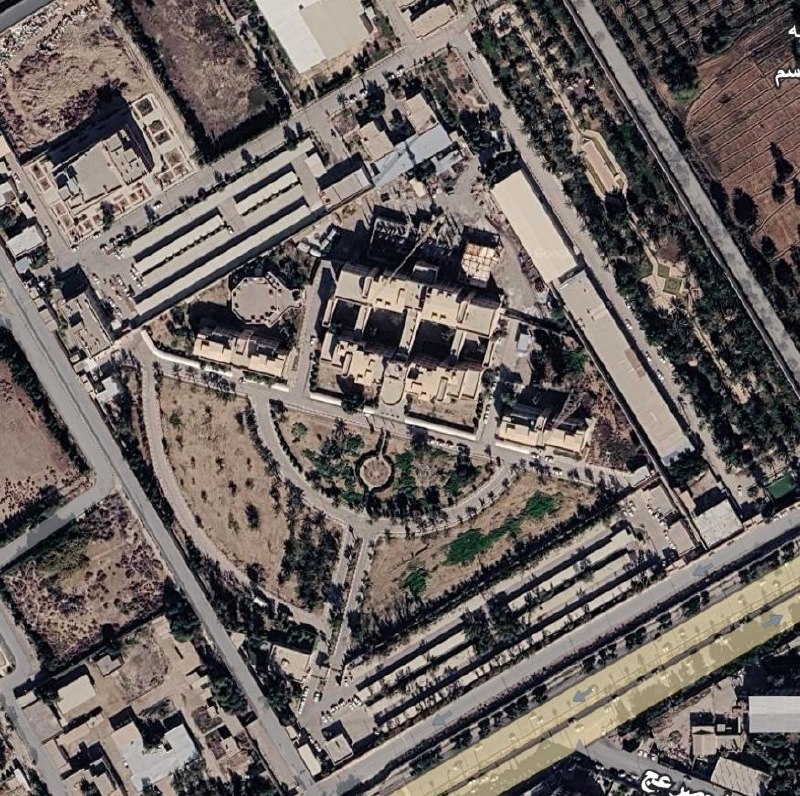
Satellite imagery analysis conducted by GeoPWatch at 11:54 confirmed substantial damage to the Khuzestan Intelligence Directorate building in Ahvaz. The analysis identified a 2,100‑square‑meter area of structural compromise on three sides of the central edifice, suggesting a direct hit by a precision‑guided munition.
"I have conducted satellite imagery analysis on behalf of the GeoPWatch team, and identified significant damage at the Khuzestan Intelligence Directorate in Ahvaz." – GeoPWatch, 11:54 UTC.
Weapons and Organizational Involvement
The July 30 operations employed a range of kinetic assets:
- Bombs delivered by U.S. aircraft in the Qeshm Island attacks.
- Missiles launched against Bushehr and other sites, intercepted by Jordanian air defenses.
- Naval firepower used by Iranian forces to strike a commercial tanker in the Strait of Hormuz.
Key actors include the United States military, the Islamic Revolutionary Guard Corps, Jordanian air defense units, and Iranian naval forces. The involvement of Jordan demonstrates the broader regional security architecture responding to U.S. kinetic actions.
Strategic Implications
The concentration of air and naval strikes within a single 24‑hour period signals a deliberate escalation strategy by the United States. By targeting both civilian infrastructure (Qeshm Island residential area) and intelligence facilities (Khuzestan Directorate), the campaign appears designed to degrade Iran’s command‑and‑control capabilities while imposing a cost on the Iranian populace.
Iran’s retaliatory posture, articulated by the IRGC, combined with its willingness to engage directly with commercial shipping, raises the risk of inadvertent escalation in the Strait of Hormuz—a chokepoint through which roughly 20 % of global oil shipments transit. Any further disruption could have immediate repercussions for global energy markets.
International Response and Legal Context
To date, no United Nations Security Council resolution has authorized the use of force against Iran, and the United States has framed its actions as self‑defense against alleged Iranian proxy activities. The civilian casualties on Qeshm Island have prompted calls for independent investigations from human‑rights organizations, though no formal inquiry has been launched.
Oman has lodged a diplomatic protest regarding the violation of its territorial waters, emphasizing the principle of freedom of navigation under the United Nations Convention on the Law of the Sea (UNCLOS). Jordan’s interception of missiles was publicly presented as a defensive measure to protect its own airspace and regional stability.
Outlook
Given the pattern of coordinated air, missile, and naval operations, analysts anticipate that the United States may continue to employ kinetic pressure to compel Iranian concessions on regional proxy activities. Conversely, Iran’s stated intent to retaliate, coupled with its recent naval aggression, suggests a potential for reciprocal strikes, either directly against U.S. assets or through asymmetric means.
Monitoring satellite imagery, open‑source video feeds, and regional diplomatic communications will be essential to assess whether the July 30 escalation represents a temporary spike or the onset of a sustained kinetic phase in the broader U.S.–Iran confrontation.