On 30 July 2026, the most consequential kinetic event recorded was an Iranian launch of ballistic missiles aimed at Jordan. The strike, reported by the open‑source intelligence channel rnintel, involved multiple ballistic projectiles dispatched from Iranian territory toward Jordanian airspace. No immediate casualty figures were released, and the missiles’ flight paths and impact points remain unconfirmed due to the “unknown” designation of the launch site. The incident underscores a rapid escalation in Tehran’s offensive posture toward neighboring states.
U.S. CENTCOM Airstrike Campaign Against IRGC Installations
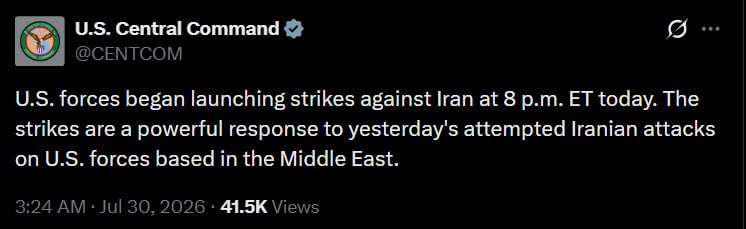
In direct response, U.S. Central Command (CENTCOM) executed a heavy wave of airstrikes against Islamic Revolutionary Guard Corps (IRGC) facilities across Iran. According to rnintel, the operation began at 22:00 ET on 29 July and targeted a spectrum of high‑value assets, including command centres, missile and drone production sites, coastal surveillance installations, and maritime defence positions. The strikes employed precision‑guided missiles launched from undisclosed platforms. Video evidence accompanying the rnintel report (https://t.me/rnintel/65102) confirms the breadth of the attack, though casualty numbers were not disclosed.
“U.S. forces successfully completed a heavy wave of strikes against Iran in response to yesterday’s attempted missile attacks on U.S. forces,” the CENTCOM statement read.
The air campaign represents the most extensive direct U.S. kinetic action against Iranian military infrastructure since 2023. No civilian infrastructure was reported as damaged, and the Iranian government has not yet issued an official response.
Escalation of U.S. Rocket Launches From Kuwait
Simultaneous to the airstrike, multiple U.S. rocket attacks were launched from Kuwait toward Iranian targets. Four separate Telegram channels documented the launches, each citing different weapon systems:
- At 00:13 ET, ATACMS and Precision Strike Missiles (PrSM) were fired, as reported by CIG_telegram (https://t.me/CIG_telegram/81286).
- At 00:09 ET, HIMARS missiles were launched, captured on video by monitor_the_situation (https://t.me/monitor_the_situation/26438).
- At 00:25 ET, additional missile strikes were announced by rnintel (https://t.me/rnintel/65100).
- At 00:31 ET, intelslava posted a CENTCOM statement confirming missile launches at 20:00 ET (https://t.me/intelslava/91749).
- At 00:57 ET, intelslava reported a second HIMARS salvo from Kuwait (https://t.me/intelslava/91756).
All launches were described as “powerful responses” to prior Iranian attempts to strike U.S. bases in the Middle East. The weapons employed—ATACMS, PrSM, HIMARS, and generic missiles—are capable of delivering precision strikes at ranges up to 300 km. No casualty data has been released for these attacks, and the specific Iranian targets remain classified.
Ukrainian Drone Strike on Russian Logistics Hub
In a separate theater, a Ukrainian unmanned aerial vehicle (UAV) struck a Wildberries distribution centre in Izhevsk, Udmurtia, Russia. The incident, reported by monitor_the_situation (https://t.me/monitor_the_situation/26468), involved a single drone delivering a payload that damaged the facility. Video footage confirms the impact, though casualty figures were not disclosed. The attack aligns with a broader Ukrainian campaign targeting Russian logistics and commercial infrastructure.
U.S. Troop Deployment and Alert Status Across the Middle East
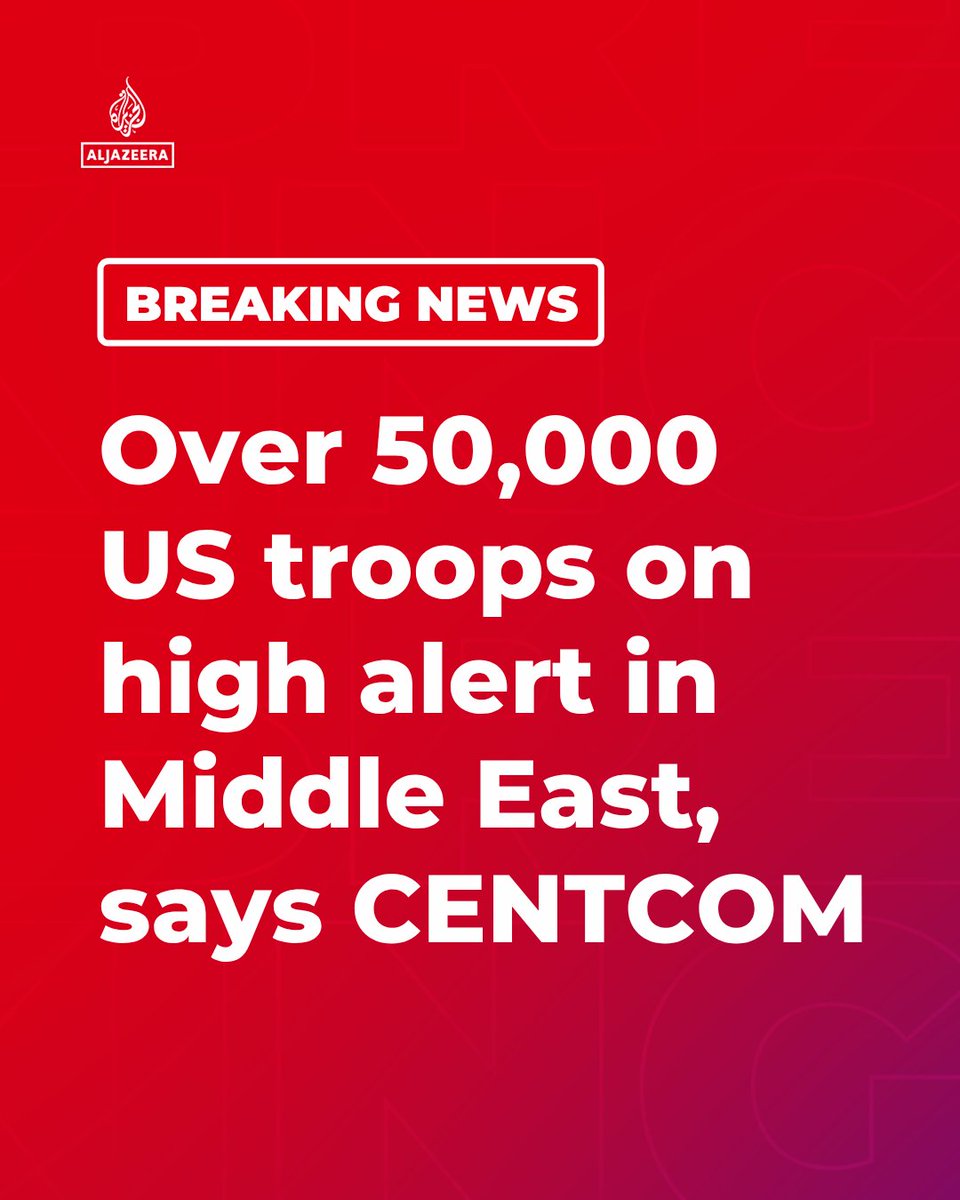
Concurrent with the kinetic operations, CENTCOM announced that over 50,000 U.S. troops are now deployed across the Middle East, with the United Arab Emirates highlighted as a focal point of heightened alert. The statement, posted by monitor_the_situation (https://t.me/monitor_the_situation/26461), indicates the highest level of readiness for U.S. forces in the region. No combat engagements involving these troops were reported on 30 July.
Collectively, the events of 30 July illustrate a rapid intensification of kinetic exchanges between Iran and the United States, accompanied by ancillary actions in the broader Eurasian security environment. While casualty numbers remain low or unreported, the deployment of high‑precision missile systems and the scale of air operations suggest a significant escalation in the risk calculus for regional stability.