Ukrainian monitoring channels have warned that Iran may launch up to three ballistic missiles at Ukraine within the next few days, a development that has heightened regional tensions and prompted immediate military responses from the United States and Israel. The alerts, posted by the Telegram channel intelslava at 13:02 UTC, cite movement of missile systems in Iran and suggest a possible escalation of the conflict between Tehran and Kyiv. The Iranian Foreign Minister has publicly declared that any Ukrainian action “cannot go unanswered,” while Ukrainian lawmakers warned that Kyiv will “understand” Iran’s refusal to let aggression go unpunished. The threat, reported by intelslava (https://t.me/intelslava/91624), underscores a rare instance of direct Iranian involvement in the European theater.
Potential Iranian Ballistic Missile Launch
According to the same source, the missiles in question are classified as medium‑range ballistic weapons capable of striking targets up to 2,000 kilometres away. The warning aligns with a separate notice from rnintel at 11:13 UTC, which identified a likely medium‑range missile launch within 24 hours. Both channels attribute the activity to Iranian military units, though no official confirmation from Tehran has been released. The lack of a concrete target list leaves analysts monitoring the situation to prepare contingency plans for air‑defence activation across Ukrainian critical infrastructure.
U.S. and Israeli Coordinated Airstrikes on Iranian Targets
In response to the escalating threat, the United States conducted coordinated airstrikes against Iranian facilities from Israeli bases, as confirmed by Israeli Defense Minister Yoav Katz. The JPost reported at 11:41 UTC that the strikes were executed by U.S. aircraft operating out of Israel during a cease‑fire period, signaling a willingness to project power beyond the immediate Middle‑East theater.
"We announced in the clearest terms that if Israel is fired upon, we will attack with all our might. We are prepared to strike Iran," Katz told Channel 14.The operation, detailed on the JPost website (https://www.jpost.com/israel-news/defense-news/article-903898), involved precision‑guided munitions delivered by fighter jets, though casualty figures remain undisclosed.
U.S. Fighter Jets Launching from Israel
Further corroborating the airstrike narrative, Israeli Defense Minister Katz disclosed at 09:23 UTC that American fighter jets were taking off from Israeli airfields to strike Iranian targets. The statement, posted on the idkunim_il channel (https://t.me/idkunim_il/61987), emphasized that Iranian authorities were aware of the operations. While the exact number of sorties and the types of aircraft were not specified, the disclosure indicates a high level of coordination between U.S. and Israeli defense establishments, potentially involving F‑15E or F‑35 platforms equipped with stand‑off weapons.
Ukrainian Drone Offensive Against Moscow Region
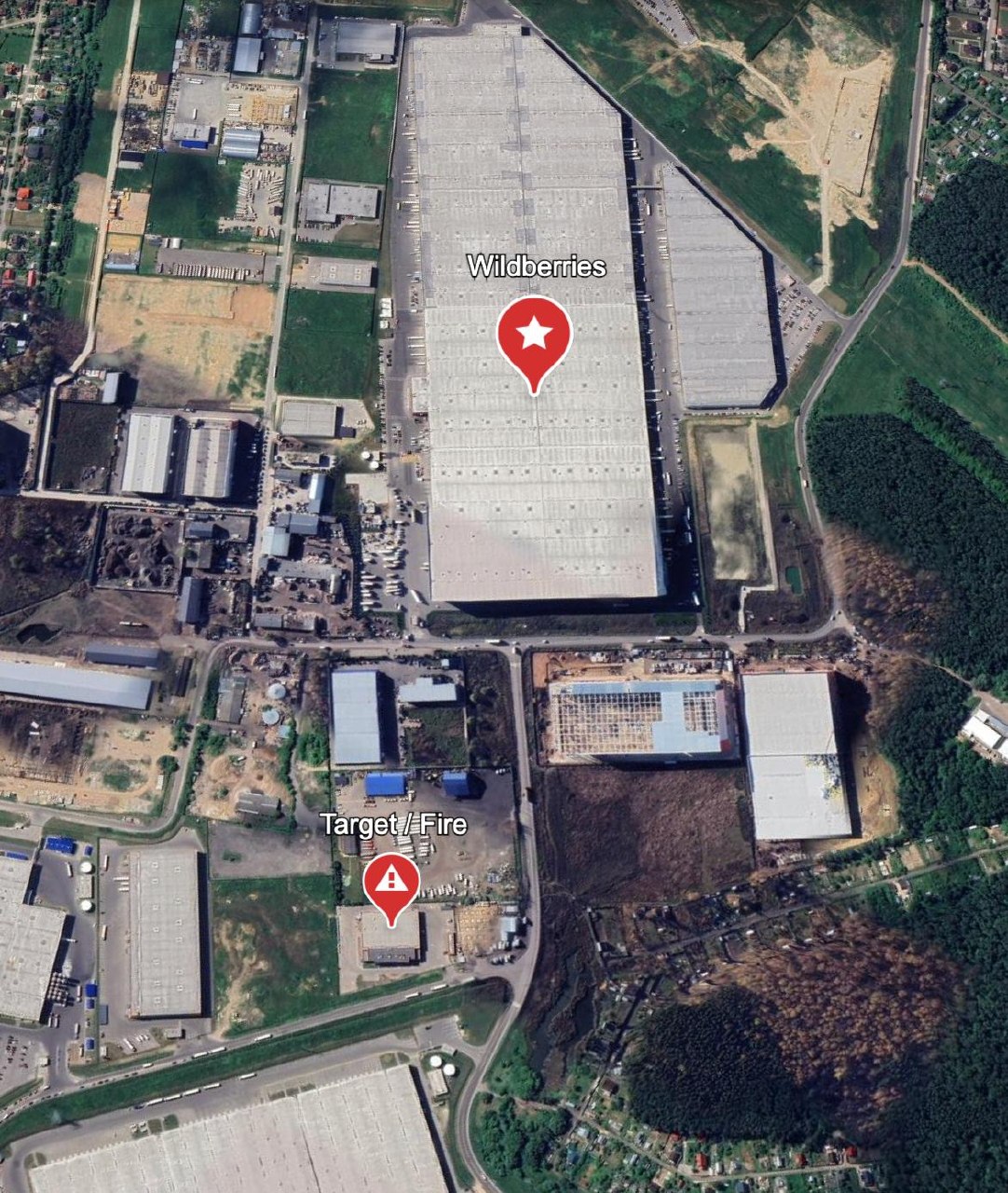
Simultaneously, Ukraine escalated its own kinetic campaign by launching a massive drone swarm against the Moscow region. GeoPWatch reported at 07:23 UTC that more than 390 unmanned aerial systems (UAS) targeted a logistics warehouse adjacent to the Wildberries distribution centre in Koledino, igniting a large fire. The attack, captured in two photographs released by the channel (https://t.me/GeoPWatch/37888), represents one of the most extensive aerial assaults on Russian territory since the war began. Ukrainian officials have not released casualty numbers, but the destruction of a key supply hub is likely to disrupt distribution networks for several weeks.
Iranian‑Backed Militia Drone Launches in the Gulf
In the broader Middle‑East, Iranian‑backed militias in Iraq launched approximately 20 drones toward Israel, Jordan, and Saudi Arabia, according to i24NEWS and relayed by GeoPWatch at 08:20 UTC. The drones, described as low‑cost, expendable platforms, were reportedly intercepted by regional air‑defence systems, though specific interception data were not disclosed. The operation illustrates the expanding use of UAVs by proxy forces to exert pressure on multiple fronts, complicating the strategic calculus for Israel and its neighbours.
Jordan Intercepts Iran‑Backed Iraqi Drones
Jordanian air‑defence units successfully intercepted three drones over Jordanian airspace on Monday and Tuesday, as reported by the JPost at 09:31 UTC. The drones are believed to have been launched by Iran‑backed Shi'ite militias operating in Iraq. The interception underscores Jordan’s heightened vigilance amid a surge of cross‑border UAV activity linked to Iranian proxy networks.
Libyan Ground Movement at Mellitah Gas Complex
On the African front, Libya’s Government of National Unity (GNU) dispatched its 52nd Brigade to secure the Mellitah Gas Complex. The brigade was subsequently attacked by an armed group from Zuwara and forced to withdraw, according to a CIG_telegram report at 17:19 UTC. The incident, geolocated at 32°50'28.69"N 12°14'46.69"E, highlights the volatile security environment surrounding Libya’s critical energy infrastructure.
Ukrainian Light Drones Target Russian Heavy Equipment
Additional footage released by idkunim_il at 11:19 UTC shows Ukrainian light drones engaging and destroying Russian heavy equipment on the front lines. While the video does not provide exact loss figures, the use of commercially available drone technology to neutralize armored vehicles demonstrates a growing asymmetry in battlefield capabilities.
Collectively, these events illustrate a multi‑theater escalation driven by ballistic missile threats, coordinated airstrikes, and proliferating drone warfare. The convergence of state and proxy actors across Europe, the Middle East, and North Africa underscores the increasingly interconnected nature of kinetic conflict in 2026.