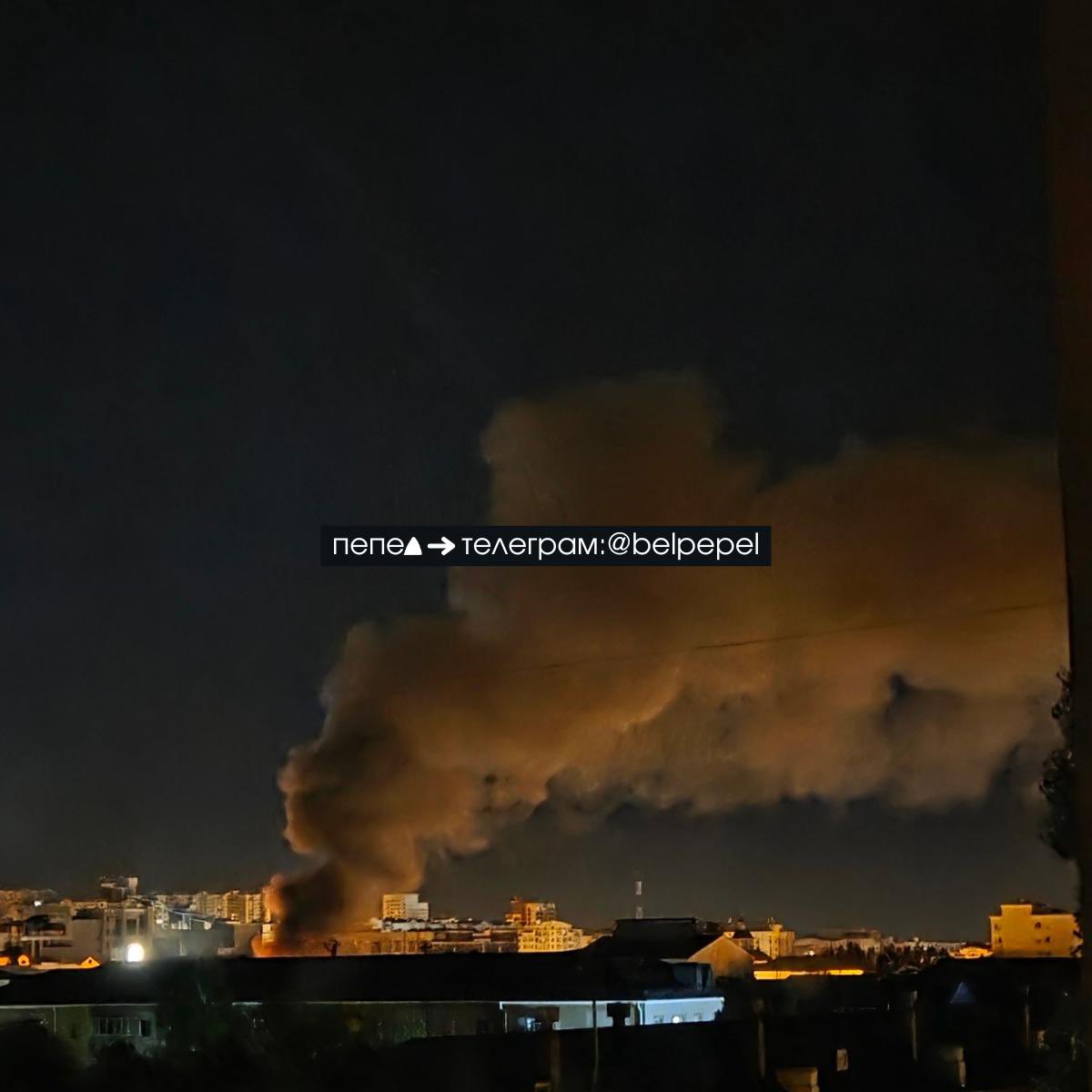
On July 27, 2026, a series of hostile unmanned aerial vehicle (UAV) operations launched from Ukrainian territory struck multiple strategic sites in Russia’s western and southern regions. The most consequential incident occurred in Belgorod, where drones targeted Federal Security Service (FSB) and Interior Ministry facilities, igniting fires, triggering secondary explosions, and causing localized power outages. No casualty figures were released, but the damage to critical state infrastructure underscores an escalation in cross‑border kinetic activity.
Belgorod: Drone Assault on FSB and Interior Ministry Buildings
At 05:34:55 local time, two Ukrainian‑origin drones penetrated the airspace over Belgorod, Belgorod Oblast, and struck the headquarters of the FSB and a nearby Interior Ministry building. Video evidence captured by the monitoring channel monitor_the_situation shows the drones approaching at low altitude before impact, followed by intense flames and secondary detonations that damaged adjacent structures. The explosions caused a temporary loss of electricity to several city blocks, prompting emergency services to activate fire suppression protocols. While official statements from Russian authorities have not disclosed casualty numbers, the incident resulted in significant material loss and disrupted municipal services.
"Ukrainian drones hit FSB and Interior Ministry buildings in Belgorod, Russia, causing fires, power outages and secondary explosions," – monitor_the_situation, https://t.me/monitor_the_situation/26161
The weapons employed were identified as commercially available quad‑copter drones modified to carry high‑explosive payloads. The choice of government facilities suggests a deliberate intent to undermine Russian internal security apparatuses and to signal capability to strike high‑value targets beyond the front lines.
Rostov‑on‑Don and Taganrog: Swarm Attack on Port and Railway Infrastructure
Earlier, at 04:31:39, a coordinated swarm of Ukrainian drones targeted the port complex of Rostov‑on‑Don and the railway hub in nearby Taganrog, both situated in Rostov Oblast. According to the same monitoring channel, at least ten separate strikes were recorded in Rostov‑on‑Don alone, focusing on cargo terminals, loading docks, and rail sidings. Video footage released by monitor_the_situation shows multiple UAVs approaching the waterfront, some colliding with storage containers before detonating. The attacks disrupted freight operations, temporarily halted rail traffic, and prompted the activation of regional air‑defense systems.
"Ukraine launched a large number of drones at Rostov‑on‑Don and Taganrog, targeting port and railway infrastructure, with at least 10 strikes in Rostov‑on‑Don," – monitor_the_situation, https://t.me/monitor_the_situation/26158
No civilian casualties were reported in the immediate aftermath, and Russian authorities have not disclosed the extent of material damage. The use of a swarm tactic indicates a shift toward saturation attacks designed to overwhelm defensive measures and create logistical bottlenecks in Russia’s southern supply chain.
Rostov‑on‑Don Residential Building Strike: Drone or Interceptor?
At 01:33:44, a multi‑story residential building in the central district of Rostov‑on‑Don sustained significant damage. Video posted by the channel intelslava shows a bright flash followed by structural collapse on the upper floors. Analysts have not reached a consensus on the origin of the strike; possibilities include a Ukrainian‑launched drone or a Russian air‑defense interceptor that detonated prematurely. The lack of clear attribution complicates the assessment of intent and responsibility.
"Something struck a multi‑story residential building in Rostov‑on‑Don. It is unclear whether it was a Ukrainian drone or a Russian air defense interceptor," – intelslava, https://t.me/intelslava/91545
Preliminary reports indicate no fatalities, though several residents were evacuated as a precaution. The incident highlights the collateral risk inherent in high‑intensity UAV and air‑defense engagements over densely populated areas.
Operational Patterns and Tactical Implications
The three incidents recorded on July 27 demonstrate a diversification of Ukrainian UAV tactics. In Belgorod, the focus was on symbolic state institutions, employing precision strikes to generate political impact. In the Rostov‑on‑Don/Taganrog corridor, the emphasis shifted to economic disruption through swarm attacks on logistics nodes. The ambiguous residential strike underscores the potential for unintended civilian harm when air‑defense systems engage inbound threats in urban environments. Across all events, the weapons platform remained relatively low‑cost commercial drones retrofitted with explosive payloads, suggesting a strategy that leverages quantity and surprise over advanced technology.
Strategic Context and Future Outlook
These kinetic actions occur against a backdrop of intensified cross‑border hostilities following the cessation of the 2025 ceasefire negotiations. Russian defensive postures have been reinforced with additional short‑range air‑defense batteries in the Belgorod and Rostov regions, yet the successful penetrations indicate gaps in detection and response timelines. The attacks also serve a dual purpose: degrading Russian operational capacity while signaling to domestic and international audiences that Ukrainian forces retain the capability to project power deep into Russian territory.
Monitoring agencies will continue to track UAV activity, assess damage assessments, and evaluate the effectiveness of Russian counter‑UAV measures. The evolving nature of drone warfare in this theater suggests that future incidents may involve more sophisticated autonomous swarms, electronic warfare integration, or expanded target sets, potentially raising the risk profile for civilian populations in proximity to strategic assets.