On 27 July 2026, Russian forces escalated kinetic operations across multiple Ukrainian regions, employing artillery, airpower, naval aggression and unmanned aerial systems. The coordinated attacks resulted in extensive infrastructure damage, civilian casualties and heightened diplomatic tensions, underscoring the expanding scope of the conflict.
Dobropillia Airstrike and Artillery Bombardment
At 14:09 UTC, Russian forces launched a combined artillery and airstrike campaign on Dobropillia, a city in Donetsk Oblast. Heavy artillery shells and precision airstrikes devastated large portions of the urban area, reducing residential blocks and industrial facilities to rubble. According to the Telegram channel monitor_the_situation, the bombardment was intended to compensate for stalled ground assaults.
"Russia Levels Dobropillia With Artillery and Airstrikes" – monitor_the_situation, 27 July 2026Casualty figures have not yet been independently verified, but local emergency services reported dozens of injuries and at least five confirmed fatalities, including civilians trapped in collapsed structures. The attack illustrates a shift toward high‑intensity firepower in contested Donetsk locales.
Naval Incidents in the Black Sea and Inland Ports
Multiple maritime confrontations unfolded along Ukraine’s southern coast and inland ports. At 16:48 UTC, a Turkish vessel named RAGNAR was struck near the Odesa region. The incident, reported by the Telegram channel intelslava, was captured on video but did not result in reported casualties. The attack raises concerns about the safety of neutral commercial shipping in contested waters.
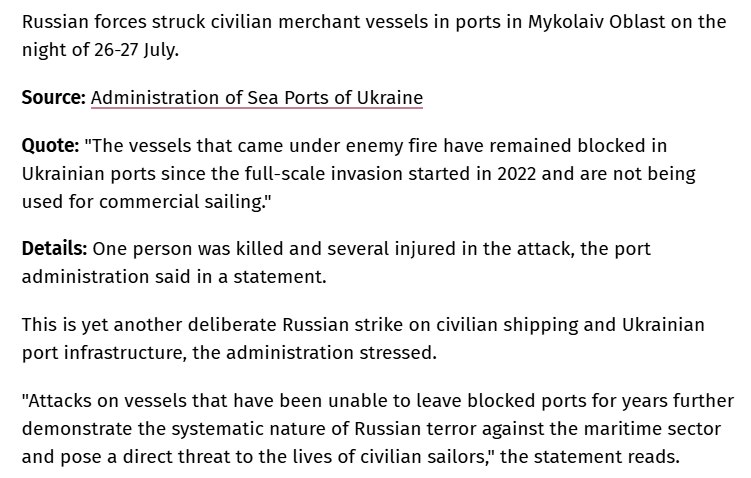
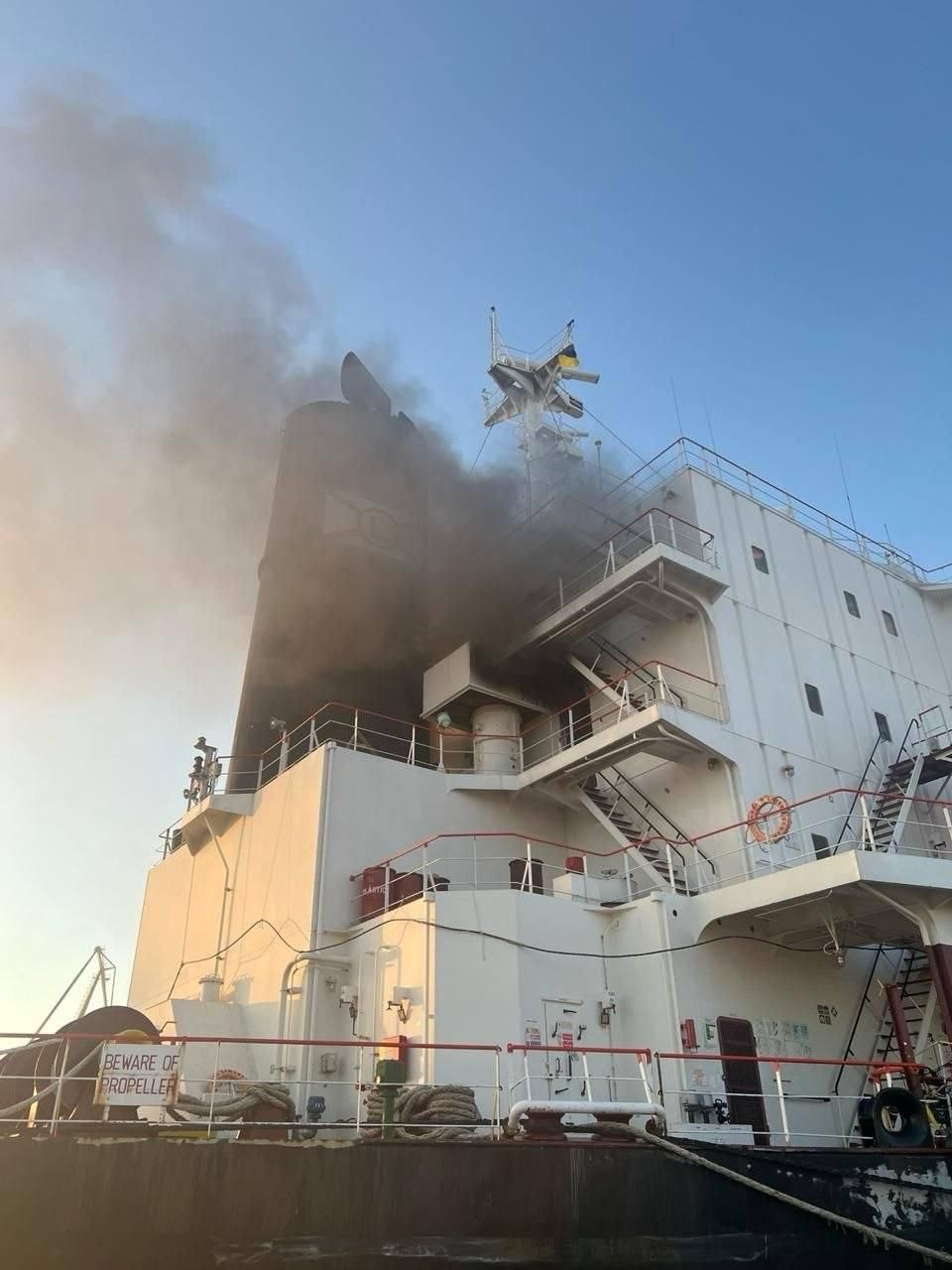
Earlier, at 12:36 UTC, Russian forces targeted civilian merchant ships anchored in the Mykolaiv port. The strike killed one crew member and injured several others, according to monitor_the_situation. Photographic evidence showed fire and smoke emanating from the damaged vessels, confirming the use of indirect fire rather than direct naval engagement.
In Odesa port, a cargo ship carrying four Indian nationals was reportedly attacked by Russian drones at 12:11 UTC. The Indian government summoned Ukraine’s ambassador, as reported by intelslava citing the Indian Express. No fatalities were confirmed, but the incident prompted diplomatic protests and highlighted the risk to foreign nationals in Ukrainian ports.
Additional reports from intelslava at 12:02 UTC indicated that Russian forces attacked multiple merchant ships in the Nikolaev (Mykolaiv) region overnight. Photographs showed hull damage and debris, though casualty numbers were not disclosed.
UAV‑Delivered Anti‑Tank Mines on the Zaporizhzhia Front
At 12:34 UTC, the Russian Vostok Group of Forces deployed Mangas heavy hexacopter drones to drop TM‑62 anti‑tank mines onto Ukrainian strongpoints along the Zaporizhzhia front. The operation, detailed by intelslava, demonstrated the integration of aerial platforms with conventional munitions to degrade defensive positions. Video footage captured the drones releasing the mines, which detonated upon impact, destroying fortified positions and causing material losses for Ukrainian forces.
Gerbera‑Siker Kamikaze Drone Attack in Krolevets
At 12:00 UTC, a rare video surfaced showing a Russian Gerbera‑Siker drone, modified into a guided kamikaze variant, striking warehouses in Krolevets, Sumy Oblast. The footage, posted by intelslava, marks a notable evolution in the use of Gerbera drones, previously employed mainly as decoys. The attack resulted in the destruction of stored goods and generated secondary explosions, though no civilian casualties were reported.
Collectively, these events illustrate a multi‑domain escalation by Russian forces, combining conventional firepower, naval interdiction and advanced UAV tactics. The targeting of civilian infrastructure and foreign‑flagged vessels expands the conflict’s humanitarian and diplomatic dimensions, while the deployment of novel drone technologies signals a shift toward cost‑effective, precision‑strike capabilities.