On July 23, 2026, Iran's Islamic Revolutionary Guard Corps (IRGC) announced a coordinated strike against United States military installations in Jordan, claiming the destruction of a THAAD anti‑ballistic missile system, an MIM‑104 Patriot air‑defense battery, a C‑RAM radar, a helicopter equipment warehouse, and associated fuel stores. The claim, posted on the CIG_telegram channel at 13:43, represents the most consequential kinetic event reported for the day, given the strategic value of the targeted systems.
🇮🇷❌🇺🇸🇯🇴 — IRGC announces conducting a strike against U.S. bases in Jordan, likely several hours ago. IRGC claims to have destroyed one THAAD anti‑ballistic missile defense system, one MIM‑104 Patriot air defense system, one C‑RAM radar, a helicopter equipment warehouse, and a helicopter maintenance & repair hangar. IRGC also claims to have set fuel tanks connected to U.S. bases in Jordan ablaze.
The IRGC statement did not provide casualty figures, and no independent verification of the damage has been released as of the reporting deadline. Nevertheless, the alleged loss of a THAAD system—designed to intercept ballistic missiles—and a Patriot battery—capable of countering aircraft and cruise missiles—could materially affect the United States' regional air‑defence posture.
Intelligence Alerts of Imminent Ballistic Missile Activity
Concurrent with the IRGC claim, the open‑source intelligence outlet intelslava issued two separate alerts on the same day. At 12:10, intelslava posted video footage of the IRGC Aerospace Force launching a suite of medium‑range ballistic missiles (Ghadr/Qadr, Emad, Kheibar Shekan, Fattah‑1, Haj Qassem), Shahed‑136 loitering munitions, and Paveh cruise missiles aimed at U.S. bases in Jordan and Kuwait. The footage, linked in the channel’s post, underscores a rapid escalation in missile deployment capabilities.
🇮🇷🇺🇸⚡️ — The IRGC Aerospace Force has released footage showing the launch of Ghadr (Qadr), Emad, Kheibar Shekan, Fattah‑1, and Haj Qassem medium‑range ballistic missiles, as well as Shahed‑136 loitering munitions and Paveh cruise missiles, targeting U.S. military installations in Jordan and Kuwait.
Later, at 16:34, intelslava warned of a “high chance” of a ballistic missile strike within the next 48 hours, citing Ukrainian media sources. The alert references potential involvement of Russian and Ukrainian actors, though the precise target remains unspecified.
U.S. Service Member Casualties and Medical Evacuation
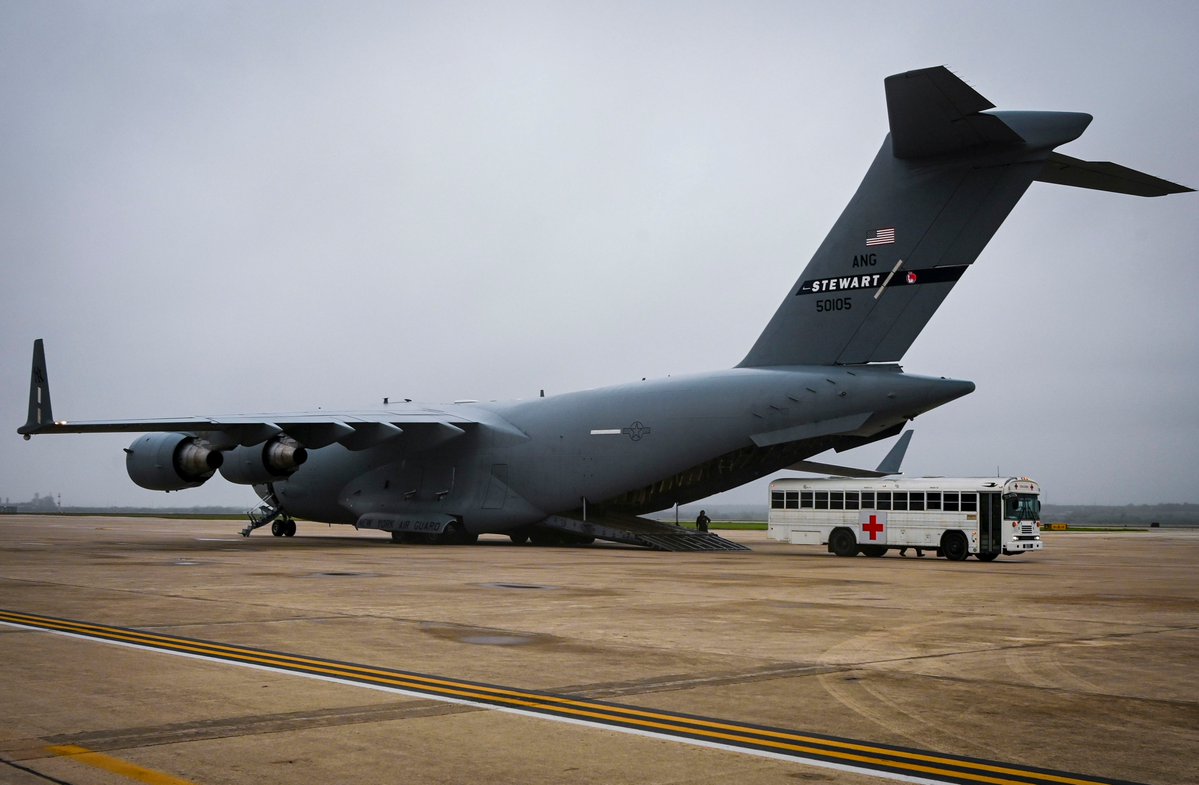
Following the reported missile and drone attacks, a separate source, monitor_the_situation, confirmed that nearly a dozen U.S. service members wounded in Iranian attacks were evacuated to Landstuhl Regional Medical Center in Germany for treatment. The evacuation, documented at 14:19, highlights the human cost of the kinetic exchanges, though specific injury details were not disclosed.
Ukrainian Drone Operations Within Russian Territory
On the same day, monitor_the_situation reported that Ukrainian‑operated drones damaged approximately 10 % of the warehouse capacity of Russian e‑commerce retailer Wildberries in Moscow. The attacks, described as part of a broader Ukrainian drone campaign, illustrate the expanding use of unmanned aerial systems in the conflict theater.
Naval and Maritime Developments
Two additional maritime‑related events were recorded. At 06:08, AlJazeera reported Yemeni concerns that the Houthi maritime embargo on Saudi Arabia could reignite broader hostilities and exacerbate humanitarian shortages. While no direct kinetic action was detailed, the embargo represents a strategic lever in the Red Sea theater.
Earlier, at 12:20, the rnintel channel relayed a statement attributed to former President Donald Trump, alleging that the United States had engaged two Saudi Arabian vessels, warning that Iran would be held responsible for Houthi actions. The claim lacks corroborating evidence and does not specify any weapons employed.
Targeted Assassination in the Israeli‑Palestinian Context
In the Israeli‑Palestinian arena, the JPost reported that the Israel Defense Forces (IDF) and Shin Bet conducted a targeted strike killing Hamas operative Abdallah Jahja, a member of Hamas’s naval force involved in the October 7 attacks. The operation, described as a precision strike, did not result in reported collateral damage.
Analytical Assessment
The convergence of multiple high‑intensity kinetic events on July 23 underscores a heightened risk of escalation across several fronts. The IRGC’s claimed destruction of U.S. air‑defence assets, combined with the launch of a diversified missile suite, suggests an intent to degrade U.S. deterrence capabilities in the Levant. Simultaneously, intelligence warnings of imminent ballistic missile strikes amplify the threat environment for both regional and coalition forces.
Ukrainian drone activity within Russian borders and the reported damage to critical logistics infrastructure indicate a widening of the conflict’s geographic scope, leveraging low‑cost UAVs to achieve strategic effects. The evacuation of wounded U.S. personnel to Germany reflects the operational impact of these attacks on coalition forces.
Maritime dynamics remain fluid, with Houthi embargo actions and unverified claims of U.S. naval engagements contributing to regional uncertainty. The targeted killing of a Hamas naval operative aligns with Israel’s ongoing counter‑terrorism posture but does not appear directly linked to the broader kinetic surge observed elsewhere.
Overall, the day's events illustrate a multi‑theater escalation characterized by the use of advanced missile systems, UAVs, and precision strikes, raising the probability of further kinetic exchanges and necessitating close monitoring of both state and non‑state actors.