The United States conducted its eleventh consecutive night of kinetic operations against the Islamic Republic of Iran on 22 July 2026, deploying a coordinated wave of airstrikes that struck at least seventeen cities and strategic sites across the country. The campaign, confirmed by multiple open‑source channels, targeted military command centres, airbases, nuclear‑related facilities, maritime infrastructure and logistics hubs. Iranian air‑defence systems responded with intensive anti‑aircraft fire over Tehran, Isfahan, Tabriz and other regions, while the Iranian Army announced a large‑scale drone strike on the U.S. Camp Doha in Kuwait later that day.
Scope of the U.S. strike wave
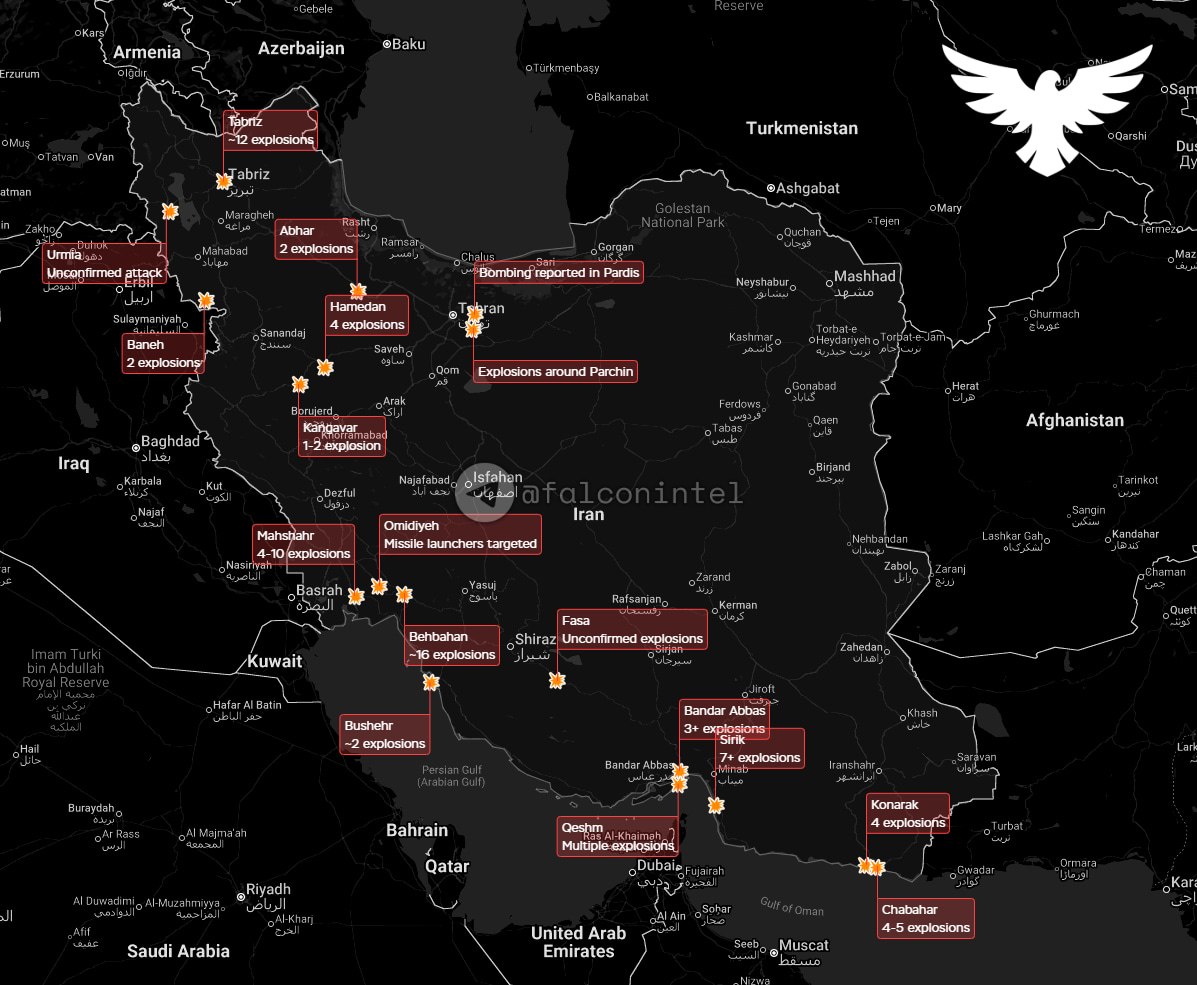
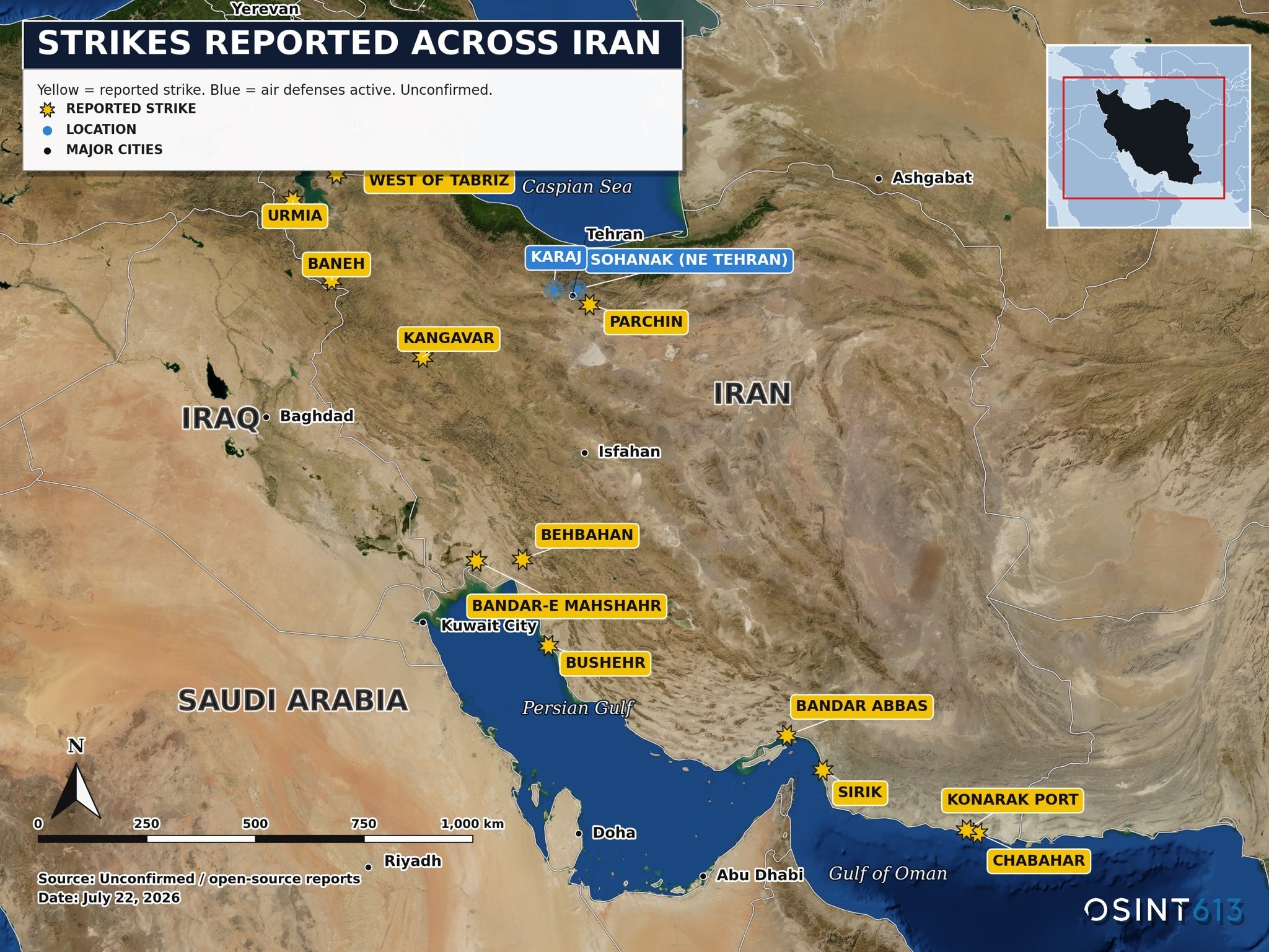
According to the Telegram channels CIG_telegram and monitor_the_situation, the United States confirmed impacts in the following locations: Tabriz, Urmia, Baneh, Abhar, Bandar‑e‑Mahshahr, Behbahan, Bushehr, Bandar Abbas, Qeshm Island, Sirik, Parchin, Pardis, Konarak, Chabahar, and the Nojeh Airbase in Hamedan Province. Additional unconfirmed reports listed Zanjan, Kermanshah, Kangavar, Omidiyeh, Fasa, Nahavand, Hamedan, Kerman and a site referred to as Sahanak in the northeastern outskirts of Tehran.
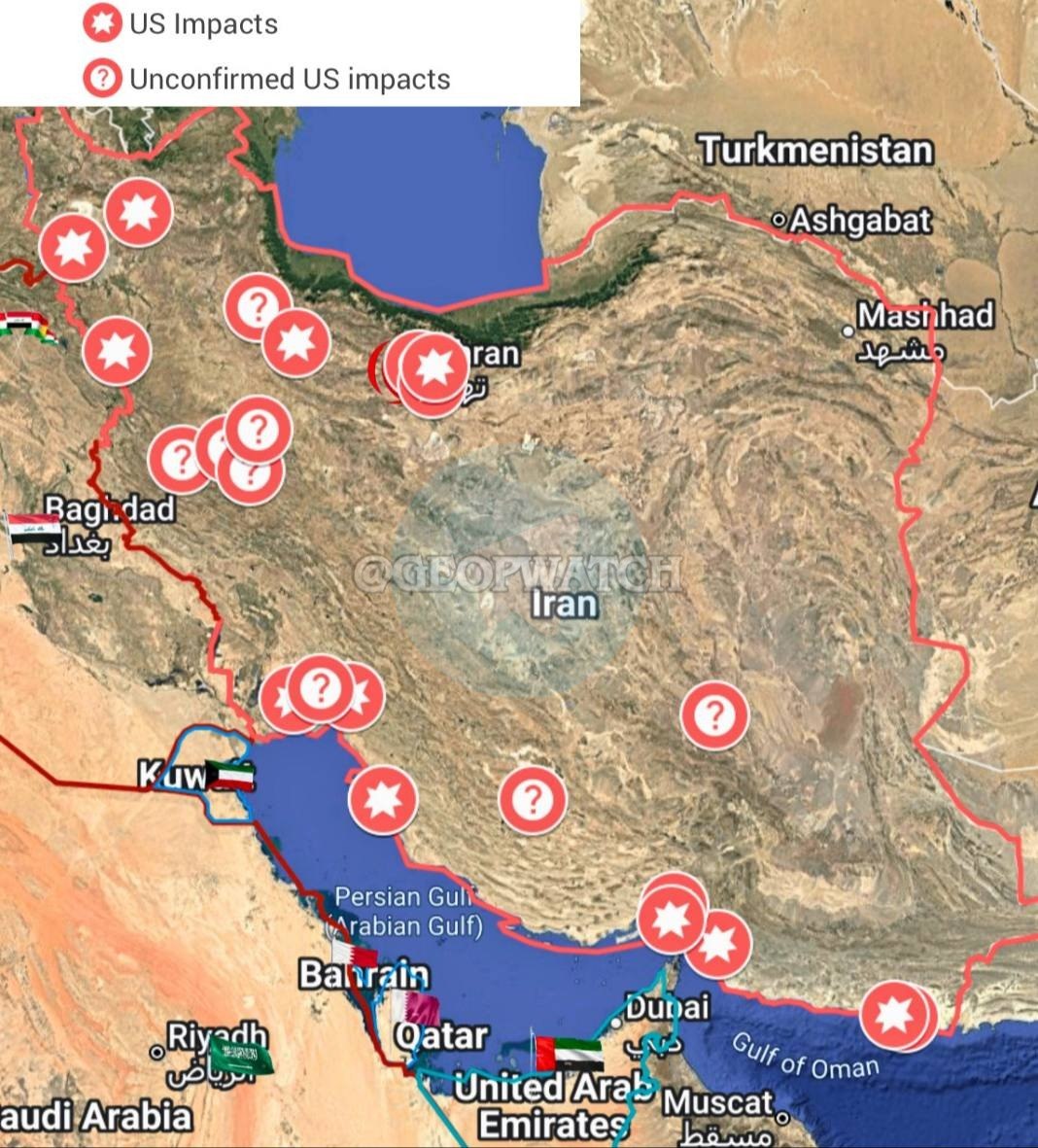
🇺🇸❌🇮🇷-**Map of the US strikes on Iran tonight, 7/22/2026**
🇺🇸⚡️**Confirmed US impacts: Tabriz, Urmia, Baneh, Abhar, Bandar‑e‑Mahshahr, Behbahan, Bushehr, Bandar Abbas, Qeshm Island, Sirik, Parchin, Pardis, Konarak, and Chabahar.**
🇺🇸⁉️**Unconfirmed US Impacts: Zanjan, Kermanshah, Kangavar, Omidiyeh, Fasa, Nahavand, Hamedan, Kerman, and Sahanak**
Key confirmed targets and reported effects
Tabriz – Multiple explosions were reported in the city and surrounding areas, with Iranian air‑defence units remaining active throughout the night. Urmia and Baneh also experienced blast signatures consistent with precision strikes. In Behbahan, a U.S. strike hit a military base adjacent to the Behbehan Northwest Airport, as documented by video footage shared on CIG_telegram. Isfahan saw strikes on military command, maritime and logistics sites, prompting activation of local air‑defence batteries, per monitor_the_situation. Parchin nuclear facility – The GeoPWatch channel posted confirmation of airstrikes on the nuclear complex southeast of Tehran, a site previously linked to Iran’s weapons‑of‑mass‑destruction program. Nojeh Airbase in Hamedan Province was hit by four separate USAF strikes, according to BellumActaNews. Bushehr and Bandar Abbas reported explosions likely caused by United States Air Force (USAF) aircraft, with local residents hearing multiple detonations.
Air‑defence response across Iran
Iranian anti‑aircraft artillery and surface‑to‑air missile systems engaged the incoming aircraft over several provinces. Video recordings from rnintel captured Iranian air‑defence activity over Tehran at 00:19:27, while BellumActaNews documented anti‑aircraft artillery firing in Germader, west of Tehran, at 00:29:25. Additional reports indicated active radar and missile batteries over Tehranpars (eastern Tehran) and Baharestan in Isfahan Province. The Iranian Air Defence Force posted multiple videos showing surface‑to‑air missile launches and gunfire, confirming a high‑intensity defensive posture.
Collateral incidents and civilian impact
Explosions were reported in civilian‑populated areas, including five blasts heard in eastern Tehran at 00:07:39 (rnintel) and multiple detonations in Pardis, a suburb west of the capital, at 00:01:53 (monitor_the_situation). No casualty figures have been released for these specific incidents, but the density of the urban environment raises the risk of civilian harm. In Bushehr, locals described “loud explosions” and reported damage to nearby structures, though official casualty numbers remain unverified.
Iranian retaliation beyond its borders
In a parallel development, the Iranian Army announced a large‑scale drone strike against the U.S. Camp Doha in western Kuwait at 03:18:28 (CIG_telegram). The operation targeted ammunition depots and logistics facilities, employing armed unmanned aerial vehicles (UAVs). The Iranian statement framed the attack as a direct response to the ongoing U.S. air campaign against Iranian territory. Video evidence of the drone launch was circulated on the same channel, though independent verification of damage at Camp Doha is pending.
Strategic implications
The breadth of the strike wave indicates a shift from isolated targeting of high‑value assets to a broader campaign aimed at degrading Iran’s command‑and‑control, air‑defence, and maritime projection capabilities. By striking both inland military installations and coastal logistics hubs, the United States appears to be seeking to limit Iran’s ability to threaten commercial shipping in the Strait of Hormuz. Iran’s robust air‑defence response and the retaliatory drone attack on a U.S. installation in Kuwait suggest an escalation in kinetic exchanges, raising the probability of further cross‑border incidents.
Assessment of the operational tempo
U.S. Central Command (CENTCOM) confirmed that the night‑time strikes were part of a sustained campaign, stating that the latest wave “targets military command centers, maritime assets, aircraft hangars, drone storage and logistics facilities” to “further degrade Iran’s ability to threaten commercial shipping.” The continuation of nightly strikes for eleven consecutive nights underscores a high operational tempo and a willingness to maintain pressure despite the risk of Iranian retaliation.