The United States completed its ninth consecutive night of airstrikes against Iranian military targets on July 19, marking the most sustained kinetic campaign in the region since the conflict escalated earlier this year. According to U.S. Central Command (CENTCOM), the operation, conducted at 10 p.m. ET, focused on Iranian command centres, air‑defence installations, coastal surveillance sites, maritime assets, missile and drone launch facilities, and communications networks. The strikes aim to degrade Iran’s capacity to threaten commercial shipping and allied forces. Open‑source monitoring by OSINTdefender notes that ammunition shortages could constrain further U.S. operations, raising questions about the campaign’s long‑term sustainability.
“U.S. Central Command successfully completed the ninth consecutive evening of strikes against Iran,” the official statement read, emphasizing the breadth of targets engaged.
Russian Defence Forces Counter Massive UAV Swarm
In parallel, Russia faced an unprecedented aerial threat when more than 400 unmanned aerial vehicles (UAVs) entered the Moscow region early on July 20. Moscow City Government spokesperson Sergei Sobyanin reported that the majority of the drones were intercepted at distance by air‑defence systems, while an additional 85 hostile UAVs were destroyed as they approached the capital. The source intelslava confirmed the scale of the attack and highlighted the rapid response of Russian surface‑to‑air missiles and anti‑drone artillery. No civilian casualties were reported, but the incident underscores the expanding use of swarming drone tactics in high‑value urban environments.
“Over 400 drones attacked the Moscow region; the majority were neutralised, 85 were destroyed as they neared the city,” Sobyanin told reporters.
Iranian Counter‑Launches Target U.S. Interests in the Gulf
Amid the U.S. air campaign, Iran launched its own missile and UAV strikes toward American‑aligned assets in Bahrain and Kuwait. The idkunim_il channel documented the deployment of both ballistic missiles and unmanned aerial systems aimed at U.S. facilities, though the exact impact on ground targets remains unverified. The timing of these attacks coincides with heightened alerts in the Gulf, where air‑raid sirens were activated in Kuwait and explosions were reported in Bahrain, suggesting that Iranian projectiles may have reached their intended destinations. These actions represent a direct escalation of the proxy dimension of the conflict, linking the Middle Eastern theatre to the broader U.S.–Iran confrontation.
Peripheral Incidents: Ukrainian Drone Activity and Casualties
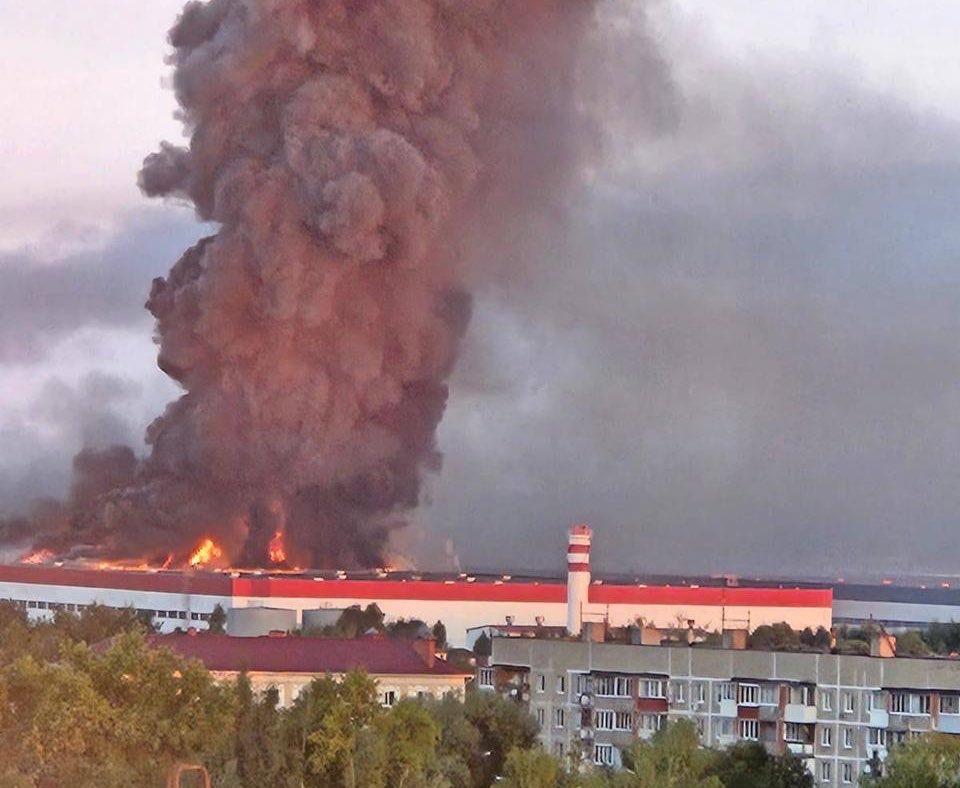
Separate from the U.S.–Iran and Russia‑UAV dynamics, Ukrainian‑operated drones struck a Wildberries distribution centre near Moscow, igniting the facility and causing material damage. The monitor_the_situation channel supplied photographic evidence of the blaze. While no casualties were reported, the incident illustrates the continued use of commercial‑infrastructure targets as a means of exerting pressure on Russian logistics networks. Additionally, a U.S. soldier was killed in northern Iraq, as reported by Al Jazeera, highlighting the multi‑theater nature of U.S. forces’ exposure to hostile actions during this period of heightened regional volatility.
Operational Constraints and Outlook
The convergence of these kinetic events reveals several operational constraints for the involved parties. U.S. forces, despite achieving a high tempo of strikes, face reported ammunition shortages that could limit the depth of future sorties. Russia’s successful interception of a large UAV swarm demonstrates robust air‑defence capabilities but also signals a growing threat from mass‑produced drones that may overwhelm conventional systems if not countered with layered defenses. Iran’s missile and UAV launches indicate a willingness to project power across the Gulf, yet the effectiveness of these attacks remains uncertain pending independent verification. The cumulative effect of these actions suggests a trajectory toward sustained, high‑intensity kinetic engagements across multiple fronts, with potential spill‑over effects on civilian infrastructure and commercial supply chains.