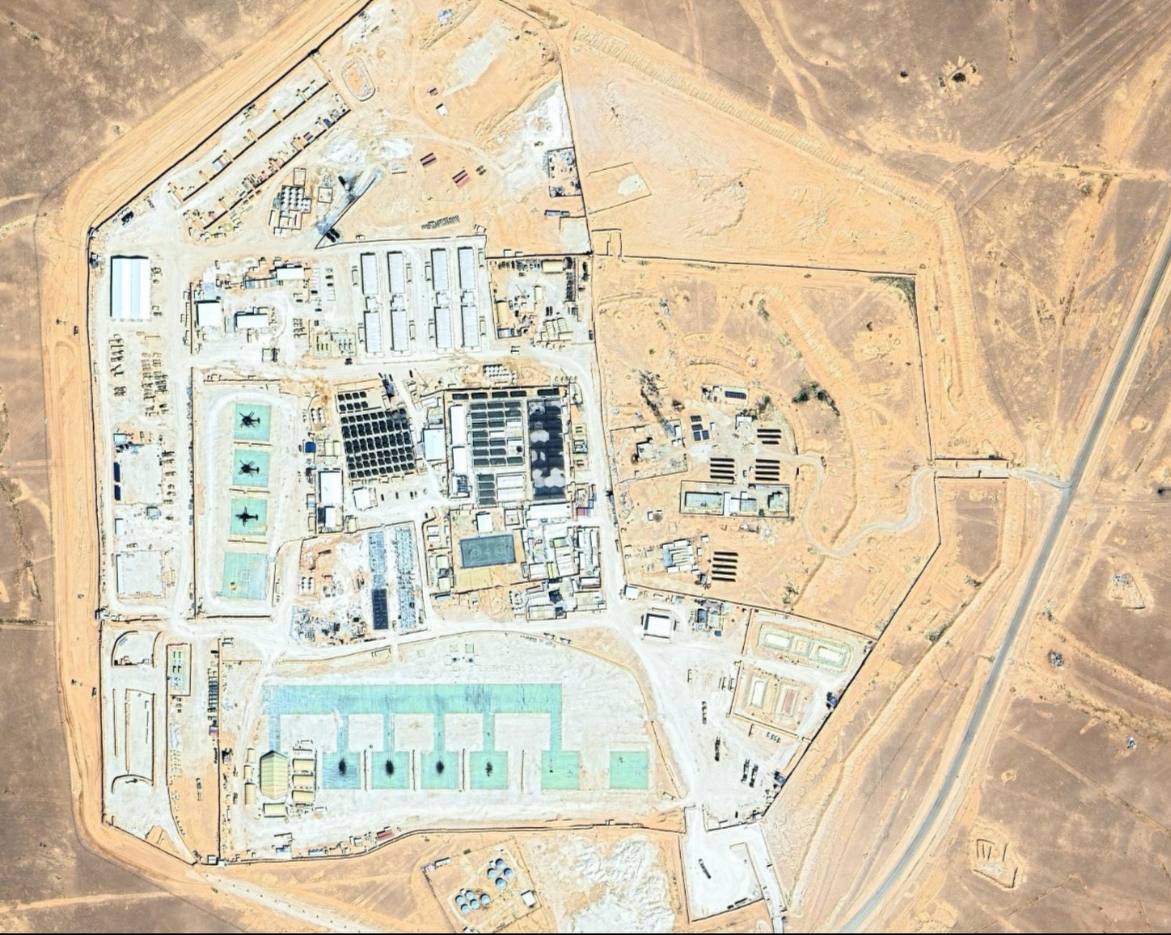
On 20 July 2026, a coordinated series of Iranian missile attacks on Jordan's Muwaffaq al‑Salti Air Base resulted in the deaths of three United States service members and injuries to approximately three dozen personnel. Satellite imagery released by the Fars News Agency and corroborated by multiple open‑source channels shows three ballistic missile impacts that damaged hangars, destroyed at least two MQ‑9 Reaper drones, and caused extensive structural damage to the base's ISR/CAS apron. The casualties include 1st Lt. Tyler James Feehan, 25, of Hawaii, identified by monitor_the_situation, and two other U.S. servicemen confirmed by CIG_telegram. A third service member remains missing.
Details of the Jordanian Strikes
The first strike, documented at 13:03:17, employed ballistic missiles launched from Iranian territory, according to CIG_telegram. Subsequent attacks at 15:41:09, 15:42:43, and 15:56:22 targeted the same installation and the nearby U.S. Tower‑22 base near the Syrian border, employing both missile and rocket munitions. OSINTdefender released Sentinel‑2 imagery on 12:05:29 showing impact craters inside two hangars, confirming the severity of the damage. The cumulative effect of these strikes has been described by U.S. Central Command as injuring over 400 American servicemen in the broader confrontation with Iran (idkunim_il, 10:00:32).
"Iran launched three missile strikes on Jordan's Muwaffaq Salti Air Base, confirmed by satellite imagery," – rnintel
Iranian officials, via the Islamic Revolutionary Guard Corps (IRGC) and its affiliated Fars News Agency, have claimed responsibility for the attacks, asserting that the targets were U.S. drone maintenance and vessel preparation facilities in Jordan, Bahrain and Kuwait (JPost, 14:06:14). The IRGC also alleged that the strikes damaged aircraft at Aqaba Airport (JPost, 11:21:22).
Parallel Kinetic Events in the Region
Simultaneously, Israeli forces conducted an airstrike in Gaza City at 16:45:23, injuring at least 14 civilians, as reported by AlJazeera. The strike adds to the cumulative death toll in the Gaza Strip, which the Gaza Health Ministry now records at 73,283 deaths since the onset of hostilities in October 2023 (monitor_the_situation, 10:19:29).
Kurdish fighters have accused Iran of employing illegal white‑phosphorus incendiary munitions in a drone attack, citing eyewitness accounts and medical examinations that indicated extensive fires consistent with such weapons (JPost, 11:21:11).
U.S. Forces and Casualties
Beyond the Jordanian incidents, U.S. personnel have suffered significant injuries across multiple fronts. Central Command reported more than 400 American servicemen injured in clashes with Iranian forces (idkunim_il, 10:00:32). The New York Times, cited by GeoPWatch, noted that Iran conducted three additional strikes on U.S. forces in Jordan earlier in the week, killing two soldiers, leaving one missing, and injuring dozens while damaging helicopters (GeoPWatch, 09:29:59).
In Bahrain, air defenses intercepted an Iranian ballistic missile over Manama at 15:05:04, and earlier at 06:29:26, Bahrain's defenses successfully repelled an Iranian attack aimed at the U.S. Navy's 5th Fleet headquarters (OSINTdefender, 06:29:26). Sirens sounded repeatedly throughout the day, marking the sixth attack in 24 hours (GeoPWatch, 15:41:09). Iranian statements claim ongoing missile and UAV attacks on U.S. targets in Bahrain (idkunim_il, 13:32:46).
Naval and Maritime Developments
In the maritime domain, the United States Navy's USS Boxer enforced a CENTCOM blockade in the Arabian Sea, redirecting seven commercial vessels and disabling one to prevent access to Iranian ports (monitor_the_situation, 16:06:53). Concurrently, the Strait of Hormuz experienced a ship fire following U.S.–Iran strikes, prompting flight cancellations and travel advisories for UAE residents (monitor_the_situation, 11:27:53).
Yemeni Houthi forces announced a naval blockade of Saudi Arabian ports, citing retaliation, while Ansarallah's naval forces issued VHF warnings to ships heading to Saudi Arabia and began deploying anti‑ship systems along the al‑Hodeidah highlands (CIG_telegram, 15:54:19; rnintel, 15:03:02; rnintel, 12:04:45).
Other Regional Kinetic Incidents
In the broader Middle East, Lebanese forces initiated a pilot‑zone takeover in southern Lebanon, implementing a trilateral framework agreement with Israel and the United States across three villages (AlJazeera, 16:13:42). In the Black Sea region, Ukrainian mid‑range drones struck air‑defence radars and missile systems in Russia's Krasnodar Krai and occupied Zaporizhzhia Oblast (monitor_the_situation, 11:46:53). A separate Ukrainian drone attack damaged a Wildberries logistics warehouse near St Petersburg (monitor_the_situation, 10:22:47) and targeted seven Russian shadow‑fleet vessels in the Black and Azov seas (monitor_the_situation, 10:12:09).
In the Gulf of Oman, a merchant vessel was hit by an unknown projectile 8 nautical miles northwest of Khasab, Oman, as reported by UKMTO (GeoPWatch, 06:56:12). Additionally, a Russian Gerbera drone carrying explosives was discovered and neutralized on the Istanbul coast (monitor_the_situation, 09:43:43).
Political Context
Amid the kinetic escalation, Iranian President Masoud Pezeshkian declared that Iran is in a full‑scale war with the United States, warning of further consequences in response to U.S. airstrikes (monitor_the_situation, 11:42:53). The Pentagon, however, has not publicly disclosed three Iranian attacks on U.S. forces in Jordan that injured dozens of troops and damaged helicopters (monitor_the_situation, 09:22:15).
These events collectively illustrate a rapid intensification of kinetic engagements across the Middle East, involving state and non‑state actors, and underscore the expanding geographic scope of the Iran‑U.S. confrontation.