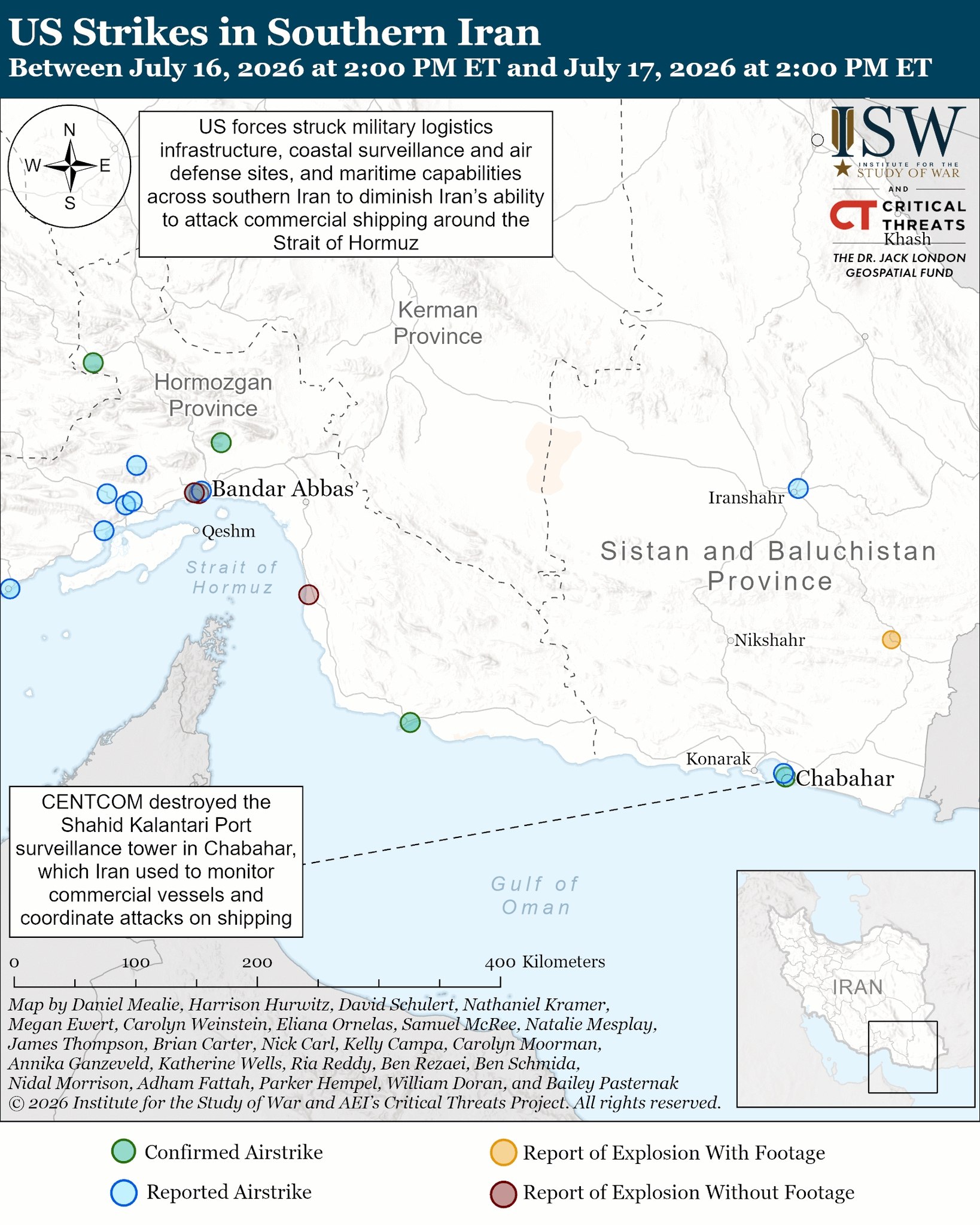
On the early morning of 18 July 2026, United States air operations intensified in Iran’s south, marking the seventh consecutive night of kinetic action against Iranian infrastructure. The most consequential strike occurred at 04:47 UTC in Iranshahr County, Sistan and Baluchestan Province, where precision‑guided bombs destroyed two road bridges and a nearby energy substation, cutting water supplies to multiple villages for the seventh night in a row. No civilian casualties were reported in the immediate aftermath, but the loss of water access has heightened humanitarian concerns across the region. The operation was documented by Al Jazeera, which described the attacks as part of a broader campaign to degrade Iran’s logistical capacity (AlJazeera, video feed).
"A seventh night of US strikes cuts water to villages in Iran’s south," AlJazeera reported, emphasizing the cumulative impact on civilian water infrastructure.
The Iranshahr operation employed conventional bombs delivered from high‑altitude platforms. According to the AlJazeera source, the targeted bridges were critical links for both civilian traffic and military supply routes feeding the port city of Chabahar. The energy substation, identified as a node in the regional power grid, also sustained significant damage, further destabilizing electricity provision to nearby settlements.
Rocket Attack on Bonji, Hormozgan Province
At 02:41 UTC, a separate kinetic event unfolded in the coastal village of Bonji, located in western Jask County, Hormozgan Province. According to a message posted on the CIG_telegram channel, United States‑origin missiles struck an electric substation and water‑desalination pumps that serve several villages in the area. The strike disabled the desalination facility, effectively cutting potable water to an estimated 3,000 residents. No injuries were reported, but the loss of desalinated water has forced local authorities to rely on emergency tankers and limited well supplies. The CIG_telegram post did not attribute the attack to a specific U.S. command, but it confirmed the use of missile‑type weapons.
Bandar Abbas Bridge and Rail Strikes
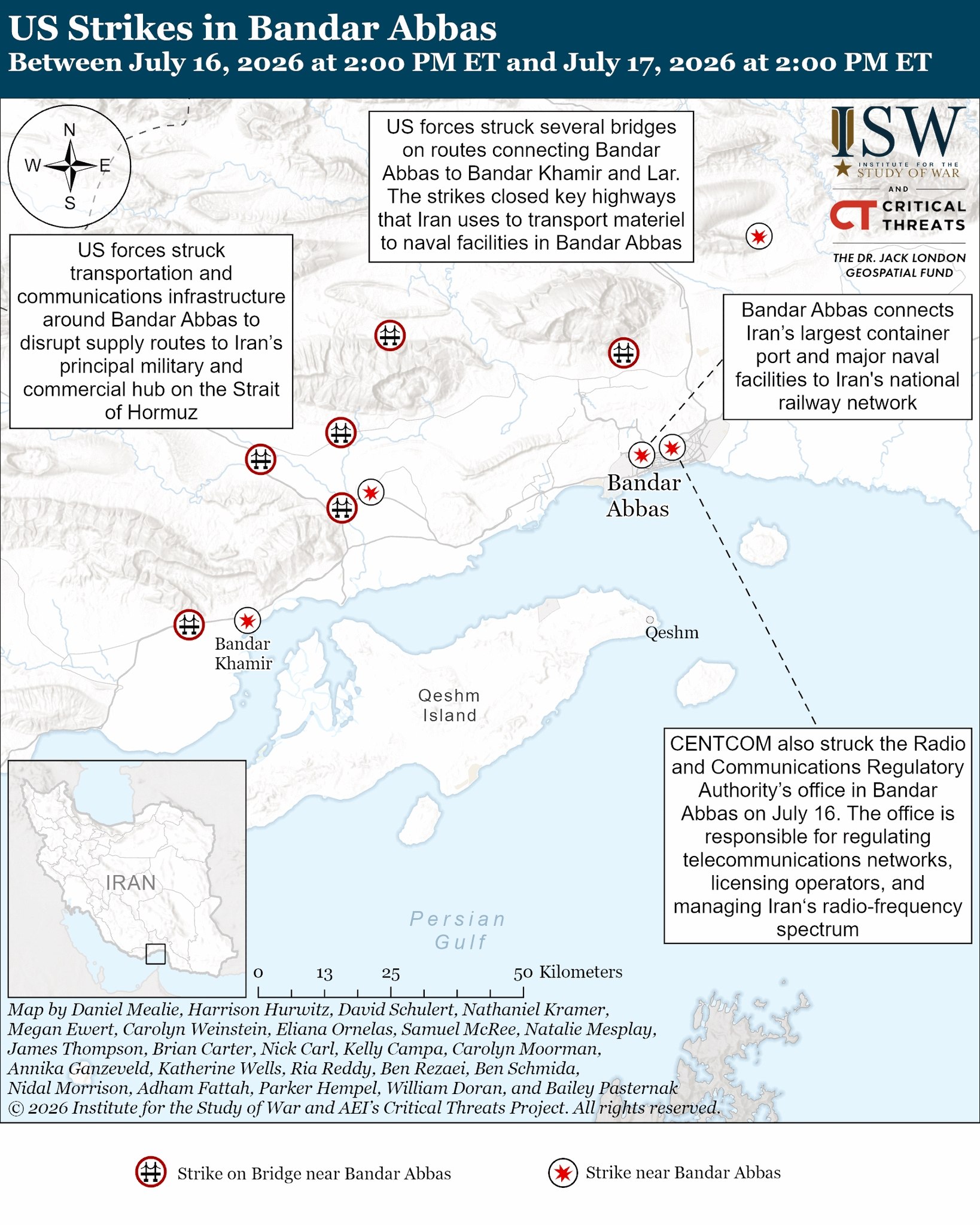
Earlier in the day, at 01:13 UTC, U.S. air assets conducted coordinated strikes on bridges and railway lines in Bandar Abbas, the capital of Hormozgan Province and a strategic naval hub for the Islamic Revolutionary Guard Corps (IRGC) Navy First Naval District. The CIG_telegram channel reported that the strikes aimed to disrupt supply routes to the port, which handles a significant portion of Iran’s oil exports. While the exact number of structures damaged remains unverified, satellite imagery released by independent analysts shows visible cratering on at least two major road bridges and a rail viaduct. No civilian casualties were confirmed, and Iranian officials have not released an official damage assessment.
GeoPWatch, another open‑source monitoring outlet, corroborated the presence of U.S. air activity over Bandar Abbas at 00:50 UTC, describing the operation as “airstrikes on Bandar Abbas” without providing further technical detail. The lack of reported weapon types suggests the possibility of low‑observable munitions or kinetic impact weapons designed to minimize collateral damage.
Targeting of Rudkhaneh Shur Bridge and Mud Routes
At 05:58 UTC, OSINTdefender documented a series of U.S. airstrikes that focused on three major road bridges in Hormozgan Province, including the Rudkhaneh Shur Bridge on the Minab–Rudan corridor. The strikes also targeted adjacent mud routes that serve as alternative supply lines for ground forces operating near Bandar Abbas. The OSINTdefender report confirms the use of conventional air‑strike munitions and notes that the bridges were rendered inoperable, forcing traffic to divert to longer, less secure pathways. No fatalities were reported, but the disruption is expected to increase logistical costs for both civilian commerce and military movements.
Iranian Retaliatory Actions Across the Gulf
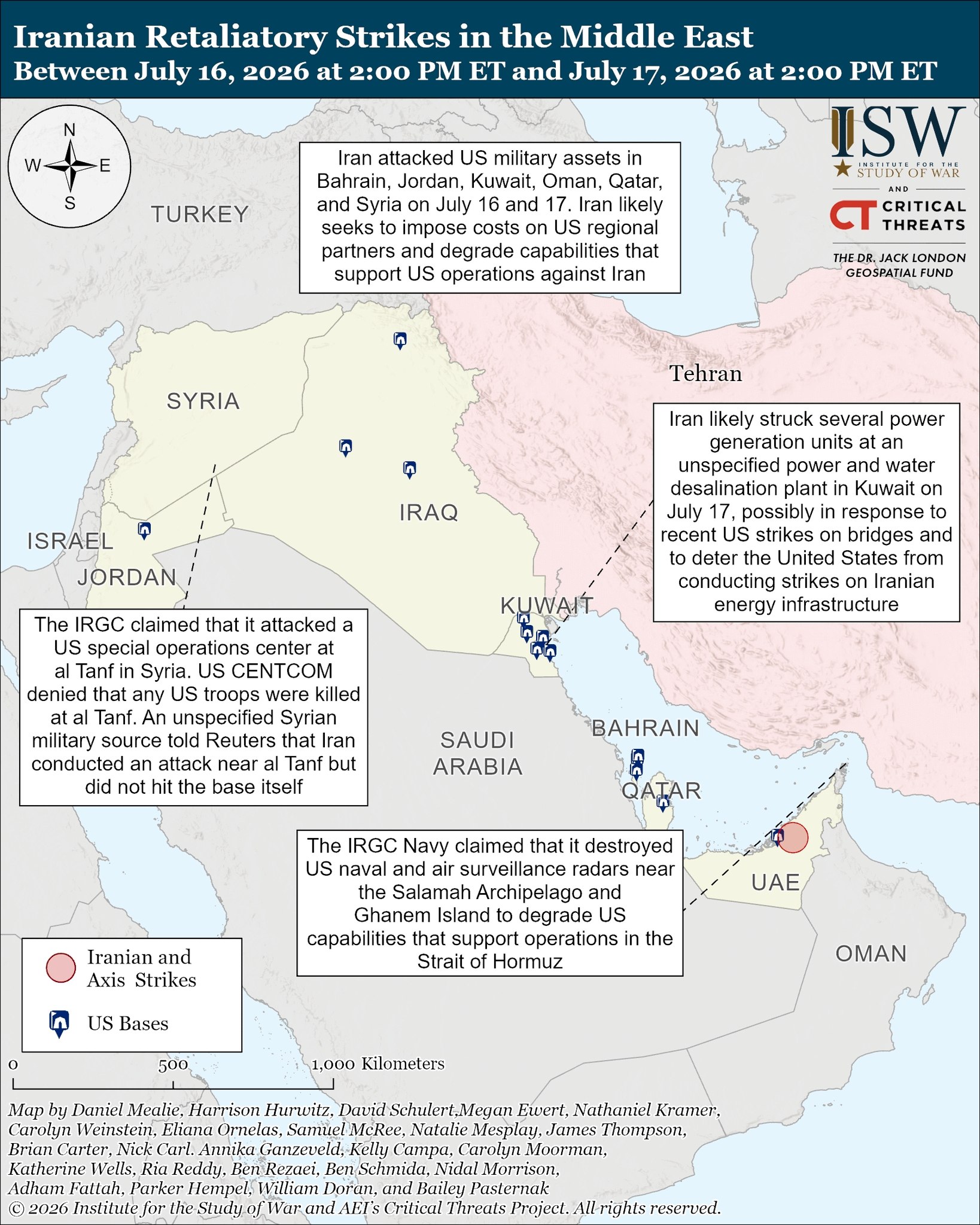
In response to the cumulative U.S. strikes, Iranian forces launched a series of counter‑operations later on 18 July, targeting infrastructure and U.S. assets in Kuwait, Bahrain, Jordan, Qatar, Oman, Syria, and a Thai‑flagged vessel transiting the Strait of Hormuz. The CIG_telegram channel indicated that the Iranian response employed both air‑strike and missile capabilities, coordinated by the IRGC Navy First Naval District. While the precise damage inflicted by these retaliatory attacks remains under verification, the multi‑theater nature of the response underscores Tehran’s intent to project power beyond its borders and to signal deterrence against further U.S. kinetic actions.
Operational Patterns and Strategic Implications
The sequence of events on 18 July reveals a clear escalation in the United States’ kinetic posture toward Iran’s southern infrastructure. By focusing on bridges, rail lines, energy substations, and water‑desalination facilities, the campaign appears designed to impair Iran’s logistical resilience and to exert pressure on civilian populations dependent on these services. The repeated targeting of water infrastructure, in particular, raises concerns under international humanitarian law, as the denial of essential services can constitute collective punishment if not proportionate to a legitimate military objective.
Iran’s rapid retaliatory strikes across the Gulf region demonstrate a willingness to expand the conflict’s geographic scope, potentially drawing additional state and non‑state actors into the confrontation. The involvement of the IRGC Navy First Naval District suggests a coordinated maritime and land‑based response, leveraging both conventional missile systems and asymmetric tactics.
Source Attribution
All events are corroborated by open‑source intelligence channels: AlJazeera (video feed), CIG_telegram (multiple posts), GeoPWatch (Telegram channel), and OSINTdefender (Telegram analysis). Each source provides time‑stamped evidence of the kinetic actions, weapon types employed, and the organizations involved. No independent casualty verification has emerged as of the time of writing.