On 18 July 2026, the Islamic Revolutionary Guard Corps (IRGC) executed a coordinated kinetic operation targeting United States air installations in Jordan, Bahrain, Saudi Arabia and Iraqi Kurdistan. The attack, reported by the open‑source monitor_the_situation channel at 05:37:15 UTC, involved ballistic missiles and unmanned aerial systems (UAS) and was described as a direct response to earlier US airstrikes on Iranian territory.
Missile and Drone Strikes on US Airbases
The IRGC’s salvo included:
- Ballistic missiles aimed at Muwaffaq Salti Airbase (Jordan), Sheikh Isa Airbase (Bahrain), Prince Sultan Airbase (Saudi Arabia) and Al‑Harir Airbase (Iraqi Kurdistan).
- Combat drones launched simultaneously to exploit the missile impact zones and increase target saturation.
Satellite imagery and on‑site video, shared via the monitor_the_situation Telegram feed (source), show burn marks and debris at the Jordanian and Saudi facilities. No official casualty figures have been released, but the United States has confirmed the evacuation of most aircraft from Al‑Udeid Air Base in Qatar following a related strike at 05:08:50 UTC.
"Iran's IRGC launched ballistic missiles and drones against US airbases in Jordan, Bahrain, Saudi Arabia and Iraqi Kurdistan," monitor_the_situation reported.
Weapons employed: ballistic missiles (type undisclosed) and armed drones. Organizations involved: IRGC; United States Air Force installations.
Secondary Iranian Attacks and Regional Counter‑Responses
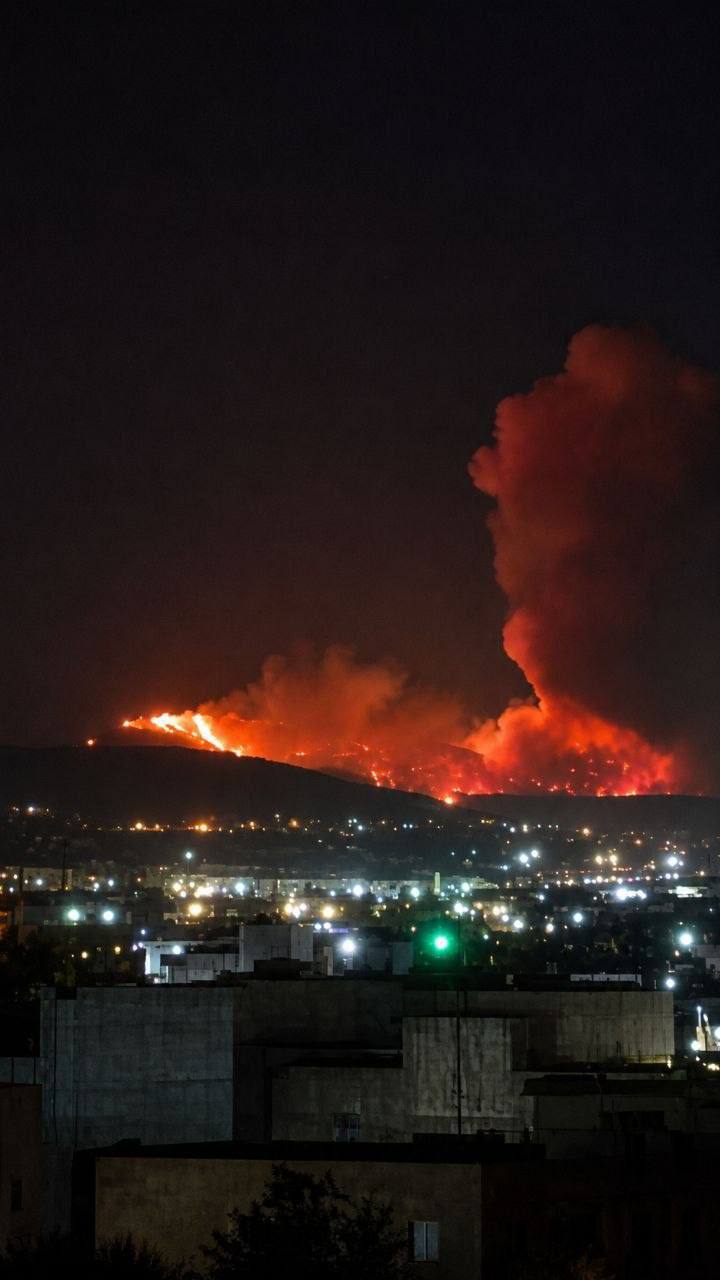
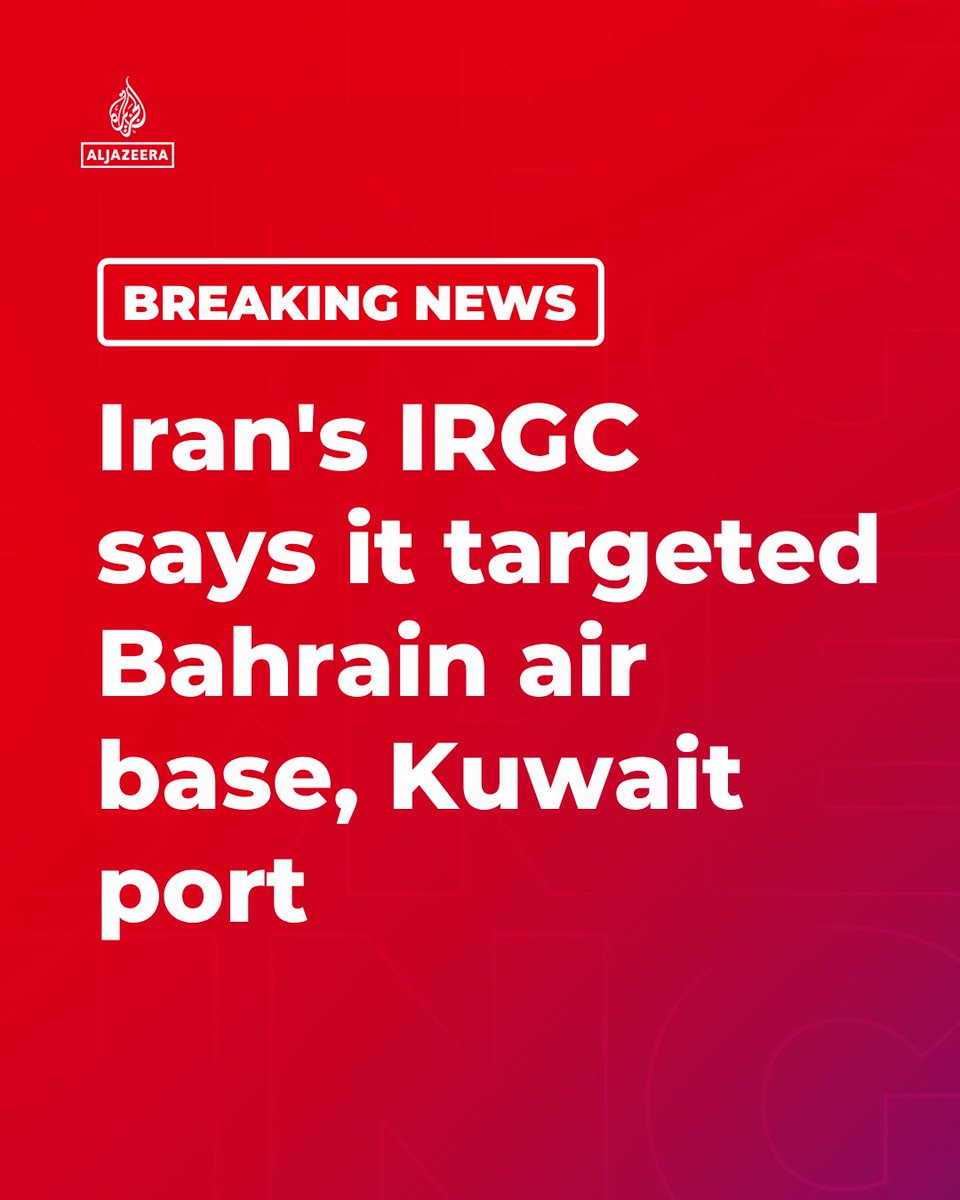
Within the same hour, the IRGC claimed additional strikes on Bahrain’s Sheikh Isa Air Base and Kuwait’s Al Ahmadi Port (05:36:16 UTC). Photographic evidence posted on the same Telegram channel (source) shows smoke plumes over the Kuwaiti port, though no damage assessments have been published.
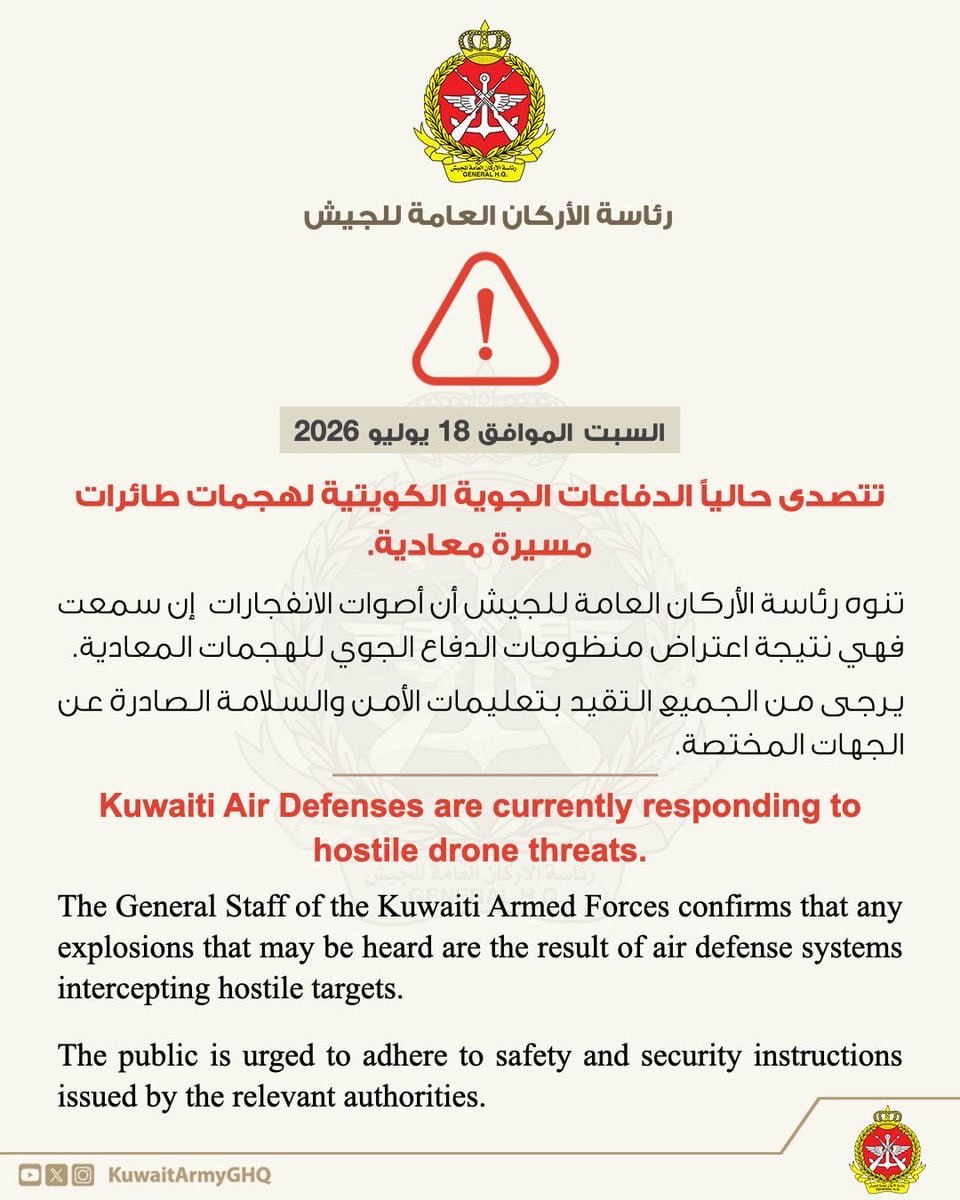
Kuwait’s government, citing a second wave of Iranian missile and drone attacks, announced a defensive response at 02:10:11 UTC (source). The statement, relayed by the monitor_the_situation channel, indicated that Kuwaiti air defenses had engaged incoming threats, a claim later corroborated by a separate report of a drone swarm interception by the Kuwaiti Royal Army Air Defenses at 00:24:36 UTC (source).
In Bahrain, explosions and interceptions were reported near the US 5th Fleet and Isa Air Base at 03:13:16 UTC (source). While the exact number of intercepted projectiles was not disclosed, the incident underscores the heightened threat environment around US naval assets in the Gulf.
Drone Operations in Iraq and Kuwait
Iranian UAV activity extended into Iraqi Kurdistan and the broader Iraqi theater. At 05:56:55 UTC, OSINTdefender documented Iranian drones striking weapons depots in Sulaymaniyah’s Tasluja area and hitting Erbil, causing civilian injuries and damage to Peshmerga facilities (source). Photographs accompanying the report show smoke rising from the depot sites.
Earlier, at 00:08:46 UTC, GeoPWatch reported IRGC drone attacks on ammunition and fuel depots at Bouheira Camp, Al‑Saleh Airbase, and Muwafiq Salty Airbase in Iraq (source). These strikes appear to be part of a broader Iranian strategy to degrade logistical hubs supporting US and coalition forces.
Israeli Operations in Southern Lebanon
Separately, the Israeli army destroyed three schools in southern Lebanon, raising the total of completely destroyed schools to at least 20 and damaging an additional 100 (Al Jazeera). While not directly linked to the Iranian‑US kinetic exchange, the action reflects the multi‑front nature of the regional conflict.
US Strategic Shift and Expanded Strike Campaign
US media outlets reported a widening of American strike operations against Iran on 01:54:45 UTC (Al Jazeera). The coverage suggests that the United States is moving deeper into Iranian interior targets, a development echoed in a live‑blog update at 00:00:00 UTC describing a seventh consecutive night of US‑Iran exchanges.
At 01:39:02 UTC, intelslava posted a claim that the US Army launched ATACMS tactical ballistic missiles from Kuwait at Iranian targets (source). While independent verification is pending, the report indicates a potential escalation in the range and precision of US kinetic assets in the theater.
Chronology of Key Kinetic Events (18 July 2026)
- 05:37:15 – IRGC ballistic missiles and drones strike US bases in Jordan, Bahrain, Saudi Arabia, Iraqi Kurdistan (CRITICAL).
- 05:36:16 – IRGC claims strikes on Bahrain’s Sheikh Isa Air Base and Kuwait’s Al Ahmadi Port (HIGH).
- 05:08:50 – Iranian missiles and drones hit US Al‑Udeid Air Base, Qatar; aircraft evacuated (HIGH).
- 03:13:16 – Explosions and interceptions near US 5th Fleet, Manama, Bahrain (HIGH).
- 02:36:14 – Ballistic missiles launched toward Bahrain (HIGH).
- 02:10:11 – Kuwait announces response to second wave of Iranian attacks (CRITICAL).
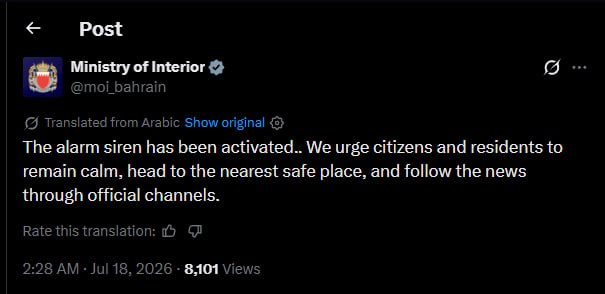
- 01:41:25 – Air‑raid sirens reported in Bahrain (HIGH).
- 01:39:02 – US Army allegedly fires ATACMS from Kuwait at Iran (HIGH).
- 00:54:41 – Two ballistic missiles impact Jordan’s Muwaffaq Salti Air Base (HIGH).
- 00:26:05 – Kuwait reports ongoing Iranian drone attacks on its territory (MEDIUM).
- 00:24:36 – Kuwaiti air defenses intercept Iranian drone swarm (MEDIUM).
- 00:08:46 – IRGC drones strike ammunition/fuel depots in Iraq (MEDIUM).
The concentration of high‑intensity kinetic actions within a twelve‑hour window marks an unprecedented escalation in the Iran‑US confrontation, with spill‑over effects on neighboring states and non‑state actors.
Implications for Regional Security
These events demonstrate a shift from proxy engagements to direct kinetic exchanges involving advanced missile and UAV capabilities. The simultaneous targeting of multiple US installations suggests a coordinated Iranian doctrine aimed at degrading US power projection while signaling deterrence to regional allies. Conversely, the United States’ reported use of ATACMS and deeper strikes into Iranian territory indicates a willingness to expand the conflict’s geographic scope.
Continued Iranian drone activity over Iraq and Kuwait raises the risk of civilian casualties and infrastructure damage, potentially drawing additional regional actors into the hostilities. The Israeli school destructions, while separate, underscore the broader humanitarian toll of the multi‑theater conflict.
Monitoring agencies, including monitor_the_situation, RNIntel, OSINTdefender and mainstream outlets such as Al Jazeera, will be essential for real‑time verification of further kinetic events and for assessing escalation thresholds.