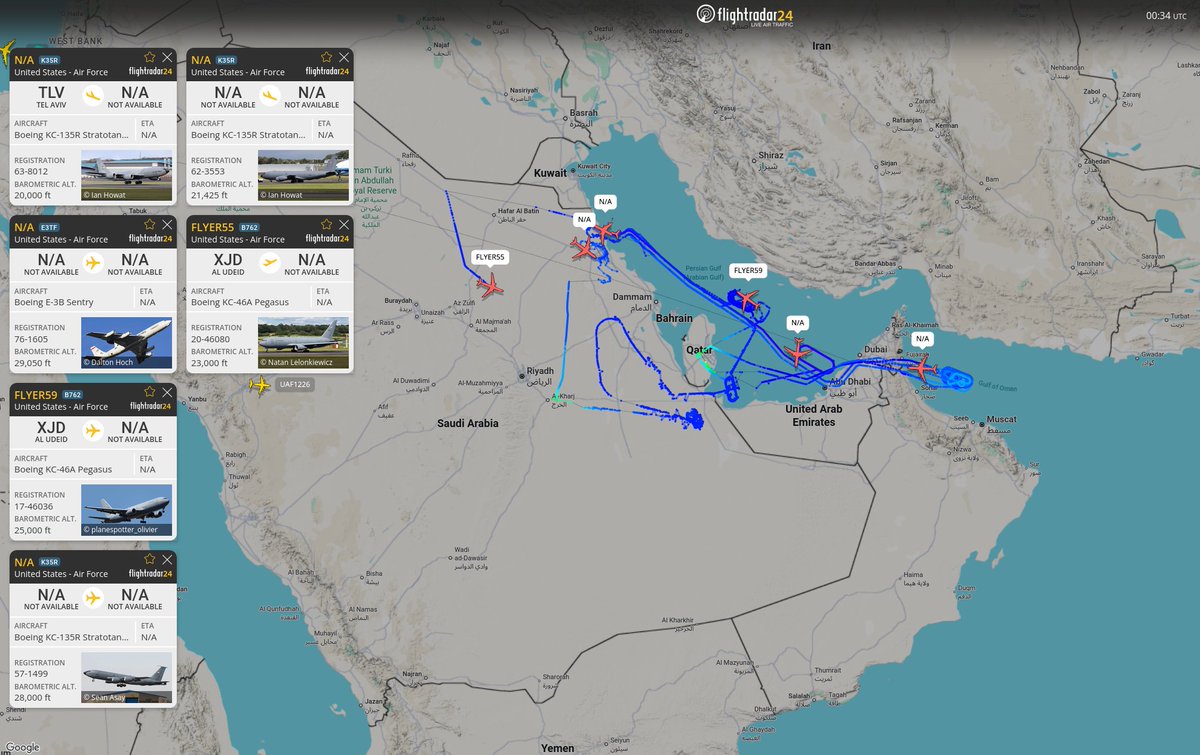
At 05:21 UTC on 16 July 2026, United States Navy vessels intercepted an Iranian‑flagged VLCC carrying approximately two million barrels of crude oil as it attempted to traverse the Strait of Hormuz. The blockade line was enforced without the use of weapons, and the tanker was ordered to stop and return to port. This action represents the most significant kinetic event of the day, underscoring the heightened maritime tension between the United States and Iran.
Source: monitor_the_situation
Naval Engagements in the Gulf
Earlier, at 04:43 UTC, U.S. Central Command reported the disabling of the Curaçao‑flagged tanker M/T Belma en route to Iran’s Kharg Island. An aircraft launched Hell‑fire missiles into the vessel’s smokestack after it ignored repeated warnings, rendering the unladen tanker inoperable. No casualties were reported.
Source: GeoPWatch
Simultaneously, Iranian media cited explosions on Qeshm Island, Bandar Abbas and Chabahar, while Bahrain and Kuwait sounded air‑raid sirens. The United States claimed to have “disabled” an Iranian oil tanker in the same timeframe, though details remain sparse.
Source: AlJazeera
US Air and Missile Strikes Across Iran
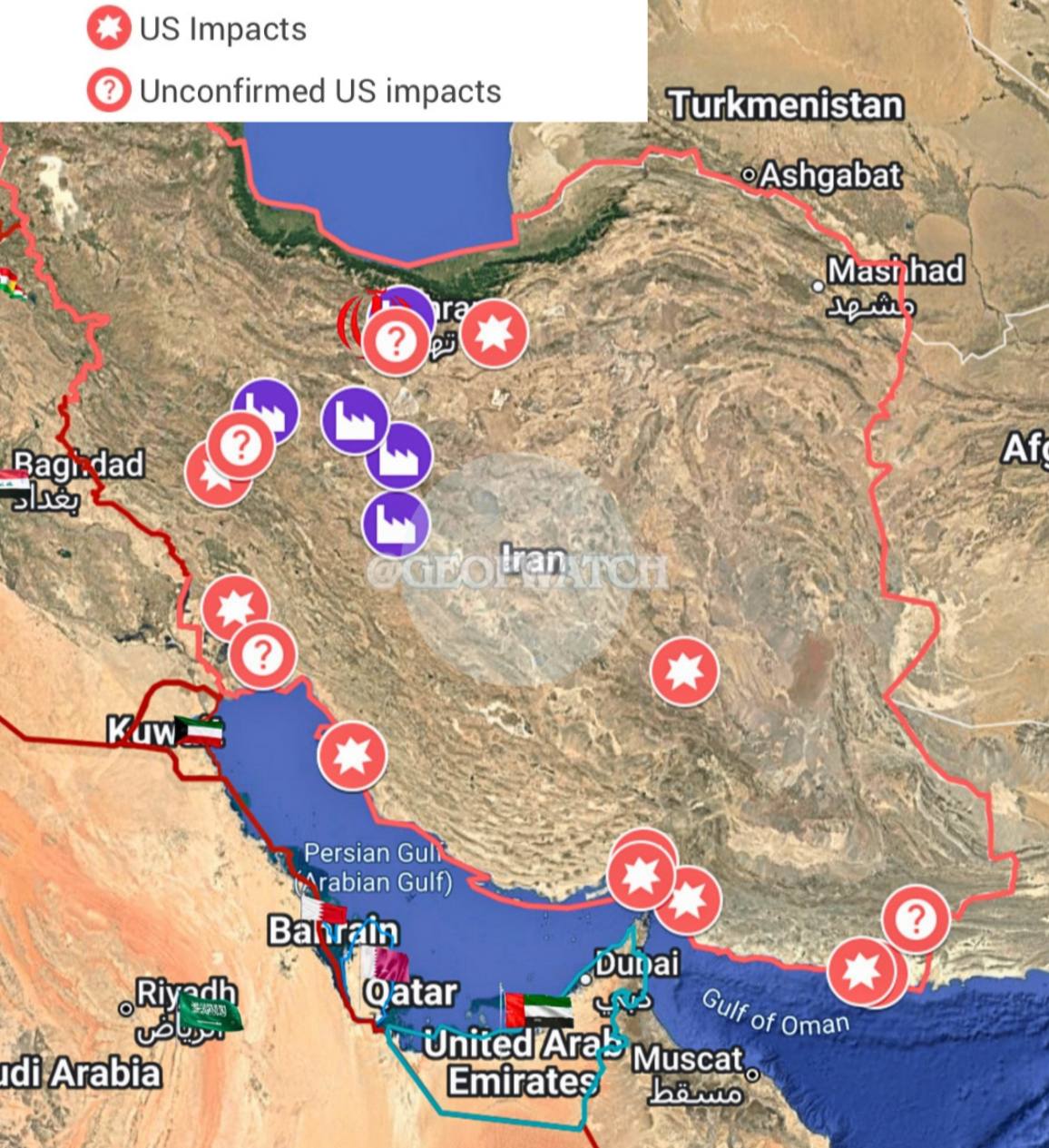
From 02:57 UTC onward, the United States conducted a coordinated wave of missile and precision‑munitions strikes targeting a range of Iranian facilities. Confirmed impacts included:
- An INSIG building, a civilian hospital, and the 92nd Armored Division base in Ahvaz.
- The Imam Ali missile base in Khorramabad.
- Semnan Airport, Bushehr, Qeshm Island (a fish‑powder factory), Bandar Abbas, Sirik, Konarak and Chabahar.
Additional unconfirmed strikes were reported in Bandar‑e‑Mahshahr, Borujerd, Pakdasht and Rask. The weapons employed were a mix of cruise missiles and precision‑guided munitions launched from US aircraft and naval platforms. No civilian casualty figures have been released, but the targeting of a hospital in Ahvaz raises concerns under international humanitarian law.
Source: CIG_telegram
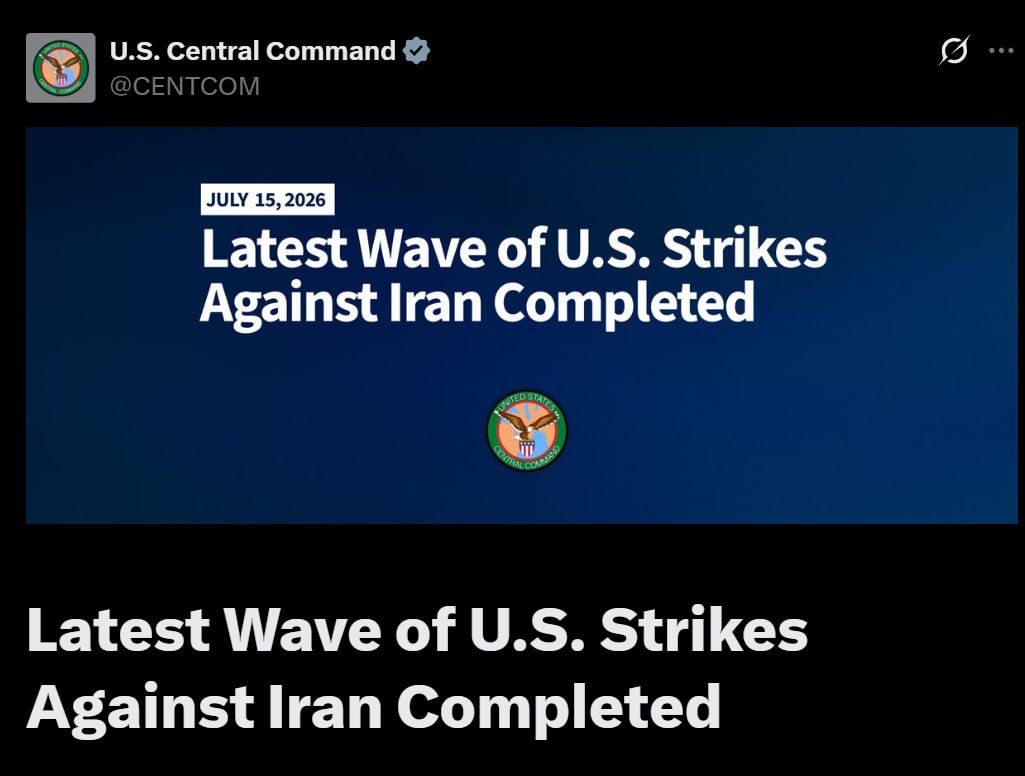
Further precision strikes were announced by CENTCOM at 01:28 UTC, focusing on command centres, air‑defence systems, missile and drone capabilities, and coastal surveillance installations in Bandar Abbas. These actions aim to diminish Tehran’s ability to threaten commercial shipping in the Strait of Hormuz.
Source: CIG_telegram
Iranian Counter‑Operations
In response, Iran launched missile attacks across the Persian Gulf at 02:10 UTC while its foreign minister visited Qatar to pay respects for the late Emir. The strikes, reported by Al Jazeera, targeted unspecified Gulf locations and were described as part of Iran’s broader defensive posture.
Source: AlJazeera
Iran’s Islamic Revolutionary Guard Corps (IRGC) also claimed the eighth wave of Operation Nasr‑2, employing ballistic missiles and drones to destroy a C‑RAM early‑warning radar at Ali Al‑Salem Airbase in Kuwait and to strike a gathering of U.S. soldiers. The IRGC’s statement emphasized the use of “Ya Zainab Al‑Kubram” as the operation’s code.
Source: CIG_telegram
Air‑Defense Activity Within Iran
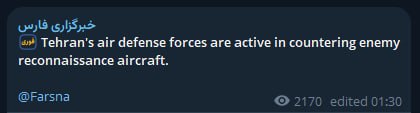
Multiple air‑defence engagements were reported across Iranian territory. In Ahvaz, a US airstrike prompted the evacuation of 211 patients from a local hospital. In Tehran and surrounding provinces, anti‑aircraft systems engaged recon drones, cruise missiles, and unidentified aircraft, with reports of smoke columns at the Khatam al‑Anbia base in Tajrish and explosions in Borujerd and Shian.
Source: monitor_the_situation
The IRGC also announced the downing of a US MQ‑9 Reaper drone over Andimeshk, Khuzestan Province, at 00:39 UTC, asserting control over its airspace.
Source: monitor_the_situation
Regional Air‑Defense Interceptions
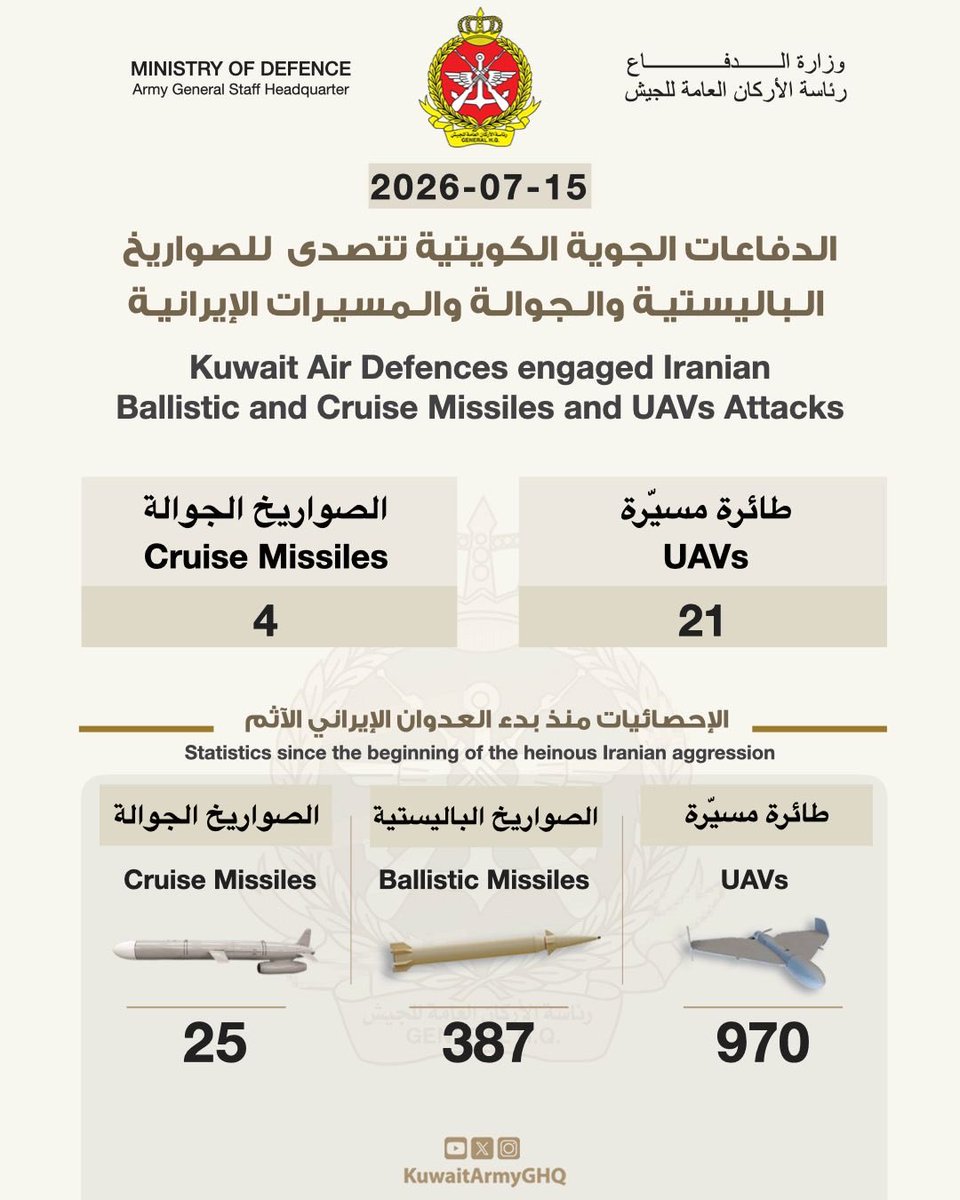
Kuwait’s air‑defence forces reported intercepting four cruise missiles and twenty‑one one‑way attack drones over Kuwait City, reflecting the broader regional spill‑over of the conflict.
Source: monitor_the_situation
In addition, Iranian anti‑aircraft artillery was observed over Rey, Tehran Province, and intense anti‑aircraft activity surrounded the Parchin Military Complex in Pakdasht, indicating heightened alert levels around strategic sites.
Source: BellumActaNews
Summary of Kinetic Activity
The day’s events illustrate a rapid escalation of kinetic engagements across maritime, aerial, and ground domains. The United States has leveraged naval blockades, missile strikes, and precision air attacks to curtail Iran’s capacity to threaten shipping lanes and to degrade military infrastructure. Iran, in turn, has employed ballistic missiles, drones, and anti‑aircraft systems to contest US operations and to project power regionally, including against Kuwaiti air‑defence assets.
All parties have refrained from reporting civilian fatalities in the immediate aftermath, but the targeting of civilian infrastructure such as hospitals and the evacuation of patients underscore the humanitarian risk inherent in the ongoing hostilities.