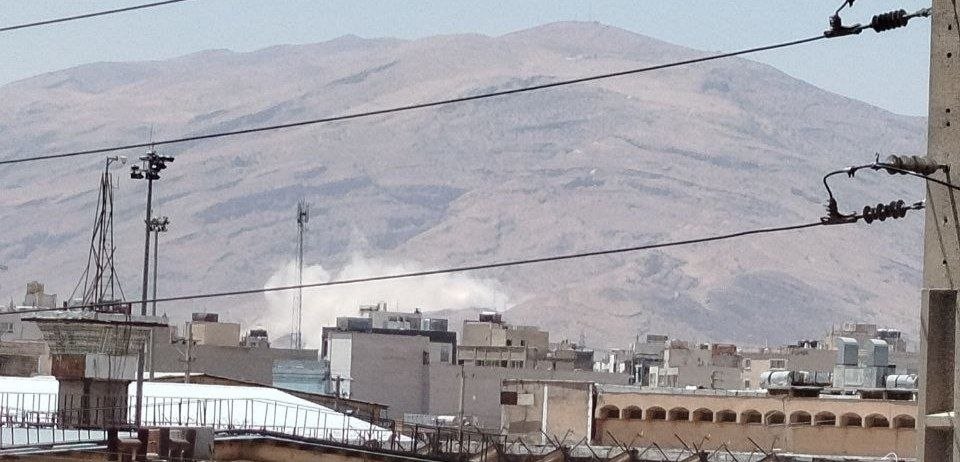
On July 15, 2026, the United States Navy conducted a series of coordinated strikes on Iran's Hengam Island in the Gulf of Oman, marking the most significant kinetic event of the day and underscoring a rapid escalation in the US‑Iran confrontation.
Naval Operations
The strike, reported by the open‑source intelligence channel rnintel at 15:47 UTC, involved US naval assets targeting undisclosed installations on Hengam Island, Hormozgan Province. While the specific weapons employed were not disclosed, the operation demonstrated the US Navy’s capacity to project power into the Persian Gulf and directly challenge Iranian maritime security. The incident follows a broader pattern of naval confrontations, including a review of commercial traffic in the Strait of Hormuz that recorded only 35 vessel crossings on July 13‑14, with a US‑coordinated tanker reportedly partially sunk after Iranian fire
Source: https://t.me/CIG_telegram/79822.
Earlier in the day, at 12:43 UTC, the Turkish‑operated cargo ship LUNI broke in half and began sinking off Bandar Abbas, Iran. While the cause remains under investigation, the vessel’s crew suggested a possible sea‑mine detonation, highlighting the heightened risk to commercial shipping in Iranian waters
Source: https://t.me/rnintel/64163.
Iranian forces also fired warning shots at two vessels in the Strait of Hormuz at 12:17 UTC, temporarily halting their progress and reinforcing the strategic importance of the waterway
Source: https://t.me/monitor_the_situation/24943.
Airstrikes
US air power was employed across multiple Iranian locations on the same day. At 12:14 UTC, US aircraft struck the Chabahar lighthouse in southeastern Iran for the second time within a week, according to the Telegram channel CIG_telegram. Video evidence accompanying the report confirmed the impact on the lighthouse structure
Source: https://t.me/CIG_telegram/79820.
At 10:36 UTC, the US Central Command (CENTCOM) announced fresh airstrikes on undisclosed targets in Tehran, intensifying the conflict’s urban dimension. The announcement, posted by the channel monitor_the_situation, included video footage of the strikes, though casualty figures were not immediately released
Source: https://t.me/monitor_the_situation/24929.
Shortly thereafter, at 09:59 UTC, an airstrike was reported over Shiraz in southern Iran. The report, also from rnintel, included a photograph of the blast site and indicated that the strike was attributed to US forces, though no official US statement was issued
Source: https://t.me/rnintel/64151.
Missile and Rocket Attacks
Iran’s health ministry reported that more than 260 individuals were injured in the series of US strikes, citing missile impacts in Tehran at 06:29 UTC. The ministry’s statement emphasized the civilian toll of the attacks and called for an immediate cessation of hostilities
Source: https://t.me/monitor_the_situation/24918.
In a distinct operation targeting Iran’s food supply chain, US missiles struck wheat storage silos in Hoveizeh County and Dasht Azadegan County, Khuzestan Province, at 06:18 UTC. The Deputy Governor of Khuzestan Province confirmed the hits, noting that this represented the first US attack on Iranian agricultural infrastructure
Source: https://t.me/CIG_telegram/79797.
Maritime Incidents and Commercial Impact
The cumulative effect of these kinetic actions has disrupted commercial navigation in the region. The UK Maritime Trade Operations (UKMTO) and other monitoring agencies reported that a US‑coordinated tanker attempting to traverse the southern Omani lane of the Strait of Hormuz was partially sunk after being struck by Iranian projectiles. The incident underscores the vulnerability of vessels operating under covert AIS settings and the potential for escalation in a chokepoint that handles a significant share of global oil shipments.
Furthermore, the sinking of the Turkish cargo vessel LUNI off Bandar Abbas raises concerns about the safety of civilian shipping routes adjacent to contested zones. While the exact cause—whether a mine, stray projectile, or structural failure—remains unverified, the incident illustrates the broader risk environment for non‑military actors.
Assessment
The coordinated nature of the US kinetic actions—spanning naval bombardment, airstrikes, and missile attacks on both strategic and civilian infrastructure—suggests a deliberate effort to impose multi‑domain pressure on Iran. The targeting of Hengam Island, a location with known naval facilities, indicates a focus on degrading Iran’s maritime capabilities. Simultaneously, strikes on urban centers such as Tehran and Shiraz, as well as the Chabahar lighthouse, demonstrate an intent to disrupt command‑and‑control nodes and critical navigation aids.
Iran’s response, characterized by warning shots in the Strait of Hormuz and reported projectile attacks on US‑aligned tankers, reflects a reciprocal escalation that threatens to broaden the conflict beyond isolated kinetic events. The reported civilian injuries and the unprecedented strike on wheat silos raise the specter of humanitarian consequences, potentially drawing international scrutiny.
Given the density of commercial traffic through the Strait of Hormuz and the proximity of civilian vessels to military targets, the risk of inadvertent casualties remains high. Monitoring agencies and diplomatic channels are likely to intensify calls for de‑escalation, but the current trajectory suggests a continued pattern of tit‑for‑tat kinetic exchanges unless a diplomatic breakthrough is achieved.