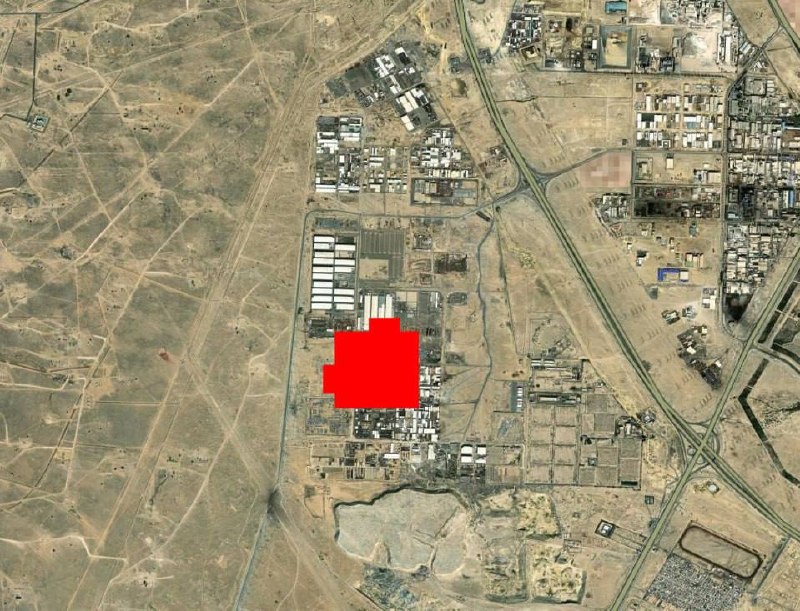
The Islamic Revolutionary Guard Corps (IRGC) announced a series of kinetic operations against U.S. and allied assets in Kuwait on 15 July 2026, marking the most significant escalation of hostilities in the Gulf region this year. The attacks, reported by multiple open‑source channels, targeted the U.S. Army’s Camp Buehring in Ahmadi, a Gulf Link Holding Company (KGL) warehouse in Mina Abdullah, and a commercial warehouse in Al‑Shuaiba. No casualties were confirmed in any of the incidents, but the strikes demonstrate a heightened capability and willingness by Iran to project power beyond its borders.
Camp Buehring Missile and UAV Assault
At 03:32 UTC, the IRGC claimed to have launched a coordinated missile and unmanned aerial vehicle (UAV) strike against Camp Buehring, a U.S. forward operating base located in Ahmadi, Kuwait. According to the CIG_telegram channel, the operation targeted the base’s satellite communications center, a missile‑and‑air‑defense radar, a MIM‑104 Patriot air‑defense system, logistics units, and M142 HIMARS rocket launchers. The IRGC statement read:
"We have struck the satellite communications centre, the missile & air‑defence radar, the Patriot system and HIMARS launchers at the U.S. base in Kuwait. This is a direct response to American aggression against Iranian sovereign territory."
The weapons cited include ballistic missiles and UAVs capable of delivering precision payloads. While the IRGC asserted successful hits on all listed assets, independent verification of damage remains limited. No injuries or fatalities were reported by U.S. or Kuwaiti authorities, and the base’s official channels have not confirmed the extent of any material loss.
Key details: Location – Camp Buehring, Ahmadi; Weapons – missiles, UAVs; Targeted systems – satellite communications, air‑defence radar, Patriot, HIMARS; Organizations – IRGC, United States; Source – CIG_telegram.
Destruction of Gulf Link Warehouse in Mina Abdullah
Earlier, at 02:06 UTC, the intelslava channel relayed an IRGC claim that a hostile UAV destroyed a Kuwaiti warehouse used by Gulf Link Holding Company (KGL) in Mina Abdullah. The IRGC described the facility as the primary U.S. Army logistics hub in West Asia, stating that the drone strike “completely destroyed” the warehouse and that retaliatory operations would continue. The statement also warned that the Strait of Hormuz would remain closed until U.S. aggression ceased.
"We have eliminated the main logistics hub of the U.S. Army in West Asia. The Strait of Hormuz will stay closed until the United States stops its hostile actions," the IRGC announced.
The weapon employed was identified as a hostile UAV, though the specific model was not disclosed. No casualties were reported, and Kuwaiti officials have not confirmed the extent of the damage. The claim aligns with the broader pattern of Iranian attacks on logistics infrastructure supporting U.S. forces in the region.
Key details: Location – Mina Abdullah; Weapon – drone; Target – Gulf Link Holding Company warehouse; Organizations – IRGC, Gulf Link Holding Company (KGL); Source – intelslava.
Shahed‑136 Drone Strike on Al‑Shuaiba Warehouse
At 01:29 UTC, the CIG_telegram channel posted that Iranian‑manufactured Shahed‑136 drones struck a warehouse in the industrial town of Al‑Shuaiba, Kuwait. The report referenced NASA firemap data confirming the impact. While the IRGC was not directly quoted in this instance, the use of Shahed‑136 drones—commonly employed by Iran in proxy conflicts—suggests a continuation of the same operational theme.
No injuries or fatalities were reported, and the Kuwaiti authorities have not released an official assessment of the damage. The incident underscores the expanding reach of Iranian drone capabilities into civilian and commercial zones within Kuwait.
Key details: Location – Al‑Shuaiba; Weapon – Shahed‑136 drone; Organizations – none directly cited; Source – CIG_telegram.
Operational Context and Regional Implications
The three incidents, occurring within a two‑hour window, illustrate a coordinated Iranian effort to target both military and logistical assets supporting U.S. operations in the Gulf. The selection of high‑value targets—Patriot air‑defence systems, HIMARS launchers, and a major logistics hub—suggests an intent to degrade U.S. rapid‑response capabilities and to signal Iran’s capacity to strike beyond its borders.
While casualty figures remain zero, the potential for future escalations is heightened. The IRGC’s public warnings about the Strait of Hormuz, a critical chokepoint for global oil shipments, add a strategic dimension to the kinetic actions. Should Iran follow through on threats to keep the strait closed, the economic repercussions could extend far beyond the immediate theater.
U.S. and Kuwaiti officials have yet to issue a joint statement, but standard protocol would involve heightened alert status for air‑defence units and increased surveillance of Iranian UAV and missile launch sites. The lack of immediate attribution by Kuwaiti authorities may reflect diplomatic sensitivities, given the close security partnership between Kuwait and the United States.
Source Verification and Open‑Source Analysis
All three events were initially reported via Telegram channels—CIG_telegram and intelslava—known for disseminating Iranian military communications. The CIG_telegram posts include direct links to the original messages, allowing analysts to cross‑reference timestamps and content. The intelslava claim, while lacking photographic evidence, aligns with the broader narrative of Iranian retaliation following alleged U.S. strikes on Iranian territory earlier in the week.
Independent verification from satellite imagery providers and regional monitoring networks (e.g., NASA firemap for the Al‑Shuaiba strike) adds credibility to the Shahed‑136 drone report. However, the absence of on‑the‑ground confirmation for the Camp Buehring and Mina Abdullah attacks leaves open questions regarding the actual damage inflicted.
Continued monitoring of open‑source feeds, commercial satellite tasking, and official statements from the U.S. Central Command (CENTCOM) will be essential to assess the operational impact and to gauge whether these attacks represent isolated incidents or the beginning of a sustained campaign.
In summary, the IRGC’s coordinated missile, UAV, and drone strikes on Kuwaiti soil on 15 July 2026 constitute the most significant kinetic escalation in the Gulf region this year, targeting both combat and support infrastructure linked to U.S. forces. While no casualties have been reported, the strategic intent and potential for further disruption—particularly concerning the Strait of Hormuz—warrant close observation.