On July 15, 2026, the Islamic Revolutionary Guard Corps (IRGC) announced the closure of the Strait of Hormuz, a critical chokepoint for global oil shipments, and pledged continued attacks on U.S. military infrastructure until American strikes cease. The declaration, posted on the monitoring channel monitor_the_situation, marks a decisive escalation in Tehran’s campaign against regional adversaries and U.S. forces, intersecting with a series of coordinated missile, drone, and artillery strikes across the Gulf, the Levant, and Eastern Europe.
Strategic Maritime Closure
The IRGC’s statement, disseminated via Telegram, warned that the Strait of Hormuz would remain closed until the United States halts its recent naval operations against Iranian targets. No specific timeline was provided, and the announcement was accompanied by threats to attack U.S. naval assets operating in the Persian Gulf. The closure threatens to disrupt up to 20% of the world’s petroleum trade, underscoring the strategic leverage Iran seeks through maritime denial.
"IRGC Closes Strait of Hormuz, Continues Attacks on US Infrastructure" – monitor_the_situation, 2026-07-15T02:02:55
Coordinated Missile and Drone Campaigns
Simultaneous with the maritime announcement, Iranian forces launched a series of missile and drone attacks targeting multiple Gulf states and U.S. installations. At 00:01:11, Iranian missiles and drones struck U.S. military facilities in Bahrain, prompting a rapid response from U.S. Patriot interceptor missiles over Bahrain at 00:06:26, as reported by rnintel (source). The interceptors produced loud explosions, confirming the presence of inbound aerial threats.
Later, at 00:17:42, alarms were raised in Kuwait following an Iranian aerial attack that also affected Bahrain (rnintel). Violent explosions were reported in Kuwait at 00:16:46 (intelslava), suggesting a broader pattern of Iranian strikes aimed at both civilian and military targets.
Iran’s IRGC Aerospace Force claimed responsibility for a direct strike on Jordan’s Muwaffaq Salti Air Base at 02:53:36, asserting that shelters housing U.S. F‑15, F‑16, F‑35 fighters and MQ‑9 drones were destroyed (CIG_telegram). Jordanian forces later reported intercepting three ballistic missiles launched from Iran at 03:32:08, though additional missiles impacted the base (source).
U.S. Counter‑Operations
In response to the expanding Iranian threat, U.S. Central Command released footage at 02:37:26 showing Navy F/A‑18E Super Hornet jets striking missile‑loaded transporter‑erector‑launchers (TELs) and UAV launch sites within Iran (CIG_telegram). The operation, conducted from a Nimitz‑class carrier, targeted multiple launch platforms, creating visible craters and a large explosion at one site.
Admiral Brad Cooper, commander of U.S. Central Command, warned that Iran’s attacks on seven commercial vessels and dozens of missiles and drones over the past week would be met with decisive action (CIG_telegram). The U.S. also announced the resumption of its blockade of Iranian ports, coinciding with Iran’s shelling of Kuwait and Bahrain earlier in the day (OSINTdefender).
Regional Spillover: Lebanon, Gaza, and Ukraine
Beyond the Gulf, Israeli forces conducted kinetic operations in southern Lebanon at 05:46:41, demolishing structures and opening fire on civilians, raising the risk of a broader Israel‑Lebanon confrontation (monitor_the_situation). In Gaza, an Israeli airstrike in Deir el‑Balah at 03:01:43 killed three civilians and wounded several others (source).
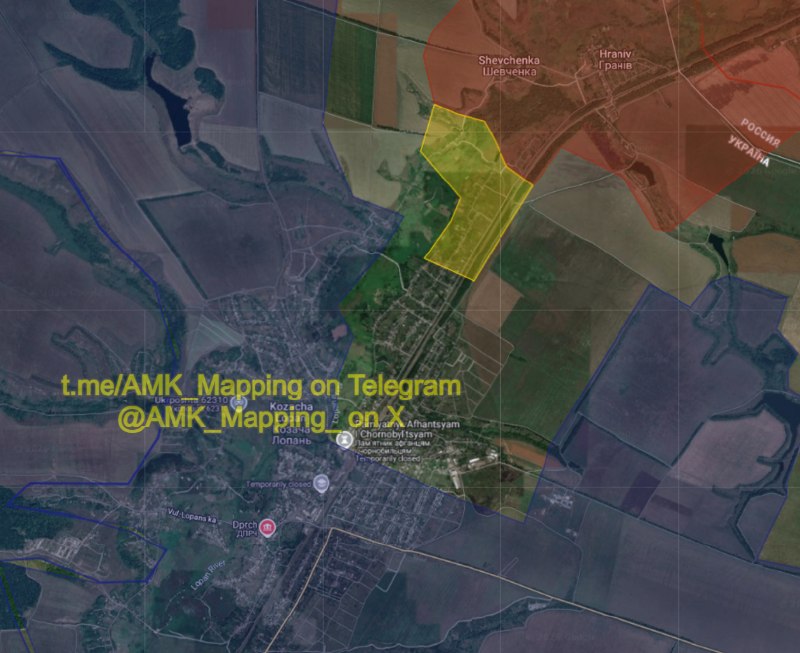
In Eastern Europe, Russian Kh‑59/69 cruise missiles struck Odesa’s Prymorskyi District at 02:40:50 without triggering Ukrainian air‑defence systems (monitor_the_situation). Concurrently, Russian artillery continued shelling Kozacha Lopan in Kharkiv Oblast at 02:33:50, contradicting earlier claims of clearance by Russian forces (source).
Casualties and Material Damage
The documented civilian toll includes three deaths in Deir el‑Balah and multiple injuries from Israeli demolition activities in southern Lebanon, though exact numbers were not disclosed. Iranian missile and drone attacks on commercial vessels in the Gulf resulted in “nearly a dozen” crew members killed, missing, or injured, according to U.S. Central Command statements.
Infrastructure damage includes the reported destruction of aircraft shelters at Muwaffaq Salti Air Base, the targeting of command and fuel facilities at the U.S. Naval Support Activity in Bahrain (CIG_telegram), and the impact on missile‑loaded TELs within Iran.
Analysis of Escalation Dynamics
The coordinated nature of Iran’s kinetic actions—spanning missile launches, drone strikes, naval threats, and direct assaults on foreign military installations—suggests a deliberate strategy to pressure the United States and its regional allies. By closing the Strait of Hormuz and simultaneously targeting U.S. assets in Bahrain, Jordan, and the broader Gulf, Tehran aims to create multiple fronts that strain U.S. response capabilities.
U.S. counter‑measures, including naval blockades, airstrikes on Iranian launch sites, and Patriot interceptions, demonstrate a willingness to project power but also risk further escalation. The lack of air‑defence response to Russian cruise missiles in Odesa highlights potential gaps in Ukrainian defensive coverage, while Israeli operations in southern Lebanon risk opening a new front that could draw Hezbollah into direct conflict.
Overall, the events of July 15 illustrate a rapidly widening kinetic environment across the Middle East and adjacent regions, with the potential for significant disruptions to global energy markets, civilian safety, and international security frameworks.