On 14 July 2026 Iran launched a coordinated missile campaign that struck multiple locations across the Gulf region, while the United States conducted a series of airstrikes on Iranian facilities. The combined kinetic actions represent the most significant escalation of hostilities involving Iran since the start of the year, affecting Jordan, Bahrain, Kuwait, Oman and Iranian territory itself.
Cross‑border missile attacks on Jordan and the Gulf
At 17:39 UTC Iran fired four ballistic missiles at King Faisal Air Base in Al Karak, Jordan. Jordanian air‑defence systems failed to intercept any of the projectiles, and the missiles impacted the base without reported casualties. The attack was documented by the CIG_telegram channel, which posted video evidence (source: https://t.me/CIG_telegram/79731). A separate but related video showed at least four ballistic missiles striking a U.S. military installation in Jordan earlier that day (source: https://t.me/CIG_telegram/79698). The same channel later released footage of missiles hitting King Faisal Air Base in Amman (source: https://t.me/CIG_telegram/79699). These strikes demonstrate Iran’s willingness to target both Jordanian and U.S. assets in the country.
In the same timeframe Iran launched missiles and drones toward Bahrain and Kuwait, triggering air‑raid sirens in Manama. The monitor_the_situation channel reported that the attacks were aimed at U.S. military installations hosted by the two states (source: https://t.me/monitor_the_situation/24865). No casualty figures were released, but the alerts underscore the risk to civilian populations in the Gulf capitals.
U.S. airstrikes on Iranian territory
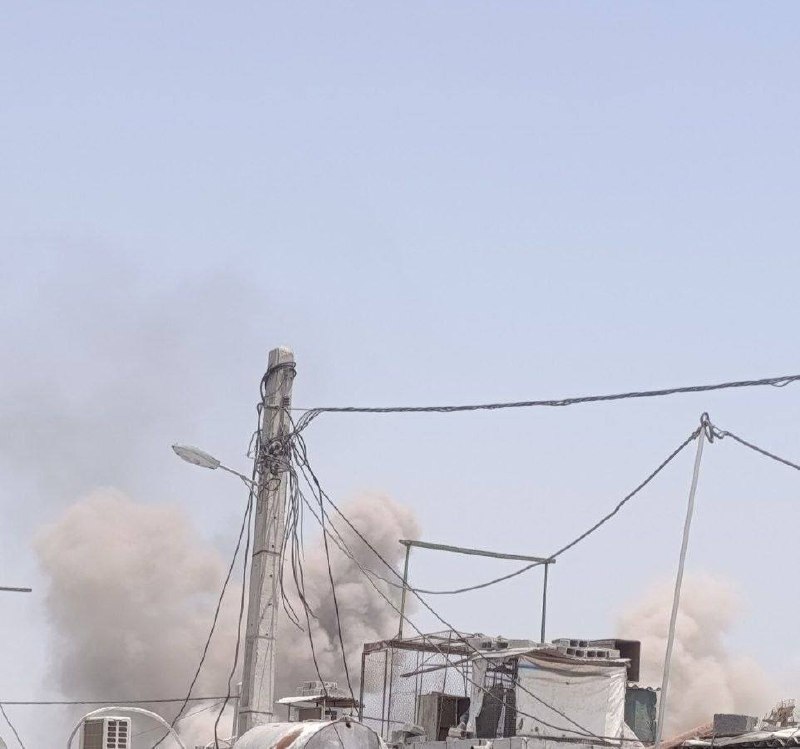
Parallel to Iran’s outbound attacks, the United States executed a series of airstrikes on Iranian installations. At 16:46 UTC U.S. forces struck undisclosed facilities on Iranian islands, as reported by the Jerusalem Post (source: https://www.jpost.com/middle-east/iran-news/article-902515). The same day, U.S. aircraft bombed the Radio Communications and Regulatory Organization building in Bandar Abbas, Iran, and later targeted a power‑plant vicinity on Kish Island (sources: https://t.me/intelslava/90512, https://t.me/BellumActaNews/175280). Additional strikes hit the Imam Khomeini Port (source: https://t.me/intelslava/90523) and the Vahdati Air Base in Dezful, where explosions produced visible smoke columns (source: https://t.me/GeoPWatch/37328). No civilian casualties were confirmed in the publicly available reports, but the strikes mark a direct escalation of U.S. kinetic response to Iranian aggression.
Naval engagements in the Gulf of Oman and Strait of Hormuz
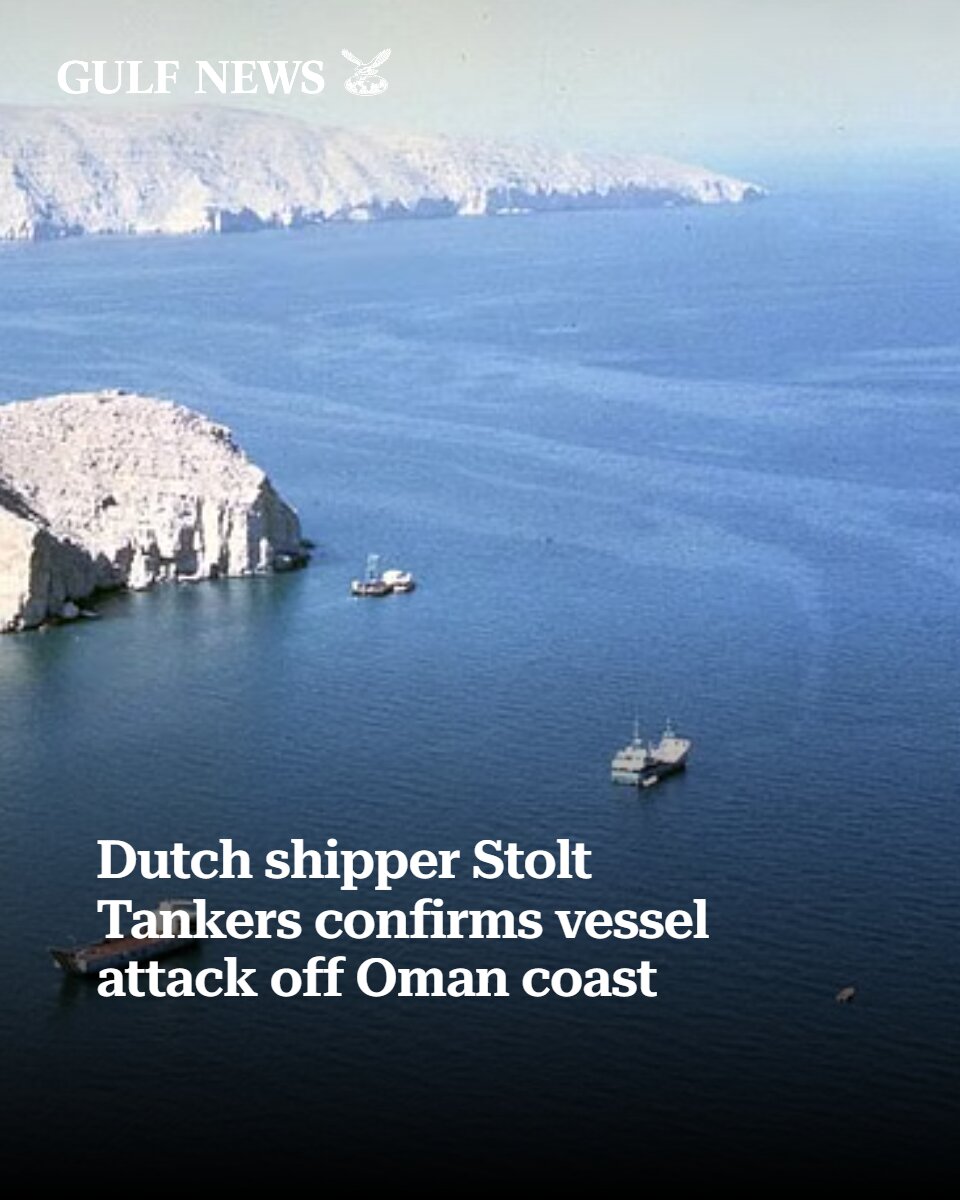
Iran’s maritime campaign intensified with multiple attacks on commercial tankers. At 17:14 UTC two Liberia‑flagged oil tankers were struck off Oman’s coast (monitor_the_situation, source: https://t.me/monitor_the_situation/24864). Later, the CIG_telegram channel cited Iranian forces hitting an Emirati supertanker and a Liberian‑flagged vessel off Oman, using projectiles linked to the Islamic Revolutionary Guard Corps (IRGC) (source: https://t.me/CIG_telegram/79717). The IRGC’s Aerospace Force released footage of short‑ and medium‑range ballistic missiles, including Kheibar Shekan, Fattah‑1 and Zolfaghar/Fateh‑110, launched toward U.S. bases throughout the Gulf (source: https://t.me/intelslava/90532).
Iranian cruise missiles also struck two ADNOC‑operated tankers on the Omani route, killing one Indian crew member and wounding eight others, while a third tanker was hit in the Gulf of Oman (rnintel, source: https://t.me/rnintel/64078). The UKMTO confirmed a missile impact on a tanker 13 nautical miles southeast of Limah, Oman (source: https://t.me/intelslava/90485). These attacks have forced regional shipping firms to reroute vessels and have prompted India to summon Iran’s ambassador after an Indian sailor was killed in the Strait of Hormuz (monitor_the_situation, source: https://t.me/monitor_the_situation/24810).
Intensified airspace activity and regional responses
Fighter‑jet activity surged in the Saudi‑Bahrain airspace at 17:21 UTC, as reported by GeoPWatch (source: https://t.me/GeoPWatch/37337). While no combat engagements were confirmed, the heightened presence reflects regional militaries’ readiness to counter Iranian provocations.
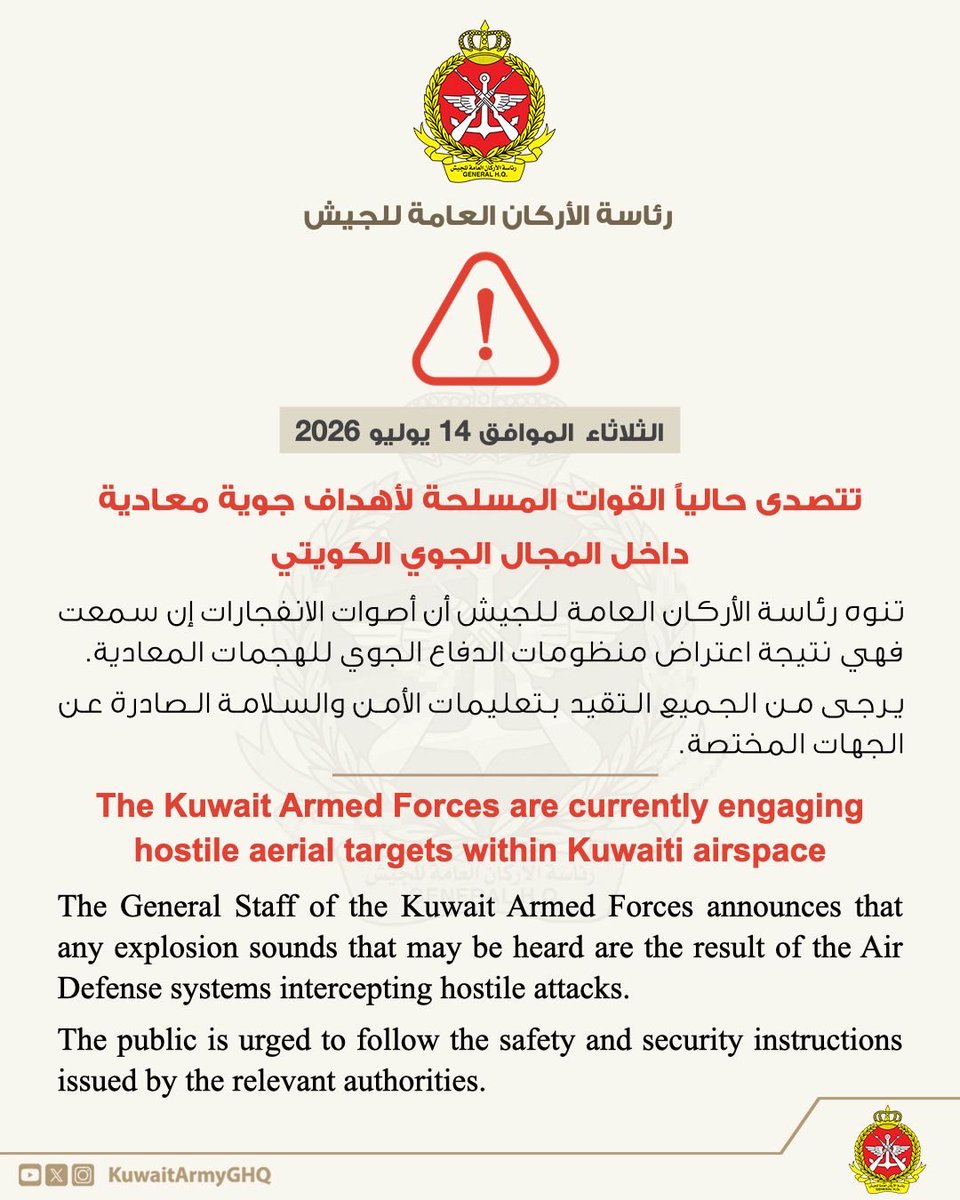
Kuwait’s armed forces reported intercepting hostile aerial targets over Kuwait City at 15:26 UTC, resulting in explosions that were captured on video (source: https://t.me/monitor_the_situation/24847). These interceptions likely responded to the same wave of Iranian missile launches that targeted Gulf shipping lanes.
Domestic explosions and Iranian internal security
Within Iran, an explosion struck the city of Andimeshk in Khuzestan Province at 16:19 UTC; casualty numbers and cause remain unverified (monitor_the_situation, source: https://t.me/monitor_the_situation/24856). Later, a U.S. projectile strike hit the cities of Abadan and Mahshahr in the same province, according to the Khuzestan governor (intelslava, source: https://t.me/intelslava/90522). A separate U.S. strike in Hormozgan Province killed three members of the same family (intelslava, source: https://t.me/intelslava/90494). These incidents illustrate the expanding kinetic footprint of the U.S.–Iran confrontation on Iranian soil.
Analysis of escalation dynamics
The coordinated missile launches from Iran, combined with the United States’ retaliatory airstrikes, indicate a rapid escalation cycle. Iran’s use of ballistic missiles, cruise missiles and drones against both state and commercial targets demonstrates an integrated approach to pressure regional allies of the United States. Conversely, U.S. strikes on Iranian military infrastructure, ports and communication facilities aim to degrade Iran’s command‑and‑control capabilities while signaling resolve.
Regional actors have responded with heightened air‑defence postures (Jordan, Kuwait) and diplomatic protests (India). The resumption of the U.S. naval blockade of Iranian ports, announced by CENTCOM for 14 July at 16:00 ET, further constricts Iran’s maritime logistics and may amplify economic pressure.
“The IRGC’s missile launches and the U.S. airstrikes represent a dangerous tit‑for‑tat escalation that threatens to broaden the conflict beyond the immediate Gulf corridor.” – Analyst, GeoPWatch
Continued monitoring of missile trajectories, naval interdictions and air‑defence engagements will be essential to assess whether the current kinetic surge stabilises or expands into a broader regional confrontation.