On 14 July 2026, Iran executed a coordinated ballistic missile barrage that struck Bahrain’s Isa Air Base and the National Security Agency (NSA) complex, registering at least thirty separate impacts. Video evidence released by the open‑source channel rnintel confirms the use of cluster warheads, marking the most intensive kinetic strike in the Gulf region this year.
Ballistic Missile Barrage on Bahrain
The attack, documented at 17:46:43 UTC, involved multiple missile types launched from Iranian territory. According to rnintel, the salvo included both conventional ballistic missiles and munitions equipped with cluster warheads, designed to disperse sub‑munitions over a wide area. The strikes caused structural damage to runway infrastructure at Isa Air Base and disrupted communications at the NSA facility. No official casualty figures have been released, but the high density of impacts suggests a significant operational impact on Bahrain’s defensive posture.
"Iran launched a massive barrage of ballistic missiles, including cluster warheads, at Bahrain’s Isa Air Base and NSA Bahrain, reporting at least 30 impacts." – rnintel, https://t.me/rnintel/64108
Expanded Missile Activity Across the Gulf
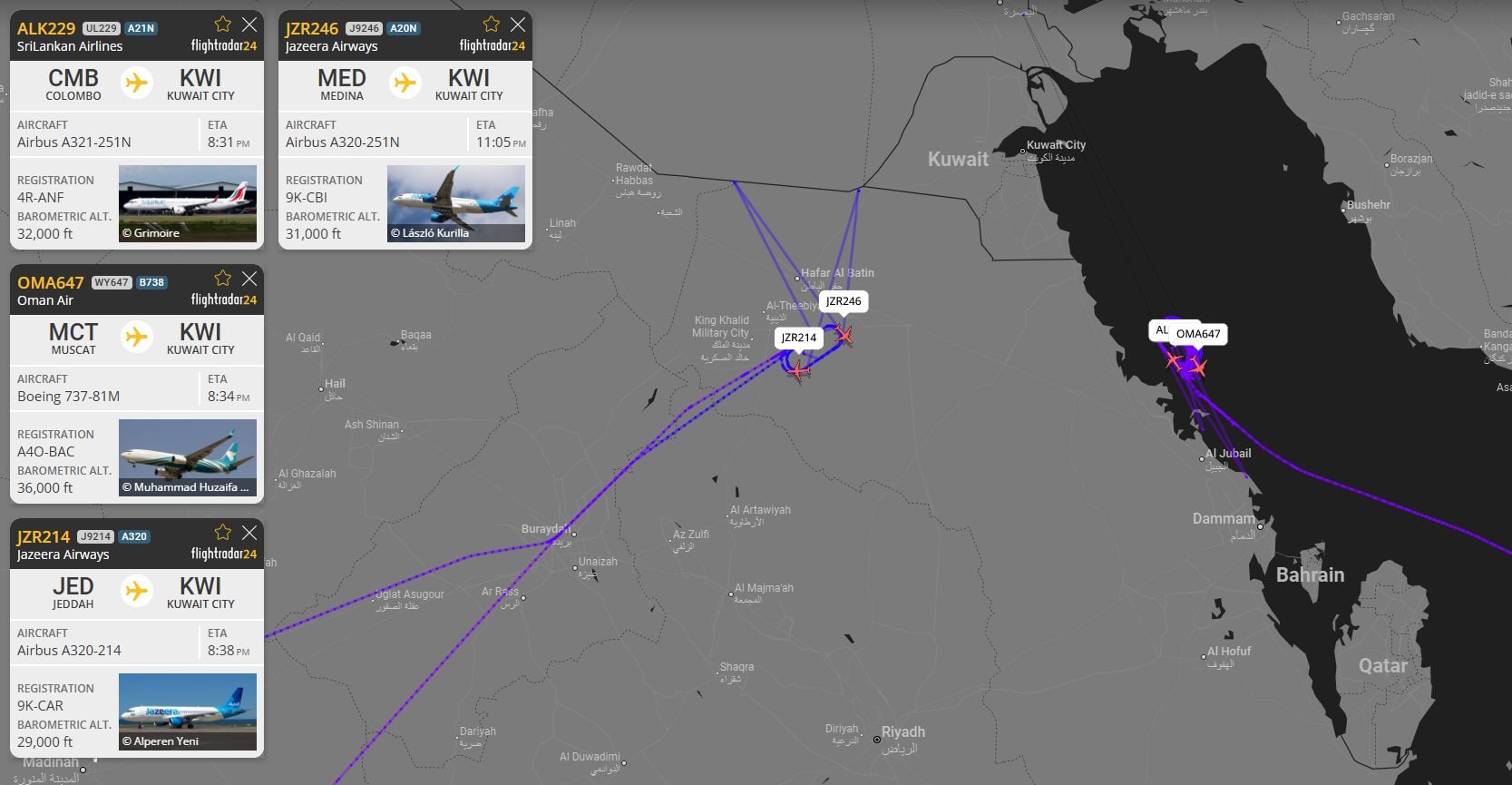
Simultaneous to the Bahrain strike, Iran conducted additional missile launches reported by GeoPWatch at 17:27:34 UTC, confirming a broader pattern of offensive missile use. Further, CIG_telegram recorded renewed Iranian attacks on Kuwait at 17:23:32 UTC, prompting commercial aircraft to enter standby patterns over Saudi Arabian airspace to avoid potential collateral damage. Explosions in Kuwait were reported as audible from Iraqi territory, a claim cited by Fars News Agency and relayed by CIG_telegram at 15:35:07 UTC.
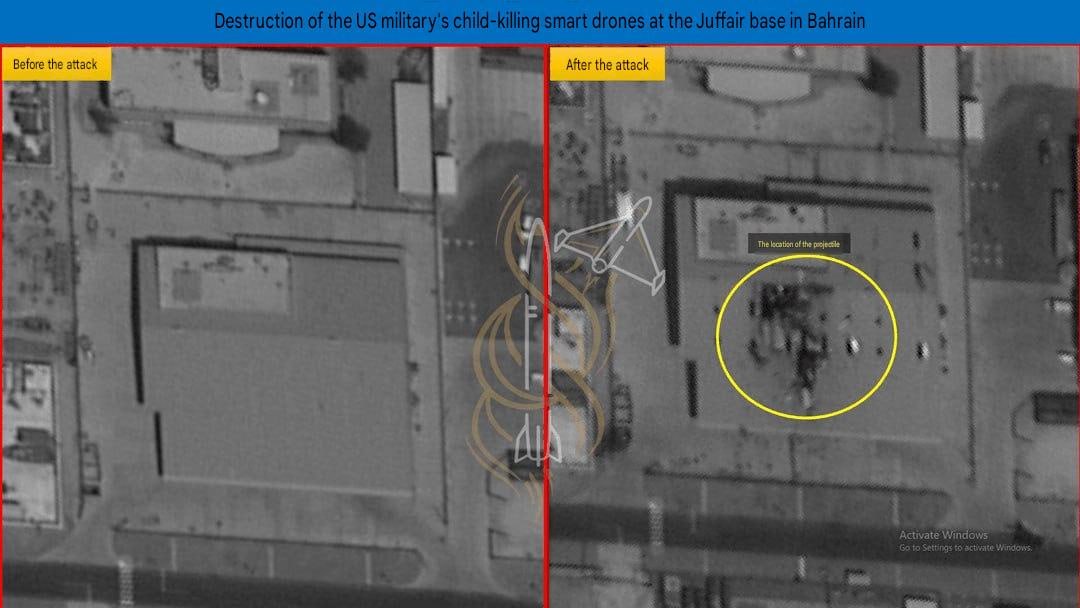
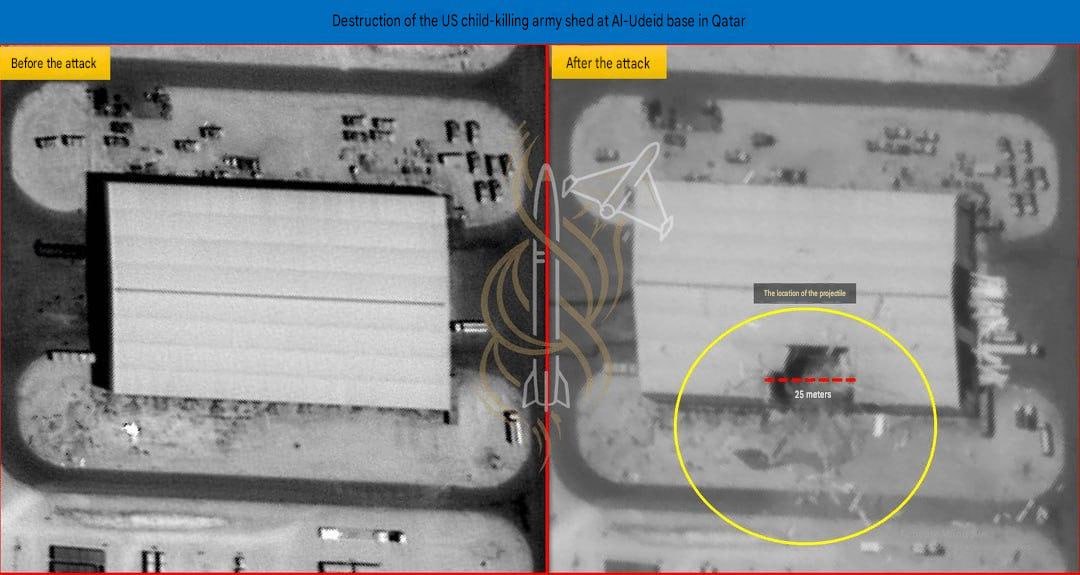
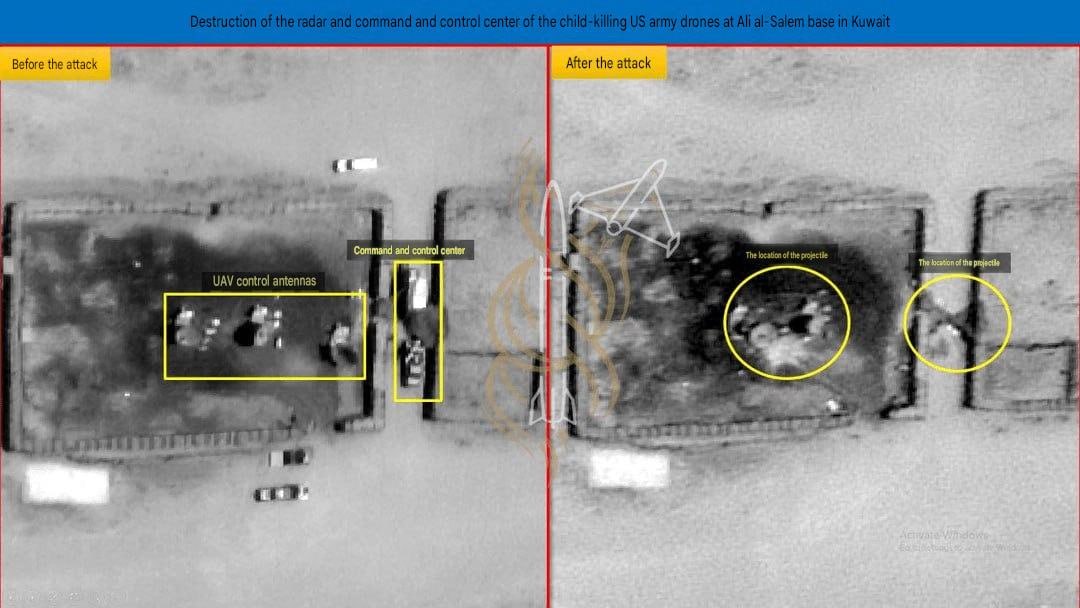
Satellite imagery released by the IRGC‑linked Fars News Agency, referenced by CIG_telegram at 14:48:02 UTC, showed missile‑induced damage to a warehouse at Qatar’s Al Udeid Air Base, a drone control centre in Bahrain, and antenna arrays at Kuwait’s Ali al‑Salem Air Base. The imagery contradicts official statements from the Qatari Ministry of Defense that all incoming missiles were intercepted.
Naval Attacks in Omani Waters
At 15:33:42 UTC, the Omani Maritime Security Center confirmed that three tankers—two Emirati supertankers and the chemical tanker Stolt Magnesium—were directly struck in Omani waters. The attacks forced the crew of Stolt Magnesium to abandon ship after the engine room was hit. No casualties were reported, but the incident underscores the expanding maritime dimension of the conflict.
"Three total tankers were directly struck yesterday, including two Emirati supertankers and the chemical tanker Stolt Magnesium. Crew had to abandon ship." – CIG_telegram, https://t.me/CIG_telegram/79713
US Airstrike Casualties in Iran
In a separate kinetic event, the United States conducted airstrikes inside Iran earlier on 14 July, resulting in civilian casualties. Monitor_the_situation reported at 10:02:53 UTC that three members of the same family were killed. The strikes were part of an ongoing US campaign targeting Iranian military infrastructure, a policy that was publicly reaffirmed by former President Donald Trump in a letter to Congress obtained by The New York Times and cited by rnintel at 08:40:24 UTC.
Israeli Counter‑terrorism Operation
At 09:17:08 UTC, the Israeli Defense Forces (IDF) eliminated a naval squad commander and three Hamas militants, as reported by idkunim_il. The operation was conducted in the maritime domain, reflecting Israel’s continued focus on neutralising Hamas maritime capabilities.
UAV Threats and Air Defense Responses
Mid‑day reports from CIG_telegram highlighted a surge in hostile UAV activity over Bahrain. C‑RAM systems detected UAVs approaching critical assets at 17:44:13 UTC, and Bahrain’s air defence interceptor failed to engage an incoming threat at 17:30:51 UTC. In response, Royal Bahraini Air Force and United States Air Force fighter jets were scrambled at 17:20:14 UTC to confront the UAVs, with Iran identified as the likely adversary.
Contextual Overview
The series of kinetic events on 14 July 2026 illustrates a rapid escalation of hostilities across multiple domains—land, air, sea, and space—within the Gulf region. Iran’s use of cluster warheads marks a notable escalation in munition sophistication, while the targeting of civilian infrastructure in Qatar, Kuwait, and Oman expands the conflict’s geographic scope. Concurrent US and Israeli operations demonstrate the involvement of external powers, raising the risk of broader regional confrontation.
All reported incidents are sourced from open‑source intelligence channels, including rnintel, GeoPWatch, CIG_telegram, monitor_the_situation, and idkunim_il. No speculative analysis is presented; the briefing reflects only verified event data as of 14 July 2026.