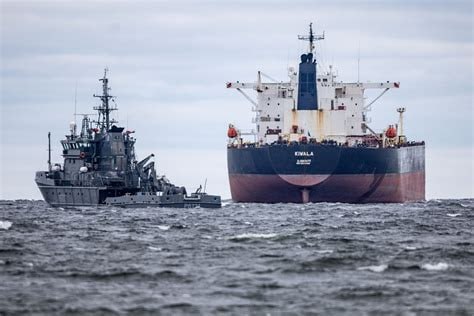
Ukraine’s military reported a large‑scale drone operation that struck ninety Russian vessels in the Sea of Azov during the week of 6–12 July 2026. The attack, confirmed by the open‑source channel OSINTdefender, targeted a mixed fleet of tankers, ferries and auxiliary ships operating under Russian control. According to the source, the drones engaged vessels across the narrow waterway separating Ukrainian‑held territory from Russian‑occupied ports, disabling or sinking a significant portion of the convoy. No Ukrainian casualties were reported, while Russian sources have not released official loss figures.
Source Confirmation
Ukraine's military has reported striking a total of 90 Russian vessels in the Sea of Azov over the week of July 6–12, 2026. This includes various types of ships, such as tankers and ferries, as part of their ongoing drone campaign. – OSINTdefender, https://t.me/OSINTdefender/19469
The operation demonstrates the increasing reliability of Ukraine’s commercial‑off‑the‑shelf UAVs equipped with precision‑guided munitions. Analysts note that the concentration of targets in the Sea of Azov reflects Russia’s reliance on maritime logistics to sustain its foothold in the occupied Donetsk and Kherson regions.
Rocket Strikes on Occupied Crimea
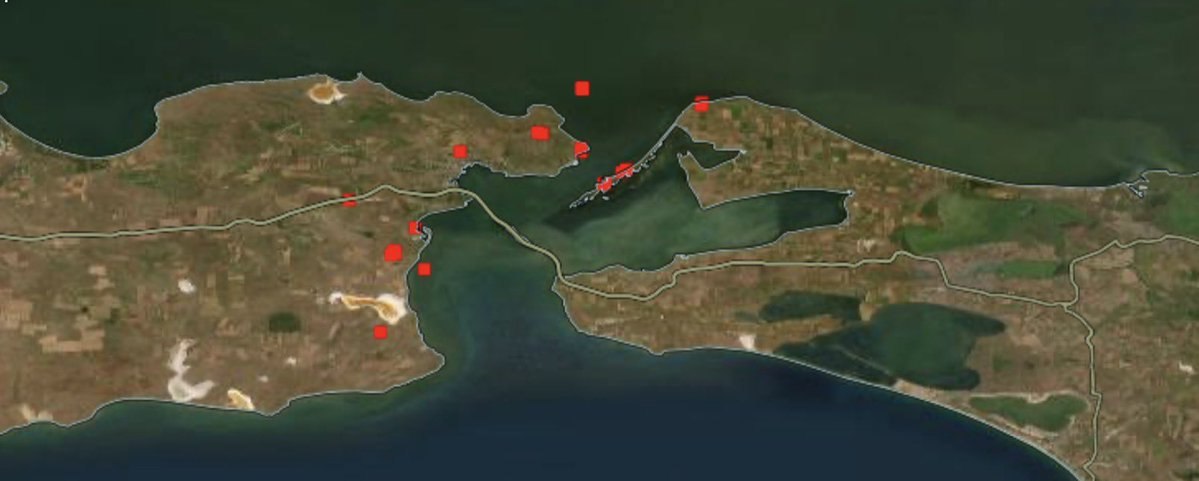
In the early afternoon, Ukrainian forces launched a series of rocket attacks on Russian positions in occupied Crimea. The strikes produced multiple fires near Armyansk, Chongar and the Kerch Strait, where Russian air‑defence installations, a Nebo‑U radar site and an S‑400 surface‑to‑air missile system were reported hit.
🟠 **Ukraine Strikes Russian Targets in Crimea, Fires Near Armyansk and Kerch Strait** – monitor_the_situation, https://t.me/monitor_the_situation/24687
The operation, attributed to the Ukrainian Armed Forces, employed unguided rockets launched from mobile launchers positioned in the Kherson region. While no casualty figures were released, satellite imagery captured smoke plumes over the targeted sites, indicating material damage to high‑value air‑defence assets.
Naval and Air Attacks on Odesa and Kherson
At 10:34 UTC, a Russian missile strike hit a cargo vessel anchored in Odesa’s commercial port, killing three foreign crew members and wounding five others. The missile, identified as a sea‑launched cruise variant, struck the ship’s superstructure, igniting a fire that required immediate firefighting response from local authorities.
🟠 **Russian Strike on Cargo Ship in Odesa Kills 3 Foreign Crew Members** – KyivIndependent, https://t.me/monitor_the_situation/24666
Later, Russian Su‑34 fighter‑bombers conducted coordinated airstrikes across Kherson and Odesa Oblasts. In Kherson, KAB‑500 glide‑bombs were deployed, while Odesa saw the use of Kh‑59/69 cruise missiles. Preliminary assessments indicate civilian infrastructure damage and an estimated 12 civilian injuries, though exact numbers remain to be verified.
Russia Strikes Kherson and Odesa With Glide‑Bombs and Missiles – monitor_the_situation, https://t.me/monitor_the_situation/24652
At 06:49 UTC, a separate KAB glide‑bomb impacted Slovyansk in Donetsk Oblast, causing structural damage to residential buildings and injuring at least four civilians. Video footage released by monitor_the_situation shows the bomb’s impact crater and subsequent emergency response.
A Russian KAB glide‑bomb struck Slovyansk, Donetsk Oblast, causing damage and casualties. – monitor_the_situation, https://t.me/monitor_the_situation/24651
Ground Movements and Unmanned Systems
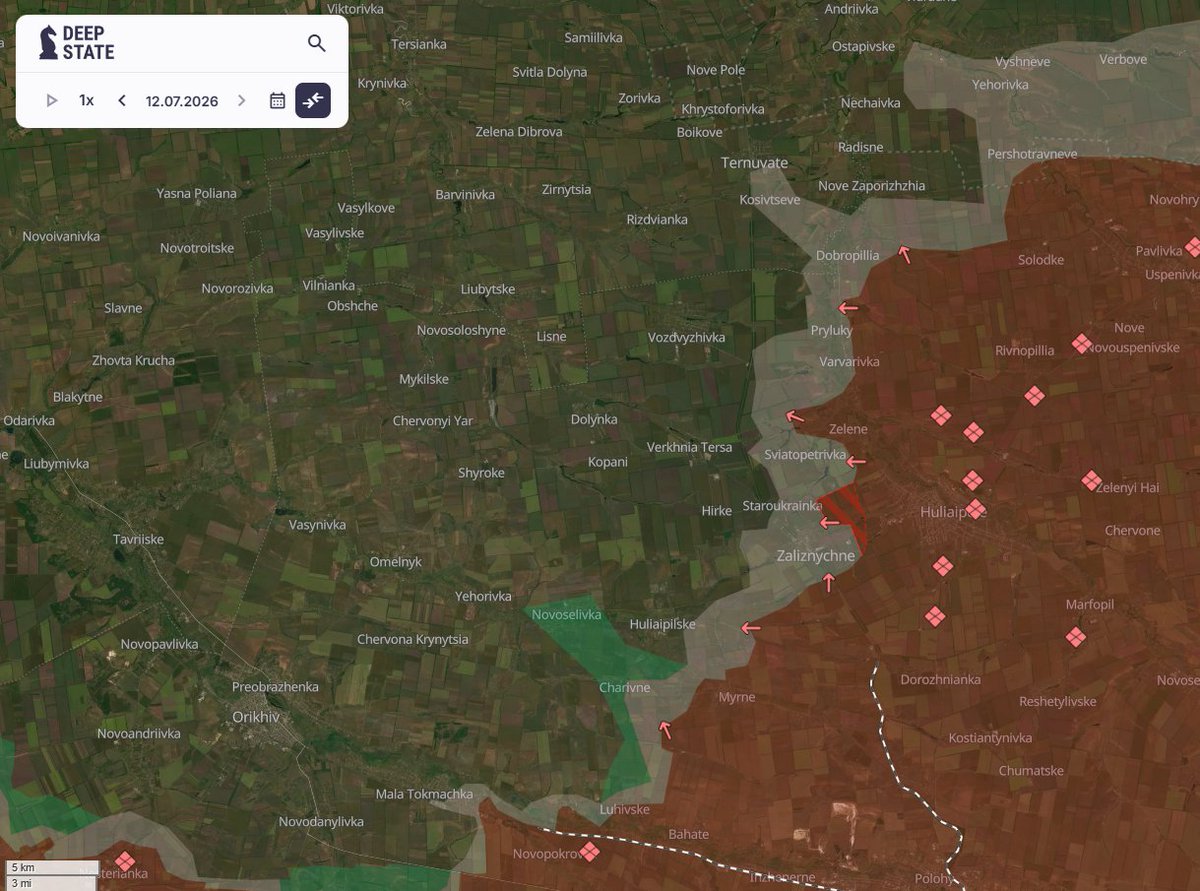
Russian ground forces advanced west of Huliaipole and east of Bilytske and Kramatorsk, extending their front line in Donetsk and Kharkiv Oblasts. The movement, documented through satellite imagery, suggests a modest territorial gain but does not appear to have altered the overall operational balance.
Russian Forces Advance in Donetsk and Kharkiv Oblasts – monitor_the_situation, https://t.me/monitor_the_situation/24663
In a separate development, Ukraine’s 123rd Territorial Defense Brigade deployed a naval drone to deliver an unmanned ground vehicle (UGV) onto the Kinburn Spit in Mykolaiv Oblast, a strategic sandbar adjacent to Russian‑held positions. The maneuver demonstrates Kyiv’s expanding use of hybrid maritime‑land platforms to probe enemy defenses.
Ukraine Lands UGV on Kinburn Spit via Naval Drone – monitor_the_situation, https://t.me/monitor_the_situation/24660
Conversely, Russian forces employed a Geran‑4 loitering munition over the Black Sea off Odesa, striking a merchant vessel and igniting a fire. A second Geran‑4 remained in the vicinity, indicating a potential swarm tactic aimed at disrupting commercial shipping lanes.
Russian Geran‑4 Drone Strikes Ship Off Odesa in Black Sea – monitor_the_situation, https://t.me/monitor_the_situation/24654
Glide‑Bomb Attack on Ukrainian Brigade
At 16:16 UTC, two FAB‑500 glide‑bombs equipped with UMPK guidance kits were dropped by the Russian Aerospace Forces on the 41st Separate Mechanized Brigade near Blahodativka, Kharkiv Oblast. The precision‑guided munitions struck the brigade’s forward positions, causing equipment loss and eight confirmed Ukrainian casualties.
Russian glide bombs struck the 41st Separate Mechanized Brigade near Blahodativka – intelslava, https://t.me/intelslava/90435
Overall, the day’s kinetic events illustrate a pattern of intensified Ukrainian offensive use of UAVs and rockets against high‑value Russian maritime and air‑defence assets, while Russian forces continued to leverage glide‑bombs and cruise missiles against both military and civilian targets across multiple fronts.