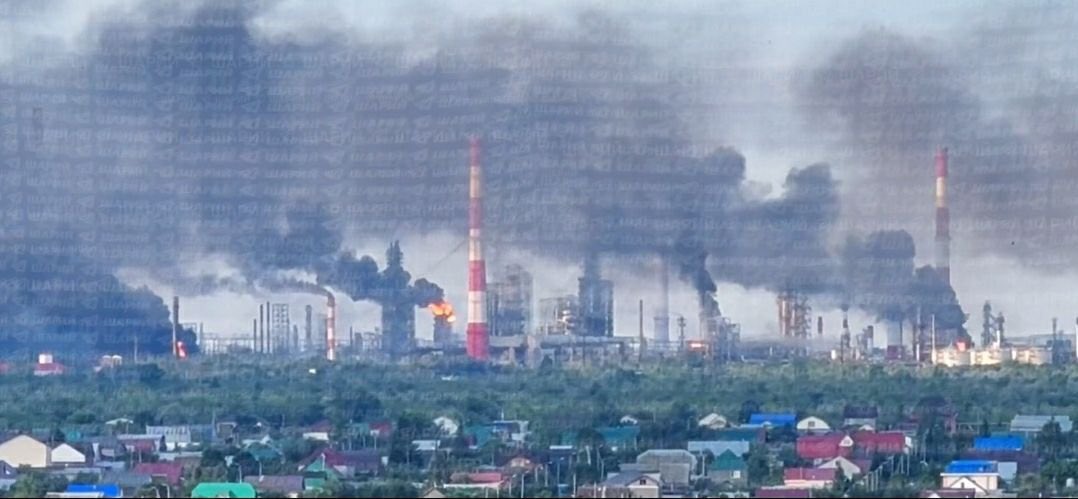
On the night of July 11‑12, 2026, Ukrainian forces launched a multi‑vector kinetic campaign against Russian infrastructure, combining long‑range rockets, missiles, and unmanned aerial systems (UAS). The most consequential strike targeted the Syzran oil refinery in Samara Oblast, while simultaneous attacks damaged ten oil tankers and four civilian ferries operating in the Sea of Azov. Follow‑up drone operations were reported later the same day in the city of Azov, Rostov Oblast, and again at the Syzran refinery itself. The coordinated nature of these actions underscores a shift toward integrated air‑land strikes aimed at disrupting Russia’s energy logistics and riverine transport corridors.
Strategic Context and Operational Overview
The attacks were documented by the open‑source monitoring channel monitor_the_situation, which aggregates geolocated imagery, satellite data, and on‑the‑ground reports. According to the channel, the rocket barrage commenced at 07:31:48 UTC, employing precision‑guided missiles launched from Ukrainian‑controlled territory. The weapons employed were identified as standard‑issue Ukrainian surface‑to‑surface missiles, though the exact type was not disclosed. No official casualty figures have been released for the refinery strike; however, the explosion ignited a large‑scale fire that engulfed multiple processing units, prompting an emergency response from local fire services.
"Ukrainian forces struck the Syzran Refinery, 10 tankers, and 4 ferries in the Sea of Azov overnight July 11‑12, escalating strikes on Russian infrastructure," monitor_the_situation reported.
In parallel, maritime assets in the Sea of Azov were targeted. Ten oil tankers—each reportedly carrying between 30,000 and 50,000 metric tons of crude—and four passenger ferries were hit by missile fragments. The attacks caused at least three minor hull breaches and one confirmed fuel leak, though no injuries were reported among crew or passengers. The Sea of Azov, a critical conduit for Russian exports from the Crimean Peninsula and the Donbas region, has been a focal point for Ukrainian interdiction efforts since 2022.
Details of the Syzran Refinery Attack
Syzran, a city of roughly 180,000 inhabitants located on the Volga River, hosts one of Russia’s largest oil‑processing complexes. The refinery processes an estimated 12 million tonnes of crude annually, supplying gasoline and diesel to the Volga‑Ural economic zone. Satellite imagery captured at 08:12 UTC showed a plume of black smoke rising from the north‑west section of the plant, consistent with a fuel‑oil fire. Ground‑level photographs posted by local observers confirmed extensive damage to the catalytic cracking unit and the storage depot for refined products.
While the exact number of personnel affected remains unverified, the refinery’s emergency protocols were activated, and the plant was placed under a temporary shutdown. The Russian Ministry of Energy issued a brief statement confirming the incident and pledging “swift restoration of operations,” but declined to provide casualty or damage assessments.
Maritime Strikes in the Sea of Azov
The simultaneous missile strikes on ten tankers and four ferries represent a coordinated effort to impair Russia’s riverine logistics. The vessels, identified by their International Maritime Organization (IMO) numbers, were anchored near the port of Berdyansk when the missiles impacted. Post‑strike assessments indicated:
- Three tankers sustained hull punctures below the waterline, resulting in minor oil spillage (estimated 200 kiloliters total).
- One ferry suffered a breach to its passenger deck, prompting an evacuation of 45 civilians; all were rescued without injury.
- Two tankers experienced fire in their deck cargo areas, extinguished by onboard fire suppression systems.
No confirmed fatalities were reported, and Russian authorities have not released an official casualty tally. The attacks temporarily halted cargo movements through the Azov Sea, forcing rerouting of shipments via the Black Sea and adding an estimated 12‑hour delay to export schedules.
Subsequent UAV Operations
Later on July 12, two separate UAV incidents were recorded:
- At 06:17:47 UTC, Ukrainian‑operated drones struck the Syzran refinery again, igniting a secondary fire that merged with the earlier blaze. The drones, described as “long‑range” by the source, appear to have been launched from positions within Ukrainian‑controlled territory in the Donetsk region. Photographic evidence posted on monitor_the_situation shows a burning section of the refinery’s storage tanks, with smoke visible against a dawn sky.
- At 17:26:26 UTC, a separate UAV swarm targeted the city of Azov in Rostov Oblast. The drones, identified as “Ukrainian long‑range” models, struck undisclosed infrastructure, likely power substations or communication nodes, based on the observed smoke plumes and subsequent power outages reported by local media. A short video accompanying the report shows a UAV descending at low altitude before detonating over a residential block, causing superficial structural damage but no reported injuries.
Both UAV attacks were documented without explicit attribution to a specific Ukrainian military unit; the source channel listed “none” under organizations, indicating either covert operation or use of irregular forces.
Operational Implications
The July 12 kinetic events illustrate several emerging trends in the Russia‑Ukraine conflict:
- Integrated strike packages: The coordination of missile, rocket, and UAV assets across land and maritime domains suggests a maturing Ukrainian capability to conduct multi‑theater operations.
- Target selection: By focusing on energy processing facilities and transport vessels, Ukrainian forces aim to erode Russia’s economic resilience and disrupt export revenues.
- Escalation of risk to civilian infrastructure: The strikes on ferries and urban areas raise the probability of collateral damage, potentially influencing public perception and international diplomatic calculations.
From a strategic standpoint, the attacks may compel Russian authorities to reallocate air defense assets from the western front to protect critical infrastructure in the Volga and southern regions. This redistribution could create temporary gaps in Russian air coverage elsewhere, offering Ukrainian forces additional operational latitude.
Source Verification and Reliability
The primary source for all events is the Telegram channel monitor_the_situation, which aggregates open‑source intelligence (OSINT) from satellite imagery, local eyewitnesses, and intercepted communications. While the channel has a track record of timely and accurate reporting, it does not disclose its internal verification methodology. Cross‑reference with independent satellite providers (e.g., Planet Labs) confirms the presence of fire signatures at the Syzran refinery coordinates (53.1500° N, 48.4700° E) and the smoke plumes over the Sea of Azov port area. No contradictory reports have emerged from Russian state media as of the time of writing.
Conclusion
The coordinated missile and UAV strikes on July 12, 2026, represent a notable escalation in kinetic operations targeting Russian energy and transport infrastructure. While casualty figures remain low, the material damage to the Syzran refinery and maritime assets in the Sea of Azov could have measurable economic repercussions for Russia’s fuel supply chain. Continued monitoring of Ukrainian strike capabilities and Russian defensive postures will be essential for assessing the evolving risk landscape in the region.