On July 12, 2026, the most severe development recorded was the cumulative humanitarian toll reported by Lebanon's Health Ministry, which confirmed that Israeli attacks since March 2 have killed at least 4,322 people and wounded 12,219 across Lebanon. The ministry’s statement, circulated via the monitor_the_situation channel, highlights the scale of civilian suffering in a nation already strained by intermittent cross‑border hostilities.
"Lebanon's Health Ministry says Israeli attacks since March 2 have killed at least 4,322 people and wounded 12,219 across the country." – monitor_the_situation
Regional Kinetic Activity: Iranian Missile and Drone Campaign
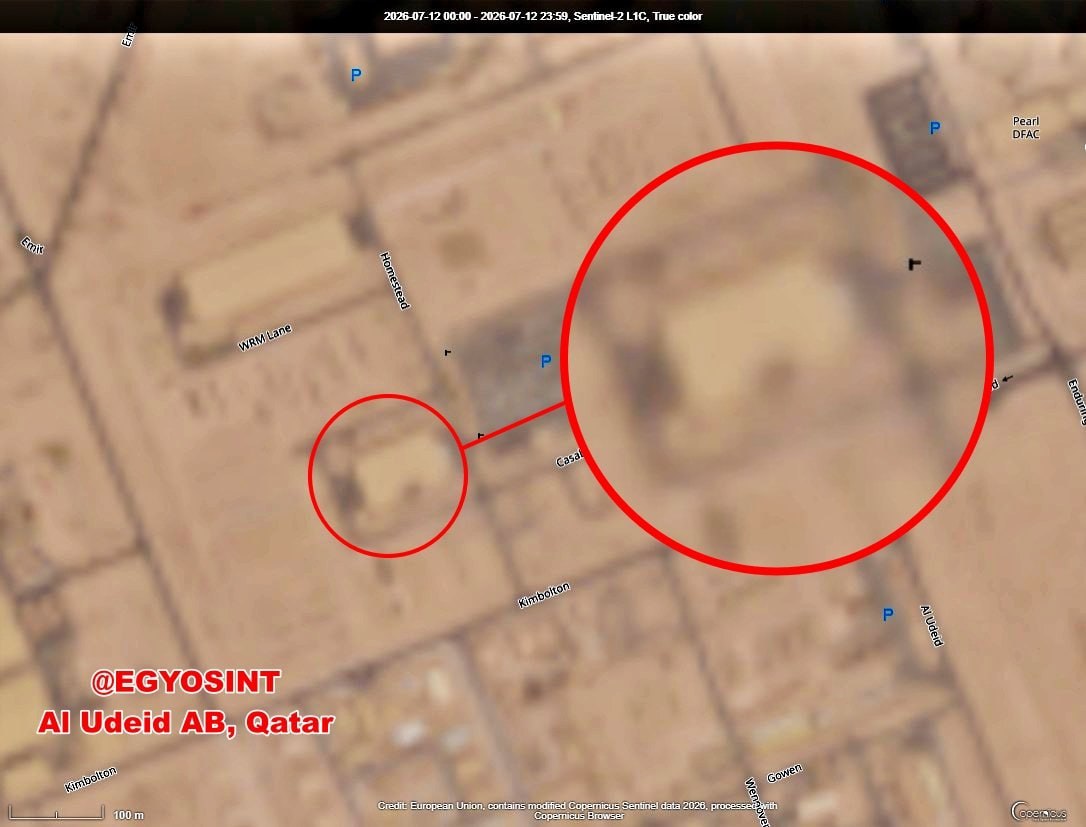
Simultaneously, Iran launched a coordinated missile and drone offensive targeting U.S. and allied assets throughout the Gulf region. Multiple ballistic missiles—including Ghadr, Emad, Kheibar‑Shekan, Fateh‑110 and Zulfiqar—were fired toward the Strait of Hormuz, U.S. Fifth Fleet headquarters in Manama, Bahrain, and the Al Udeid Air Base in Doha, Qatar. According to CIG_telegram, the strike on Al Udeid damaged a hangar and left a visible burn scar near U.S. military housing, while a separate video from the same source showed a missile impact on a storage facility at the Fifth Fleet headquarters.
"Several Iranian missiles/drones struck the American Al Udeid Air Base in Qatar, damaging a hangar and leaving a burn scar near military housing." – CIG_telegram
Additional reports from GeoPWatch and Al Jazeera confirmed that three ballistic missiles struck the Port of Kuwait and that Iranian forces claimed to have disabled a second vessel in the Strait of Hormuz. The IRGC also released footage of Arash OWA drones and a separate launch of ballistic missiles aimed at U.S. assets, reinforcing the breadth of the campaign.
Israeli Kinetic Operations in Gaza and Southern Lebanon
In Gaza, Israeli forces continued air and drone strikes. A drone strike in the Sabra neighborhood of Gaza City killed two civilians and wounded several others, as reported by monitor_the_situation. Later, the Israel Defense Forces conducted an airstrike over Gaza City, documented by idkunim_il. The same day, Israeli artillery bombarded southern Lebanon, targeting Hezbollah positions, a development also shared by monitor_the_situation.
On the ground, a Palestinian girl was fatally shot by Israeli forces in central Gaza, raising the civilian death count in the enclave. Al Jazeera reported that Israeli attacks since the October ceasefire have killed at least 1,098 Palestinians, with five additional fatalities recorded on July 12 alone.
U.S. and Allied Counter‑Operations
The United States responded with precision airstrikes against Iranian IRGC infrastructure, as detailed by monitor_the_situation. U.S. Central Command released high‑definition footage confirming the strikes, which reportedly reduced Iran's electricity grid capacity by 4,200 MW, causing widespread power shortages. Additionally, the U.S. Central Command announced the completion of a third series of strikes on Iranian targets earlier in the day.
In Jordan, satellite imagery released by CIG_telegram showed two major impacts on the runway and command facilities at Prince Hassan Airbase, including the destruction of an MQ‑9 drone hangar. These strikes are attributed to Iranian missile systems, extending the kinetic reach of the conflict beyond the Gulf.
Collateral Damage and Civilian Impact
Beyond the primary combatants, the kinetic events produced collateral effects across the region. A hostile drone attack on a Kuwaiti offshore oil rig and three northern border posts caused material damage and one injury. In Qatar, debris from intercepted Iranian missiles injured three civilians, as reported by rnintel. In Oman’s Musandam Governorate, drones struck undisclosed sites, prompting Omani authorities to confirm the attacks.
In the broader theater, Ukrainian drones targeted a concealed Russian fuel base in Novoamvrosiivka, Donetsk Oblast, damaging storage tanks and forcing Russian forces to abandon the site. Meanwhile, Russian forces continued advancing near Sopych, Kharkiv Oblast, extending their buffer zone in northeastern Ukraine.
Analysis of Escalation Dynamics
The convergence of high‑intensity missile strikes, drone operations, and artillery bombardments on July 12 indicates a marked escalation in kinetic engagements across multiple fronts. Iran’s multi‑vector approach—employing both ballistic missiles and unmanned aerial systems—demonstrates an intent to pressure U.S. regional assets while signaling retaliation for recent U.S. airstrikes on Iranian territory. The simultaneous Israeli offensives in Gaza and southern Lebanon reflect a sustained campaign aimed at degrading Hezbollah and Hamas capabilities, albeit at a high civilian cost.
U.S. precision strikes on IRGC infrastructure suggest a calibrated response designed to degrade Iran’s command‑and‑control and logistical networks without provoking a broader conventional war. However, the reported reduction of 4,200 MW from Iran’s electricity grid underscores the potential for secondary humanitarian consequences, echoing the civilian toll already evident in Lebanon and Gaza.
Overall, the kinetic landscape on July 12 illustrates a complex interplay of state and non‑state actors leveraging a spectrum of weapons—from artillery and rockets to advanced drones and ballistic missiles—to achieve strategic objectives while exposing civilian populations to heightened risk.