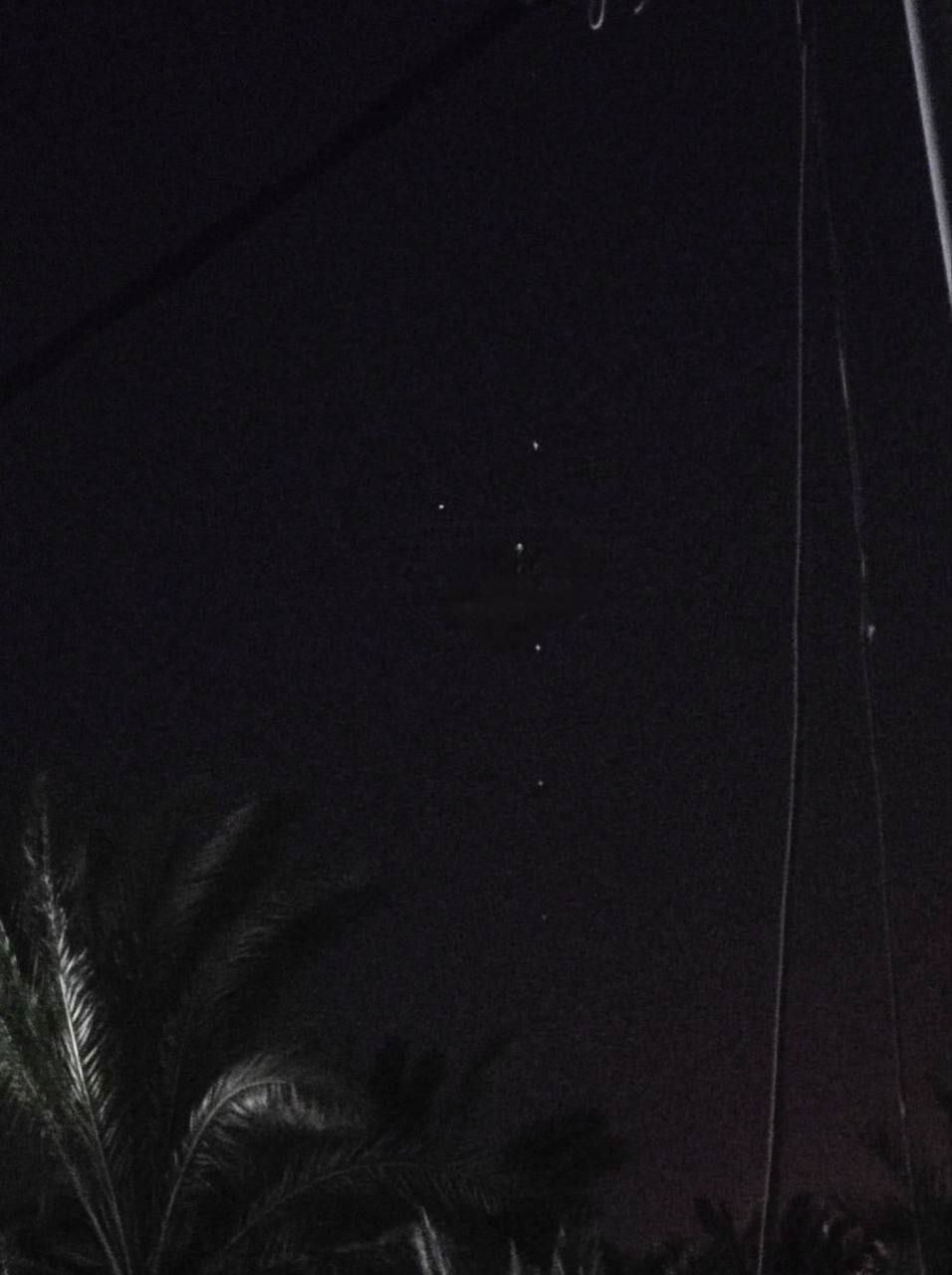
Iran launched a coordinated missile and drone barrage against Qatar, the United Arab Emirates (UAE) and Jordan at 02:45 UTC on 12 July 2026, representing the most severe kinetic event recorded in the region this year. The operation, reported by the monitor_the_situation channel, employed a mix of cruise missiles and loitering drones, targeting undisclosed sites in the three states. No casualty figures have been released, and the attacks were described as “precision strikes” aimed at strategic infrastructure.
"Iran launched missile and drone attacks targeting Qatar, the United Arab Emirates, and Jordan, escalating regional conflict amid ongoing US‑Iran tensions." – monitor_the_situation, 02:45 UTC
Chronology of the July 12 attacks
Following the initial barrage, a series of high‑intensity events unfolded across the Gulf. At 04:26 UTC, Qatar issued a second missile alert and re‑activated its air‑defence network, confirming the detection of inbound projectiles (source: rnintel). Within minutes, at 04:59 UTC, Iranian state media claimed missile strikes on U.S. military installations in Bahrain, Kuwait, Jordan and Qatar (source: AlJazeera). The same hour saw reports of renewed explosions in Bahrain and Qatar, attributed to Iranian‑linked ordnance (source: CIG_telegram).
At 05:58 UTC, rnintel documented Iran’s “largest wave of attacks yet,” citing simultaneous strikes on Bahrain, Qatar, Oman, Jordan and Kuwait, with alerts also sent to the UAE despite no formal claim of responsibility by the IRGC. The weapons employed included ballistic missiles, rockets and cruise missiles, indicating a diversified launch portfolio.
Regional responses and interceptions
Qatar’s air‑defence forces reported successful interception of several missiles and drones, issuing an all‑clear message at 02:58 UTC (source: rnintel). In parallel, at 03:53 UTC, GeoPWatch recorded at least fifteen audible explosions or interceptions across Qatar, suggesting a high density of incoming threats. Bahrain experienced multiple missile alerts, with sirens sounding at 04:46 UTC (source: CIG_telegram) and continued UAV activity reported at 05:05 UTC (source: rnintel).
Kuwait activated civil defence sirens at 05:00 UTC, reflecting heightened alert status, while the nation’s Patriot systems were reportedly targeted by Iranian ballistic missiles aimed at ammunition depots and radar sites (source: rnintel, 03:30 UTC).
U.S. counter‑strikes and broader escalation
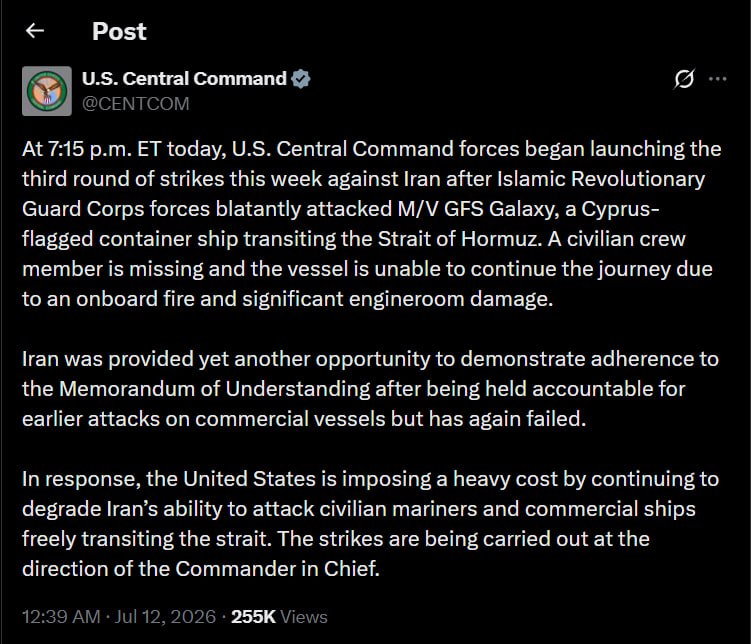
In response to Iranian aggression, United States Central Command (CENTCOM) conducted a third round of precision airstrikes on 11 July, targeting approximately 140 Iranian military assets across the country (source: BellumActaNews, 04:39 UTC). The strikes employed fighter aircraft, drones, naval vessels and precision munitions, focusing on missile launch sites, command‑and‑control nodes and logistics hubs. The operation was framed as retaliation for an IRGC attack on the Cyprus‑flagged container ship M/V GFS Galaxy in the Strait of Hormuz, which resulted in a missing crew member (source: BellumActaNews, 00:04 UTC).
Concurrently, the U.S. Army reportedly launched multiple PrSM HIMARS missiles from Kuwait toward Iranian positions at 00:37 UTC (source: BellumActaNews). Additional American launches of ATACMS and HIMARS missiles were noted at 00:15 UTC (source: GeoPWatch), underscoring a rapid escalation of long‑range strike capabilities on both sides.
Operational patterns and weapon systems
The July 12 sequence reveals a layered approach by Iranian forces, combining ballistic missiles, cruise missiles, loitering drones and ground‑to‑ground rockets. The use of Patriot‑system targeting in Kuwait and the reported focus on ammunition depots suggest an intent to degrade allied air‑defence and logistical capacities. Iranian launches from domestic sites were complemented by cross‑border missile trajectories aimed at U.S. naval vessels operating in the Gulf (source: GeoPWatch, 02:00 UTC).
U.S. responses leveraged joint‑force assets, integrating air, sea and land‑based platforms to deliver a high volume of precision strikes. The emphasis on “approximately 140” targets indicates a systematic effort to degrade Iran’s missile production and launch infrastructure, while the deployment of HIMARS and ATACMS reflects a shift toward theater‑scale, high‑precision fire support.
Implications for regional security
The coordinated attacks and subsequent counter‑strikes have heightened the risk of inadvertent escalation. While no civilian casualties have been reported to date, the density of missile alerts across Bahrain, Qatar, Kuwait and the UAE demonstrates a pervasive threat environment. The rapid activation of air‑defence systems and the reported interceptions underscore the operational readiness of regional militaries, yet also reveal the strain on command‑and‑control networks during high‑tempo engagements.
Analysts note that the simultaneous targeting of U.S. military installations and allied Gulf states marks a departure from previous, more limited Iranian strike patterns. The integration of drone and missile assets, combined with the U.S. deployment of long‑range precision munitions, suggests a new phase of kinetic competition in the Gulf, where both sides possess the capability to inflict strategic damage within hours.