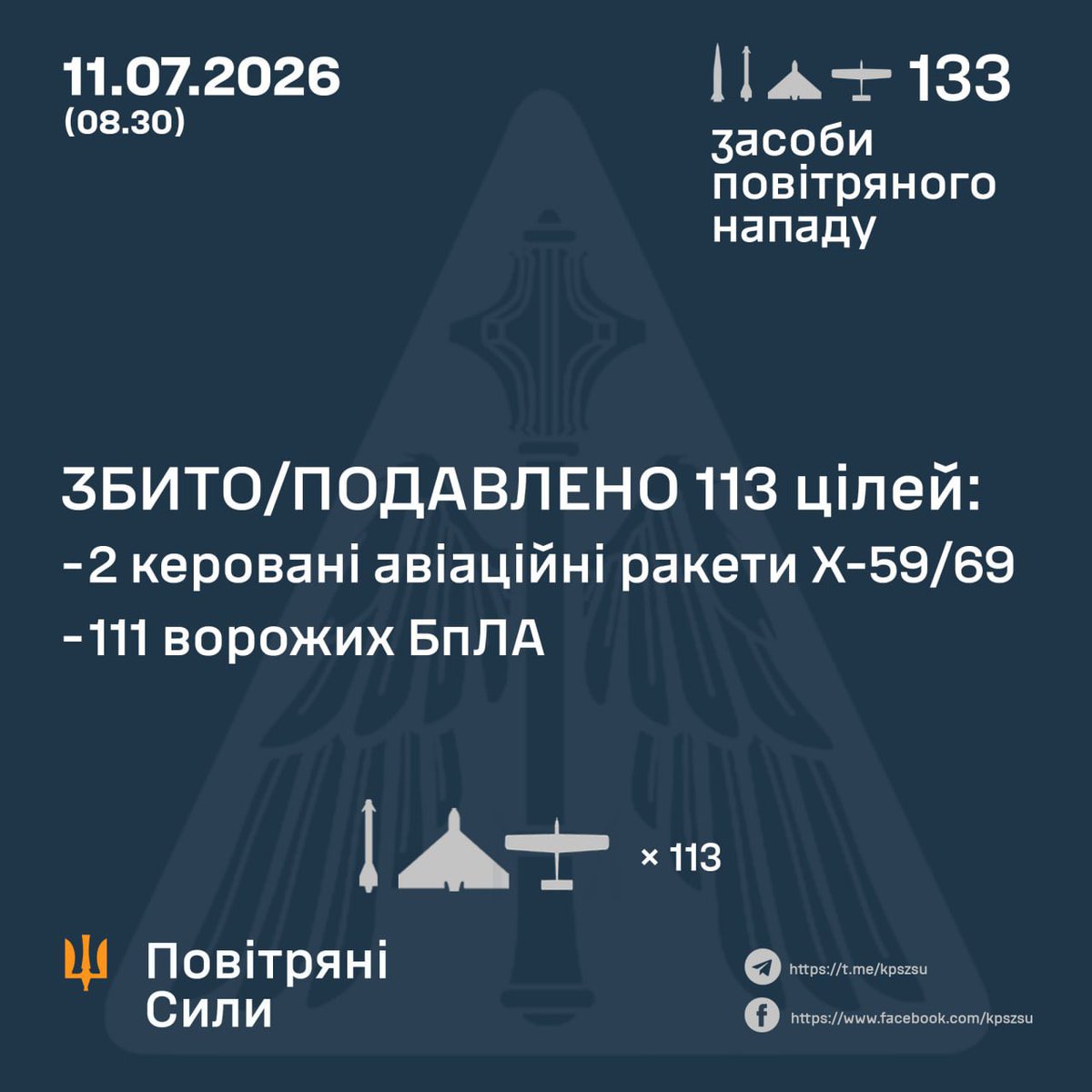
In the early hours of 11 July 2026, Russian forces launched a coordinated kinetic operation against Ukraine, employing six Iskander-M/S-400 ballistic missiles and a swarm of 121 unmanned aerial systems (UAS). The strike targeted eleven distinct locations across Ukrainian territory, marking the most extensive missile‑drone barrage recorded in the conflict to date. Ukrainian air defense units reported successful interception of two missiles and eleven drones, while the remaining ordnance impacted the designated targets.
Operational Overview
The missile component of the attack consisted of Iskander-M short‑range ballistic missiles, launched from mobile launch platforms and guided by the S‑400 air‑defence system for targeting coordination. The drone fleet comprised a mix of reconnaissance and loitering munitions, programmed to strike pre‑identified infrastructure and military assets. According to the open‑source monitoring channel monitor_the_situation, the strike sequence began at approximately 02:00 UTC and concluded by 04:30 UTC, with impacts recorded in both eastern and southern Ukrainian oblasts.
Source: https://t.me/monitor_the_situation/24471
Ukrainian Air‑Defense Response
Ukraine’s integrated air‑defence network, employing a combination of Patriot, S‑300, and domestically produced systems, engaged the incoming threat vector. Two of the six ballistic missiles were neutralised by surface‑to‑air interceptors, while eleven of the 121 drones were shot down by short‑range anti‑aircraft artillery and electronic‑warfare measures. No civilian casualties were reported in the immediate aftermath, and Ukrainian officials indicated that critical infrastructure at the struck sites sustained varying degrees of damage, though exact loss figures remain unverified.
Parallel Ukrainian Missile Test Toward Moscow
In a separate development reported later on the same day, Ukrainian analysts claimed that two domestically produced ballistic missiles were launched toward Moscow on 30 June 2026. The missiles, described as experimental prototypes, were reportedly intercepted by Russian air‑defence assets, though Russian sources have not confirmed the interception. The claim, circulated by the same monitoring channel, underscores a reciprocal escalation in long‑range strike capabilities.
Source: https://t.me/monitor_the_situation/24469
Naval Posture in the North Sea
Amid the heightened kinetic activity, the United Kingdom announced the deployment of its largest aircraft carrier, HMS Prince of Wales, to the North Sea. The carrier’s tasking focuses on anti‑submarine warfare (ASW) operations aimed at tracking Russian submarine movements and safeguarding critical underwater infrastructure, including communication cables and energy pipelines. While the carrier itself did not engage in direct combat, its presence signals a strategic shift toward maritime deterrence in response to Russian naval activity.
Source: https://t.me/monitor_the_situation/24477
UAV Incidents in Russia and Ukraine
Additional UAV engagements were documented on 11 July. A Ukrainian drone attacked the Kapotnya oil refinery in Moscow, igniting a fire despite the deployment of Pantsir‑S1 air‑defence systems. The incident, reported by @NOELreports, highlights the expanding reach of Ukrainian UAV operations into Russian heartland. In a separate footage release, Ukraine’s 426th Separate Unmanned Systems Regiment confirmed a drone strike on a Russian fuel truck operating within Ukrainian‑controlled territory, resulting in a large fire and temporary disruption of fuel logistics.
Source: https://t.me/monitor_the_situation/24465
Russian forces also employed Geran‑2 and Geran‑4 seeker drones against Ukrainian energy infrastructure. Video evidence released by the Russian Defense Ministry showed attacks on substations and a railway train, illustrating the continued use of commercially available drone platforms repurposed for kinetic strikes.
Source: https://t.me/monitor_the_situation/24456
Collectively, these events demonstrate a multi‑domain escalation, with both state and non‑state actors leveraging ballistic missiles, carrier‑based air power, and unmanned systems to achieve tactical objectives. The convergence of high‑intensity missile strikes, UAV incursions across national borders, and naval deployments underscores the fluidity of the conflict’s kinetic landscape.