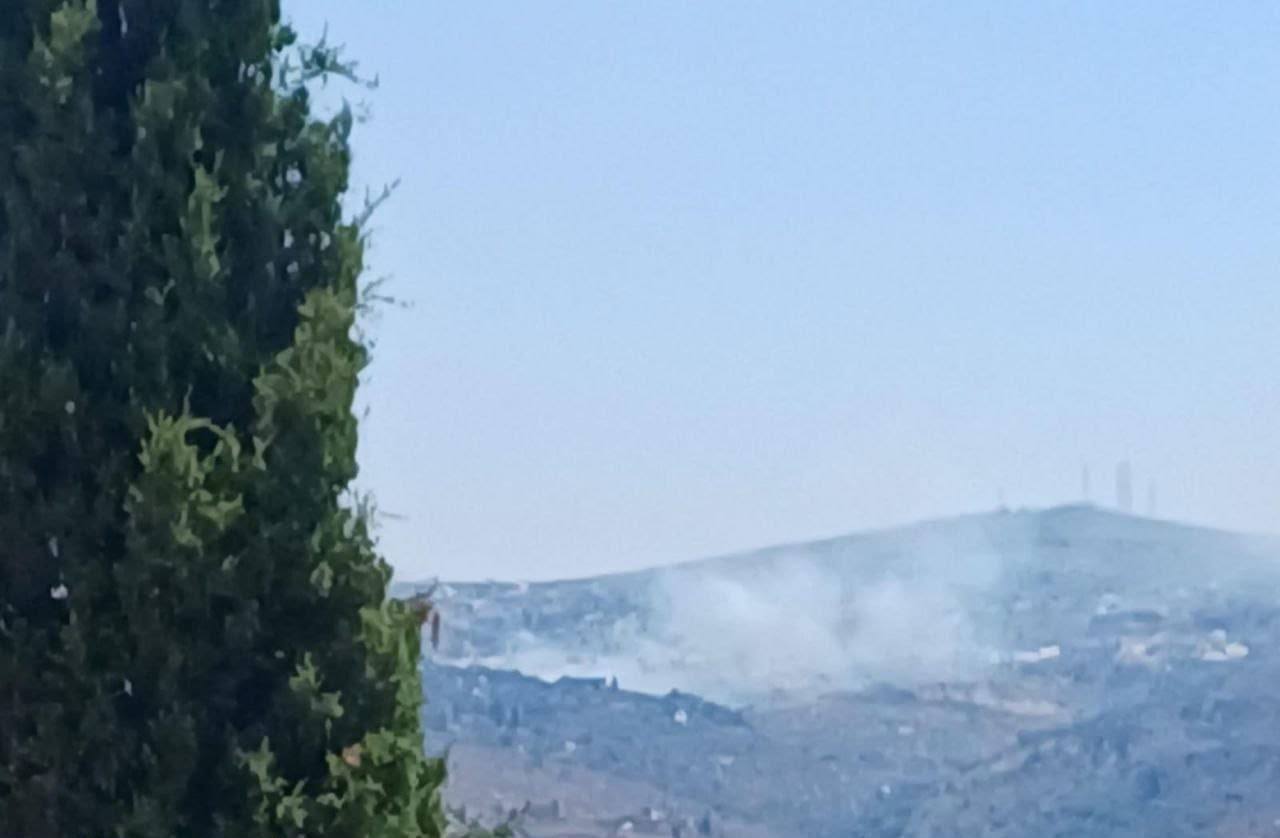
The Israeli Air Force conducted a precision strike on a building in southern Lebanon identified as a Hezbollah weapons transport hub, resulting in secondary explosions that amplified the blast impact. The operation, reported at 17:13:57, underscores a marked escalation in kinetic engagements along the Israel‑Lebanon frontier.
Airstrike on Hezbollah Facility
According to the monitoring channel monitor_the_situation, Israeli jets targeted a structure used by Hezbollah to move armaments. The strike caused multiple secondary detonations, suggesting the presence of stored explosives or munitions. No casualty figures were released at the time of reporting, and the channel did not specify civilian impact.
"Israeli Air Force Strikes Hezbollah Militants in Southern Lebanon" – monitor_the_situation, 2026-07-11T17:13:57, https://t.me/monitor_the_situation/24494
The use of air power without accompanying ground forces indicates a strategic intent to degrade Hezbollah’s logistical capabilities while limiting direct confrontation with Israeli troops on the ground.
Hezbollah Anti‑Tank Missile Movement
Moments before the airstrike, at 17:13:56, the same monitoring channel documented Hezbollah militants transporting anti‑tank missiles within a security zone in southern Lebanon. Video evidence captured the movement of the missiles, which are reportedly intended for use against Israeli forces and civilian targets.
"Hezbollah militants were observed transporting anti‑tank missiles in a security zone in southern Lebanon, intended for use against Israeli forces and civilians." – monitor_the_situation, https://t.me/monitor_the_situation/24493
The proximity of the missile movement to the airstrike suggests a possible intelligence link, with Israeli forces potentially acting on real‑time surveillance of Hezbollah’s armament logistics.
Israeli Ground Incursion Near Beit Yahoun
At 16:23:14, Israeli troops entered the eastern outskirts of the village of Beit Yahoun, marking a ground incursion confirmed by Lebanese state media. Video footage released by the monitoring channel shows Israeli soldiers advancing along a rural road, establishing a foothold in the area.
"Israeli troops move into the eastern outskirts of Beit Yahoun in southern Lebanon, confirmed by Lebanese state media, marking a ground incursion." – monitor_the_situation, https://t.me/monitor_the_situation/24488
The incursion follows a pattern of limited, targeted ground operations aimed at gathering intelligence, securing forward positions, or disrupting Hezbollah supply lines.
Controlled Demolitions in Houla
Earlier in the day, at 09:35:20, Israeli forces carried out controlled demolitions in the town of Houla, southern Lebanon. The operation, reported by the intelligence channel intelslava, involved the use of explosives to destroy structures deemed to be of strategic value to Hezbollah.
"Israeli forces carry out controlled demolitions in Houla, southern Lebanon." – intelslava, https://t.me/intelslava/90219
No civilian casualties were reported, and the demolition appears to be part of a broader campaign to degrade Hezbollah’s infrastructure without escalating to full‑scale ground combat.
Drone Strikes on Kfar Tebnit
At 09:17:07, Israeli unmanned aerial vehicles (UAVs) conducted two separate strikes on the village of Kfar Tebnit. The drone attacks, also reported by intelslava, targeted unspecified sites within the village, likely linked to Hezbollah’s operational network.
"Israeli drone strikes Kfar Tebnit, south Lebanon, twice." – intelslava, https://t.me/intelslava/90218
The use of UAVs reflects Israel’s reliance on remote kinetic tools to apply pressure on Hezbollah while minimizing the risk to Israeli personnel.
Analysis of the Kinetic Pattern
The sequence of events on 11 July 2026 illustrates a coordinated kinetic approach by Israeli forces, combining air, ground, and unmanned assets to target Hezbollah’s logistical and operational capabilities. The timing of the airstrike and the observed missile movement suggests that Israeli intelligence may have identified a high‑value target and acted swiftly to prevent the deployment of anti‑tank weapons.
Ground incursions, such as the one near Beit Yahoun, serve multiple purposes: they provide on‑the‑ground verification of intelligence, enable the placement of forward observers, and signal a willingness to cross the de‑facto border when deemed necessary. Controlled demolitions and drone strikes further extend Israel’s reach into densely populated areas without committing large troop formations.
From a strategic perspective, these actions aim to degrade Hezbollah’s ability to launch conventional attacks while avoiding a broader escalation that could draw in regional actors. The absence of reported civilian casualties in the documented events may reflect a deliberate effort to limit collateral damage, thereby reducing the potential for international condemnation.
Nevertheless, the cumulative effect of repeated kinetic engagements raises the risk of inadvertent escalation. Each incident adds to the volatility of the security environment along the Blue Line, and the potential for miscalculation remains high, especially if Hezbollah responds with asymmetric retaliation.