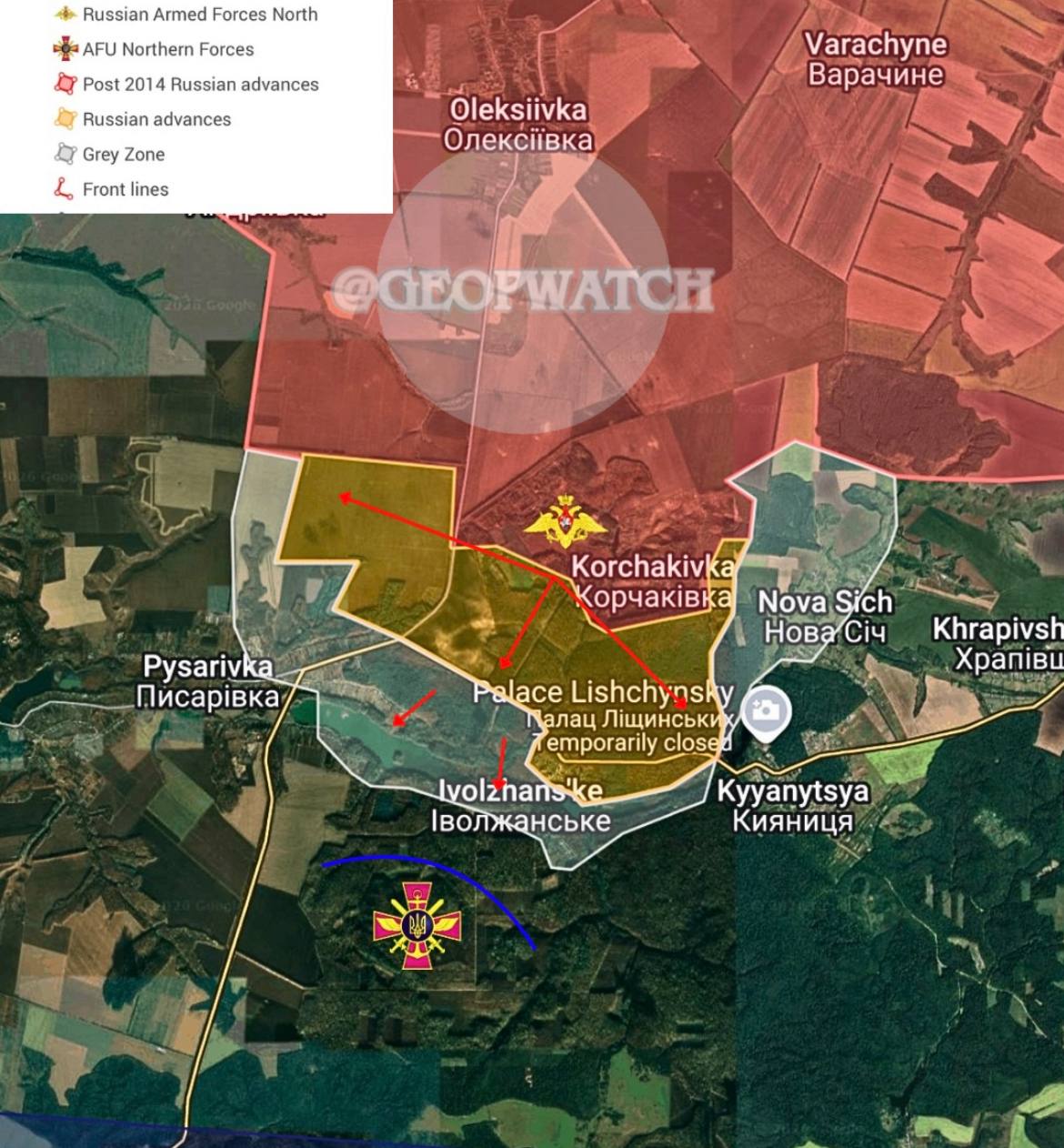
On 9 July 2026, Russian military units entered the village of Ivolzhanske in Sumy Oblast, marking the latest ground movement in the ongoing offensive toward the regional capital. Geolocated footage released by the open‑source monitoring channel GeoPWatch shows Russian soldiers advancing through the southern part of the settlement, waving flags as they move under the cover of surrounding woods. The terrain provides natural concealment from Ukrainian aerial reconnaissance, a factor noted by analysts monitoring the front. No casualties were reported by either side at the time of reporting, and it remains unclear whether the Russian units have established a permanent foothold or are conducting a temporary probing action.
"Russian forces have entered the village of Ivolzhanske, utilizing the woods as cover from drones. Geolocated footage shows flags being raised in the southern part of the village," GeoPWatch, 05:27 UTC, https://t.me/GeoPWatch/36927
Geran‑2 Drone Strike on Ukrainian Heavy‑Drone Launch Site in Dobropillya
At 04:10 UTC, three Russian‑manufactured Geran‑2 unmanned aerial vehicles (UAVs) attacked a Ukrainian heavy‑drone launch point in the town of Dobropillya, Donetsk Oblast. The strike was reported by the Telegram channel monitor_the_situation, which provided a concise summary and a photographic record of the impact zone. The launch site, used by Ukrainian forces to deploy larger tactical UAVs, sustained damage to its launch infrastructure, but no personnel injuries were confirmed in the immediate aftermath. The Geran‑2, a repurposed commercial drone equipped with a modest warhead, has been employed repeatedly in the conflict to conduct precision strikes against fixed installations.
"Three Russian Geran‑2 drones struck a Ukrainian heavy‑drone launch point in Dobropillya, Donetsk Oblast," monitor_the_situation, 04:10 UTC, https://t.me/monitor_the_situation/24208
Geran‑2 Drone Attacks on Petrol Stations Near Dnipro and Targets in Synelnykove
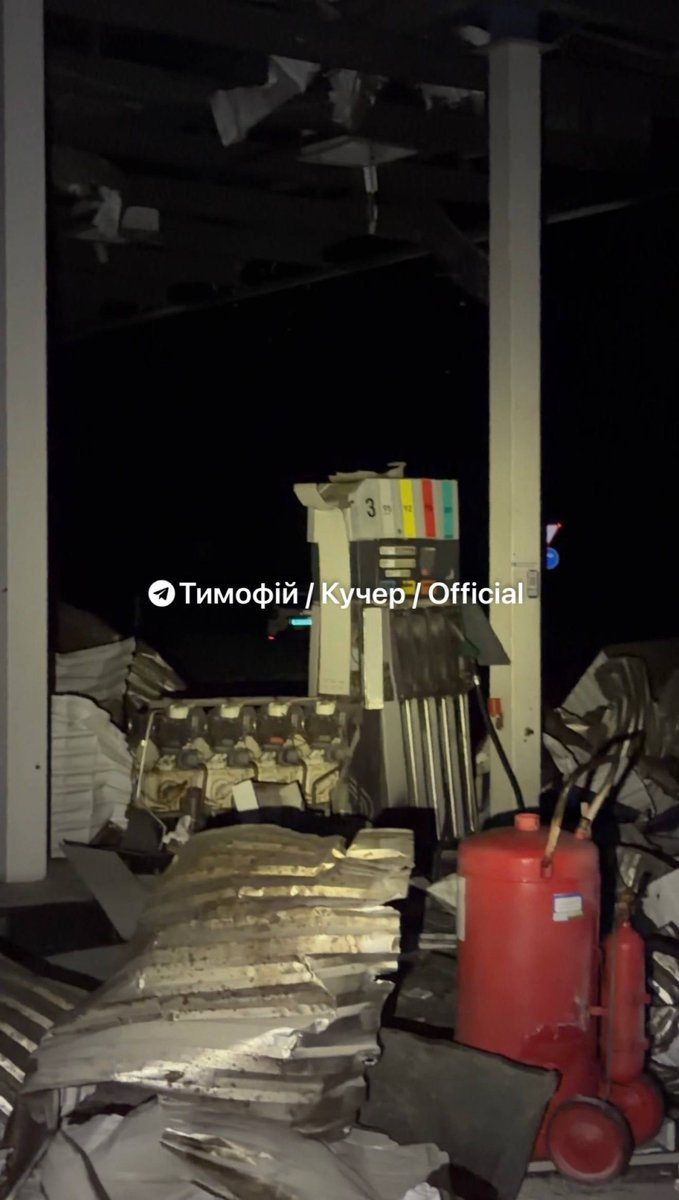
Earlier, at 03:10 UTC, a pair of Geran‑2 drones targeted civilian infrastructure in the Dnipropetrovsk region. Two petrol stations on the outskirts of Dnipro were hit, causing fuel spillage and temporary service interruptions. Simultaneously, additional Geran‑2 UAVs engaged undisclosed targets in the nearby town of Synelnykove. The attacks were documented by monitor_the_situation, which posted a photograph of the Dnipro station after the strike. No fatalities were reported, though local authorities noted several injuries requiring medical attention for smoke inhalation and minor shrapnel wounds.
"Russian Geran‑2 drones struck at least two petrol stations near Dnipro and targets in Synelnykove overnight," monitor_the_situation, 03:10 UTC, https://t.me/monitor_the_situation/24202
Operational Patterns and Tactical Implications
The three incidents recorded on 9 July illustrate a coordinated Russian approach that blends limited ground incursions with low‑cost UAV strikes. The use of woods to shield infantry movements in Sumy aligns with a broader Russian tactic of exploiting terrain to mitigate the effectiveness of Ukrainian drone surveillance. Simultaneously, the deployment of Geran‑2 drones against both military and civilian targets demonstrates a flexible strike capability that can be launched from relatively short ranges, reducing the exposure of launch platforms to Ukrainian air defenses.
Ukrainian forces have responded by reinforcing drone detection networks in the affected oblasts and by dispersing critical launch infrastructure to mitigate the impact of future UAV attacks. The absence of reported casualties in the Ivolzhanske advance suggests either a limited engagement scope or effective Ukrainian defensive measures. However, the damage to the Dobropillya launch site could degrade Ukraine’s ability to field heavier UAVs in the short term, potentially affecting reconnaissance and strike operations in the Donetsk sector.
Strategic Outlook
While the ground movement in Ivolzhanske does not yet constitute a large‑scale offensive, it signals continued Russian intent to probe and potentially expand footholds in Sumy Oblast. The concurrent UAV strikes reinforce a pattern of pressure across multiple fronts, aiming to stretch Ukrainian defensive resources. Monitoring agencies will likely focus on subsequent movements from the Ivolzhanske area and on any escalation in UAV activity, particularly the frequency and payload of Geran‑2 deployments.