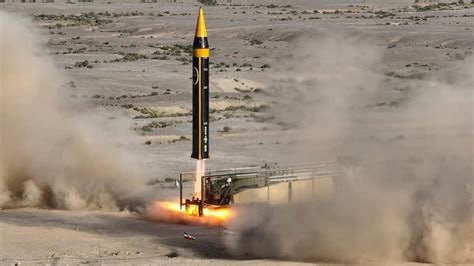
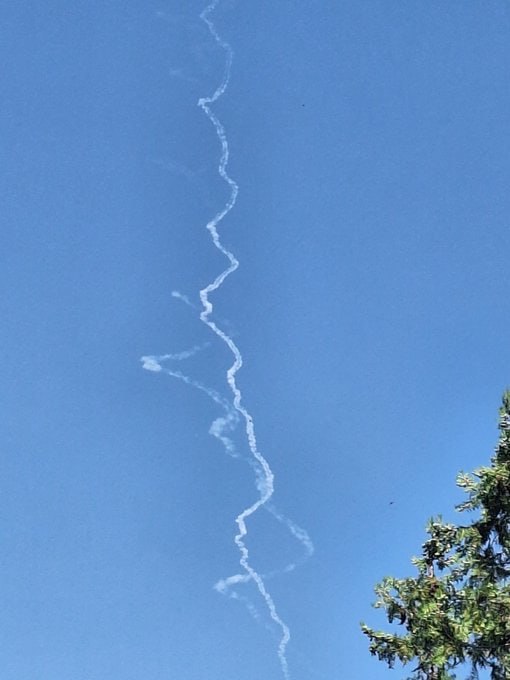
The Islamic Revolutionary Guard Corps (IRGC) confirmed on July 9 that it had conducted missile strikes targeting Jordan, marking the most significant kinetic event reported for the day and signalling a marked escalation in Tehran's regional posture.According to OSINTdefender, the IRGC launched missiles at Jordanian sites and warned of additional attacks if perceived provocations continued.
"Iran's IRGC says it has carried out missile strikes on Jordan and threatens further escalation." – OSINTdefender, 17:46 UTCThe strikes were part of a broader, coordinated campaign that unfolded across the Gulf and the wider Middle East, involving medium‑range ballistic missiles (MRBMs), anti‑ship missiles, cruise missiles, attack drones and ballistic missiles aimed at multiple state and U.S. assets.
Iran’s Multi‑Theater Missile Campaign
Between 10:43 UTC and 17:46 UTC, Iranian forces launched a series of missile attacks that targeted Jordan, Kuwait, Bahrain, Qatar, the United Arab Emirates and U.S. naval vessels in the Gulf of Oman. GeoPWatch reported that Iranian drones and ballistic missiles struck Patriot air‑defence systems in Kuwait, satellite receiver stations and early‑warning sites in Qatar, and U.S. fuel depots in Bahrain. The same source noted that the Iranian military also targeted “Patriot” systems in Jordan, confirming a pattern of simultaneous strikes across several allied states.Five MRBMs were fired at Jordan’s Muwaffaq Salti Air Base and Kuwait’s Ali Al Salem Air Base, with one missile impacting a nearby industrial complex (CIG_telegram, 13:14 UTC). The same salvo included anti‑ship missiles directed at U.S. Navy vessels operating in the Gulf of Oman.
U.S. and Allied Air Operations
In response to the Iranian barrage, the United States intensified its own kinetic actions. The New York Times, cited by rnintel, reported that U.S. forces carried out more than 170 airstrikes on Iranian targets over the preceding two days, underscoring a rapid escalation in direct U.S. involvement. A separate report from Al Jazeera noted a second consecutive night of U.S. strikes on Iran, raising questions about the durability of the interim peace agreement signed earlier in the year.
U.S. air operations also included targeted strikes on Iranian infrastructure, as suggested by intelslava, which referenced a possible attack on an Iranian railway used for Chinese logistical support. While the source is speculative, it reflects the broader strategic calculus of disrupting Iran’s supply chains.
Drone and UAV Activity Across the Gulf
Iranian kamikaze drones were deployed against U.S. and allied assets in Kuwait, Qatar and Bahrain, triggering sirens in Manama and prompting defensive alerts across the region (monitor_the_situation, 08:06 UTC). Kuwait’s armed forces reported intercepting a cruise missile, three ballistic missiles and ten drones in its airspace, resulting in one civilian injury from falling shrapnel (JPost, 12:56 UTC). The same engagement demonstrated Kuwait’s integrated air‑defence capability, which successfully neutralised multiple inbound threats.
Interceptions and Casualties
Jordan’s air‑defence network intercepted Iranian missiles over its territory, prompting widespread sirens in several Jordanian cities (Al Jazeera, 12:12 UTC). Jordanian officials confirmed the interceptions, and local media circulated video footage of the events (idkunim_il, 11:15 UTC). No casualties were reported in Jordan, but the alerts highlighted the vulnerability of civilian populations to high‑speed missile trajectories.
Kuwait also reported an injury caused by shrapnel from an intercepted missile, marking the only confirmed casualty among the documented events for July 9. The incident underscores the human cost of missile interceptions in densely populated areas.
Broader Regional Implications
The coordinated Iranian strikes represent a strategic attempt to pressure regional allies of the United States and to demonstrate missile‑launch capabilities across multiple fronts. By targeting air‑defence systems, satellite stations and fuel depots, Tehran aimed to degrade the operational readiness of its adversaries while signaling its willingness to employ both conventional and asymmetric weapons.
U.S. retaliation, characterized by a high volume of airstrikes, suggests a policy of proportional response designed to deter further Iranian aggression. However, the escalation raises the risk of miscalculation, especially given the proximity of missile trajectories to civilian infrastructure in Jordan and Kuwait.
Overall, the events of July 9 illustrate a volatile security environment in the Gulf, where missile and drone warfare have become central tools of statecraft. Continued monitoring of IRGC communications, allied interception capabilities, and U.S. strike patterns will be essential for assessing the trajectory of the conflict.