At 01:56 UTC on 7 July 2026, Iranian forces resumed direct attacks on commercial shipping in the Strait of Hormuz, a development reported by the monitoring channel monitor_the_situation and cited by Axios. The renewed hostility marks the most serious escalation in the waterway since the 2022‑2023 confrontations, and it has immediately reshaped naval postures across the region.
Iran's renewed naval aggression
"Iran has resumed attacks in the Strait of Hormuz, per reporting from Axios, marking renewed hostilities against commercial shipping in the strategic chokepoint." – monitor_the_situation, 7 July 2026
The announcement follows a period of relative calm that began after a series of diplomatic overtures in early 2025. No specific weapons were identified in the initial report, and the source did not attribute the attacks to any particular Iranian unit. Nonetheless, the language used by the channel underscores a deliberate policy shift: Iran is once again leveraging its naval capabilities to pressure commercial traffic that transits the 21‑nautical‑mile corridor linking the Persian Gulf with the Gulf of Oman.
Strategically, the Strait of Hormuz handles roughly 20 percent of global petroleum shipments, making any disruption a matter of international economic security. The renewed attacks therefore raise immediate concerns for shipping companies, insurers, and national governments that rely on uninterrupted oil flow. While the report does not provide casualty figures, the mere fact of an attack on commercial vessels suggests a heightened risk of vessel damage, crew injury, and potential environmental harm.
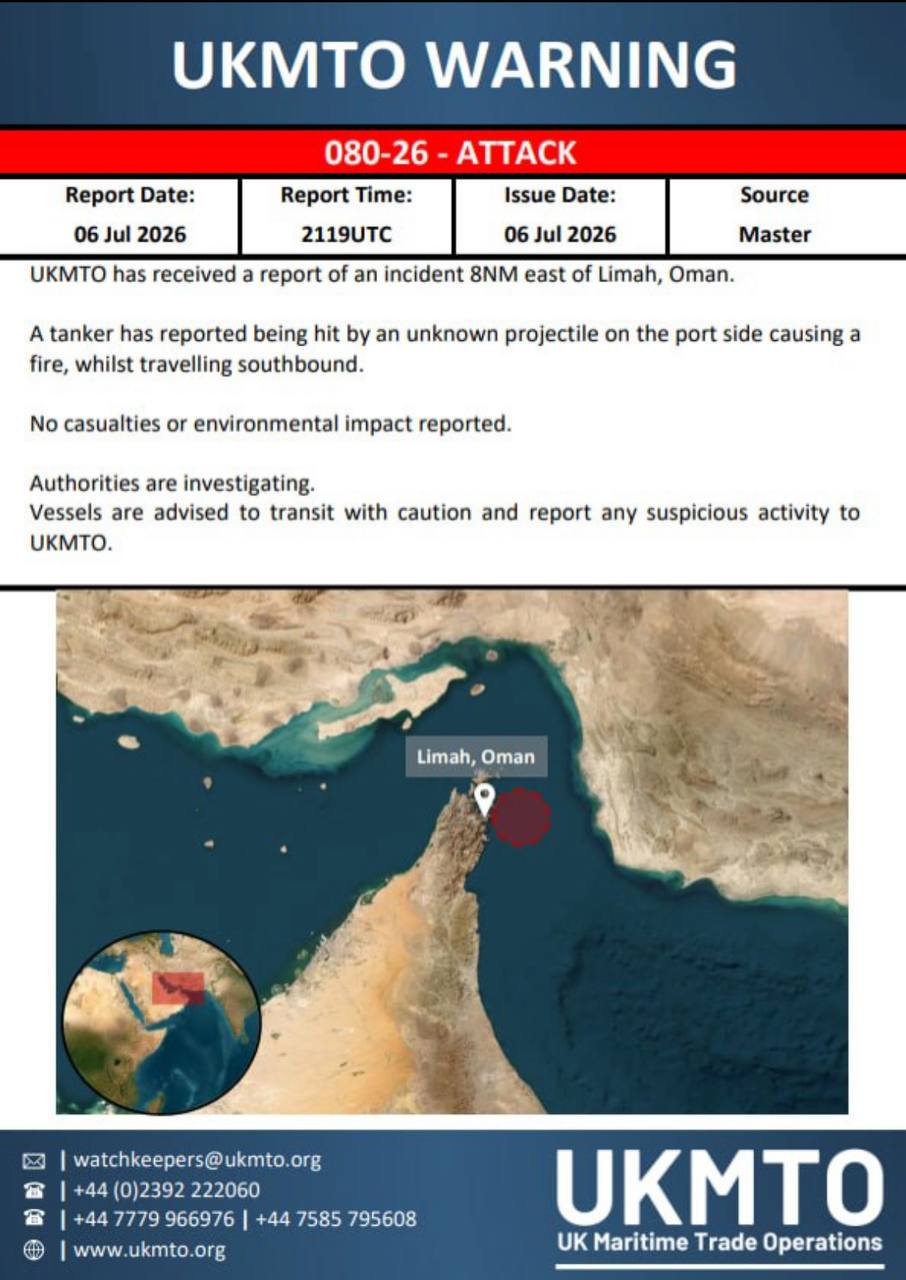
Oil tanker struck near Lima, Oman
"An oil tanker reported a fire on its port side after being struck by an unidentified projectile while sailing southward, 8 nautical miles east of Lima, Oman. The vessel was targeted in the vicinity of the Strait of Hormuz." – GeoPWatch, 7 July 2026
At 01:38 UTC, an oil tanker operating southward in the Gulf of Oman suffered a fire after being hit by an unidentified projectile eight nautical miles east of Lima, Oman. The incident, documented by the open‑source monitoring group GeoPWatch, occurred in international waters but within the broader operational sphere of the Strait. The projectile’s origin remains unconfirmed, and no group claimed responsibility. Photographic evidence accompanying the report shows a blaze on the vessel’s port side, with crew members deploying fire‑suppression equipment.
While casualty numbers were not disclosed, the incident underscores the tangible danger posed to commercial assets. The tanker’s cargo, likely crude oil or refined products, represents a significant economic loss if the fire spreads or the vessel sustains structural damage. Moreover, the event illustrates the potential for collateral damage to the marine environment, a risk that could trigger broader ecological and economic repercussions.
U.S. Navy response: USS Boxer deployment
"USS Boxer (LHD 4) Amphibious Ready Group with 11th MEU deploys to the Gulf of Oman, escalating US naval posture in the region amid Iran tensions." – monitor_the_situation, 7 July 2026
In direct response to the escalating threat environment, the United States Navy dispatched the amphibious assault ship USS Boxer (LHD‑4) along with its Amphibious Ready Group and the 11th Marine Expeditionary Unit (MEU) to the Gulf of Oman at 00:52 UTC. The deployment, announced by the same monitoring channel, signals a rapid increase in U.S. naval presence aimed at deterrence, maritime security, and the protection of commercial shipping lanes.
The USS Boxer, a Wasp‑class amphibious assault ship, can embark a mix of helicopters, vertical‑take‑off aircraft, and landing craft, providing a versatile platform for both kinetic and humanitarian operations. The 11th MEU adds a ground combat element capable of conducting ship‑to‑shore missions, while the broader Amphibious Ready Group offers integrated command, control, and logistics support. Together, these forces enhance the U.S. ability to monitor vessel movements, respond to hostile actions, and coordinate with allied navies in the region.
U.S. officials have not publicly detailed rules of engagement for the Boxer group, but standard operating procedures in contested waterways typically include escort duties for high‑value merchant vessels, rapid‑response boarding teams, and the capacity to interdict hostile projectiles. The presence of a forward‑deployed amphibious force also serves a signaling function, demonstrating resolve to both Tehran and regional partners.
Strategic implications and regional response
The confluence of Iranian aggression, an unexplained projectile strike, and a swift U.S. naval deployment creates a multi‑layered security dilemma. For Iran, the attacks may be intended to extract political concessions, test the resolve of Western powers, or signal domestic strength amid internal economic pressures. For the United States and its allies, the priority is to maintain freedom of navigation, safeguard commercial interests, and prevent escalation into broader armed conflict.
Regional actors, including Oman, the United Arab Emirates, and Saudi Arabia, have historically balanced diplomatic engagement with Iran against the need to protect their own maritime trade. While no official statements were released on 7 July, the proximity of the oil‑tanker incident to Omani waters suggests that Muscat will likely increase its own patrols and coordinate closely with coalition forces.
International maritime organizations, such as the International Maritime Organization (IMO) and the United Nations’ naval task forces, are expected to issue advisories urging vessels to adopt heightened vigilance, route adjustments where feasible, and adherence to best‑practice reporting protocols. Insurance firms have already begun to adjust premiums for voyages through the Strait, reflecting the elevated risk profile.
In the longer term, the events of 7 July may influence diplomatic calculations in ongoing negotiations over Iran’s nuclear program and regional security frameworks. The re‑escalation of naval hostilities could either pressure Tehran back to the negotiating table or entrench a more confrontational stance, depending on the effectiveness of deterrence measures and the willingness of external powers to sustain a heightened naval footprint.
Overall, the situation remains fluid. Continuous monitoring of open‑source channels, satellite imagery, and naval AIS data will be essential to assess whether the attacks represent isolated incidents or the onset of a sustained campaign. Stakeholders are advised to maintain real‑time situational awareness and to prepare contingency plans for rapid response to any further disruptions in the Strait of Hormuz.