On 28 February 2026, U.S. Army forces recorded a high‑profile missile launch that has resurfaced in open‑source intelligence channels. The video, posted by intelslava, depicts M142 HIMARS launchers in Kuwait firing ATACMS and Precision Strike Missiles (PrSM) toward Iran. The footage confirms the operational readiness of U.S. long‑range precision fire assets in the Gulf region and underscores the potential for rapid escalation between the United States, its Gulf allies, and Tehran.
U.S. HIMARS Launch from Kuwait
The recorded launch shows two HIMARS tubes discharging ATACMS, a surface‑to‑surface missile with a range of up to 300 km, followed by a PrSM, a newer precision‑guided munition capable of striking targets beyond 400 km. Both missile types are mounted on the M142 platform, a highly mobile, wheeled launcher used by U.S. and allied forces. While the exact target coordinates were not disclosed, the trajectory appears directed toward Iranian airspace, suggesting a demonstrative show of force rather than a pre‑planned strike.
"The launch illustrates the United States’ commitment to deterrence in the Persian Gulf, leveraging HIMARS to project power without deploying larger artillery systems," a senior analyst at a regional security think‑tank noted in a briefing cited by intelslava.
Key actors: United States (U.S. Army), Kuwait (host nation), Iran (target nation). No casualties were reported, as the event was a test or deterrent demonstration rather than an active combat engagement.
Russian Missile Strikes Across Ukrainian Oblasts
In a separate development, Russian forces conducted coordinated strikes across four Ukrainian oblasts, resulting in 17 fatalities—including two children—and 125 injuries, according to the Telegram channel monitor_the_situation. The attacks, which occurred on 2 July 2026, employed conventional artillery and aerial munitions, though specific weapon systems were not identified in the source material.
The civilian toll highlights the ongoing humanitarian impact of the conflict, which entered its seventh year in 2026. The strikes were part of a broader Russian campaign aimed at disrupting Ukrainian logistics and civilian infrastructure ahead of the upcoming summer offensive season.
Saudi‑Iranian Air Interception Over Houthi Leaders
On 3 July 2026 at 16:01 UTC, Saudi Arabian fighter jets attempted to intercept an Iranian aircraft that had arrived in Saudi airspace to transport senior Houthi officials from Yemen to Iran for the funeral of Iran’s Supreme Leader, Ayatollah Khamenei. The Houthi movement responded by launching surface‑to‑air missiles at the Saudi jets, forcing the Saudi aircraft to withdraw. The Iranian plane subsequently departed safely, carrying the Houthi delegation to Tehran, as reported by idkunim_il.
This incident underscores the complex three‑way dynamic among Saudi Arabia, Iran, and the Houthi movement, where airspace violations and missile exchanges can rapidly intensify without direct ground combat.
Ukrainian Strike on Vladimir Space Communications Center
Geolocation data released by monitor_the_situation confirms that a Ukrainian strike on 22 June 2026 damaged the Vladimir Space Communications Center in Orbita, Vladimir Oblast, Russia. While the specific weapon system was not disclosed, the target—a critical node in Russia’s satellite communications network—suggests the use of precision‑guided munitions capable of striking deep within Russian territory.
The attack represents a strategic escalation, as Ukraine seeks to impair Russian command, control, communications, computers, intelligence, surveillance, and reconnaissance (C4ISR) capabilities beyond the immediate front lines.
U.S. Withdrawal from Nigeria After Killing ISIS Deputy Leader
In May 2026, United States Africa Command (AFRICOM) and Nigerian security forces conducted a joint operation in northeastern Nigeria that resulted in the death of Abu‑Bilal al‑Minuki, the global deputy leader of the Islamic State (ISIS). Following the operation, the United States announced a withdrawal of its forces from Nigeria, as reported by the Jerusalem Post. The operation involved intelligence‑driven raids and air support, though specific weapons were not enumerated.
The removal of al‑Minuki is a significant blow to ISIS’s trans‑national leadership structure, but the subsequent U.S. pullout may affect the momentum of counter‑terrorism efforts in the Sahel region.
Israeli IDF and Shin Bet Eliminate Hamas Terrorist Linked to Hostage‑Taking
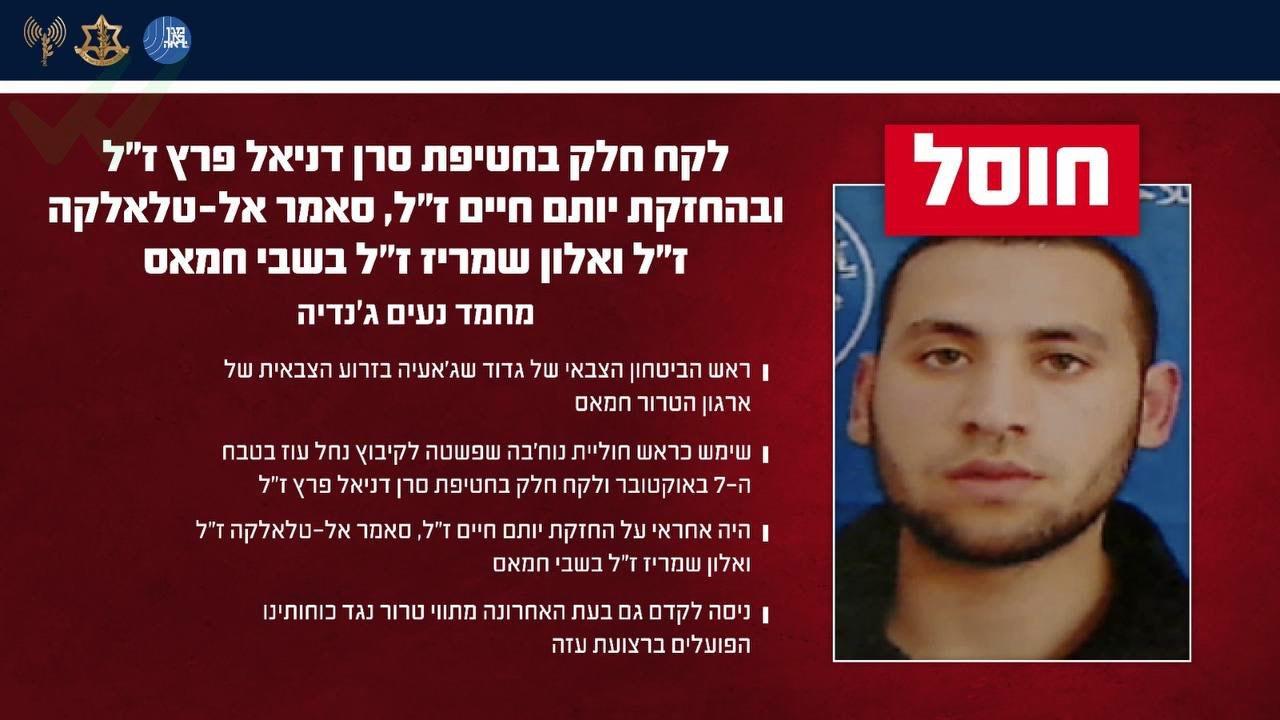
On 3 July 2026, the Israel Defense Forces (IDF) and elite unit Shin Bet announced the killing of a Hamas operative involved in the kidnapping and murder of Israeli soldiers and civilians, including Captain Daniel Peretz and hostages Yotam Chaim, Samer al‑Talalaka, and Alon Shmariz. The announcement, accompanied by a photograph, was posted on idkunim_il. While the exact location of the strike was not disclosed, the operation demonstrates Israel’s continued focus on targeted eliminations of high‑value Hamas personnel.
These targeted killings are part of a broader Israeli strategy to degrade Hamas’s operational leadership ahead of potential escalations in the Gaza Strip.
Collectively, the events of 3 July 2026 illustrate a multi‑theater environment where state and non‑state actors employ a range of kinetic capabilities—from long‑range missile launches to precision airstrikes and surface‑to‑air engagements—to pursue strategic objectives. The convergence of these actions raises the risk of inadvertent escalation, particularly where overlapping airspaces and contested borders exist.