Ukraine’s kinetic conflict landscape intensified markedly on 30 June 2026, highlighted by a comprehensive casualty report from the Azov Corps and a series of high‑impact strikes across the frontlines. The data underscore a shift toward combined‑arms operations, with conventional artillery and armor engagements complemented by increasingly sophisticated drone tactics.
Azov Corps Reports Record Russian Losses in Donetsk
The most consequential development emerged from the Donetsk Oblast, where the Azov Corps announced that its forces had killed 1,481 Russian soldiers and wounded 701 during June. The report also detailed the destruction of multiple Russian tanks, artillery pieces, and unmanned aerial vehicles (UAVs). The claim, posted on the Telegram channel monitor_the_situation, reflects a sustained offensive by Ukrainian units operating in the contested eastern region.
"Azov Corps reports inflicting 1,481 Russian troops killed, 701 wounded, and extensive equipment losses in June, including tanks, artillery, and UAVs." – monitor_the_situation, 15:27 UTC, 30 June 2026 (https://t.me/monitor_the_situation/23273)
While independent verification remains limited, the figures align with broader intelligence assessments indicating heightened attrition among Russian ground forces following a series of coordinated assaults on supply lines and forward positions. The reported losses of armored assets suggest successful anti‑tank operations, likely involving a mix of anti‑tank guided missiles (ATGMs) and drone‑delivered munitions.
Russian Aerial Bombing Targets Civilian Infrastructure in Zaporizhzhia
At 15:51 UTC, a Russian aerial bomb struck a residential district in Zaporizhzhia, destroying multiple homes and a kindergarten. The attack wounded nine civilians, according to the same Telegram source. The use of unguided aerial bombs against densely populated areas marks a continuation of Russia’s strategy to exert pressure on urban centers beyond the immediate frontlines.
"Russian aerial bomb strikes residential area in Zaporizhzhia, destroying homes, damaging kindergarten, wounding nine civilians." – monitor_the_situation, 15:51 UTC, 30 June 2026 (https://t.me/monitor_the_situation/23278)
The incident underscores the persistent threat to civilian populations in contested oblasts and raises concerns about compliance with international humanitarian law. The weapon employed—a conventional aerial bomb—does not require sophisticated targeting systems, indicating that Russian air assets continue to conduct low‑altitude, high‑risk sorties despite increased Ukrainian air‑defence activity.
Ukrainian 413th Raid Regiment Hits Power Substations in Occupied Crimea
In a coordinated operation at 15:29 UTC, Ukraine’s 413th Raid Regiment targeted four power substations in occupied Crimea, including facilities in Dzhankoi and Marianivka. The strikes, captured on video and disseminated via the monitor_the_situation channel, aimed to degrade Russian logistical support and civilian electricity supplies in the annexed peninsula.
"Ukraine's 413th Raid Regiment struck four substations in occupied Crimea overnight, including Dzhankoi and Marianivka." – monitor_the_situation, 15:29 UTC, 30 June 2026 (https://t.me/monitor_the_situation/23274)
These attacks demonstrate Ukraine’s expanding capability to conduct deep‑strike missions across the Black Sea, likely employing long‑range precision‑guided munitions launched from mobile launch platforms. The disruption of power infrastructure not only hampers Russian command‑and‑control nodes but also exerts pressure on the civilian population, potentially influencing public sentiment in the occupied territories.
FPV Drone Destroys Russian 2S19 Msta‑S Howitzer in Donetsk
At 12:00 UTC, a Ukrainian first‑person view (FPV) drone operated by the 151st Mechanized Brigade detonated ammunition stored near a Russian 2S19 Msta‑S self‑propelled howitzer in Donetsk Oblast. The secondary explosion destroyed the artillery system entirely.
"Ukrainian FPV Drone Destroys Russian Howitzer With Ammunition Detonation" – monitor_the_situation, 12:00 UTC, 30 June 2026 (https://t.me/monitor_the_situation/23250)
This incident illustrates the growing efficacy of low‑cost, high‑precision UAV platforms in neutralizing high‑value targets. By exploiting the vulnerability of ammunition depots, Ukrainian forces achieved a force‑multiplying effect, removing a key indirect‑fire asset from Russian order of battle without expending costly missile stockpiles.
Strikes on Bridges and UAV Command Posts Near Staromlynivka
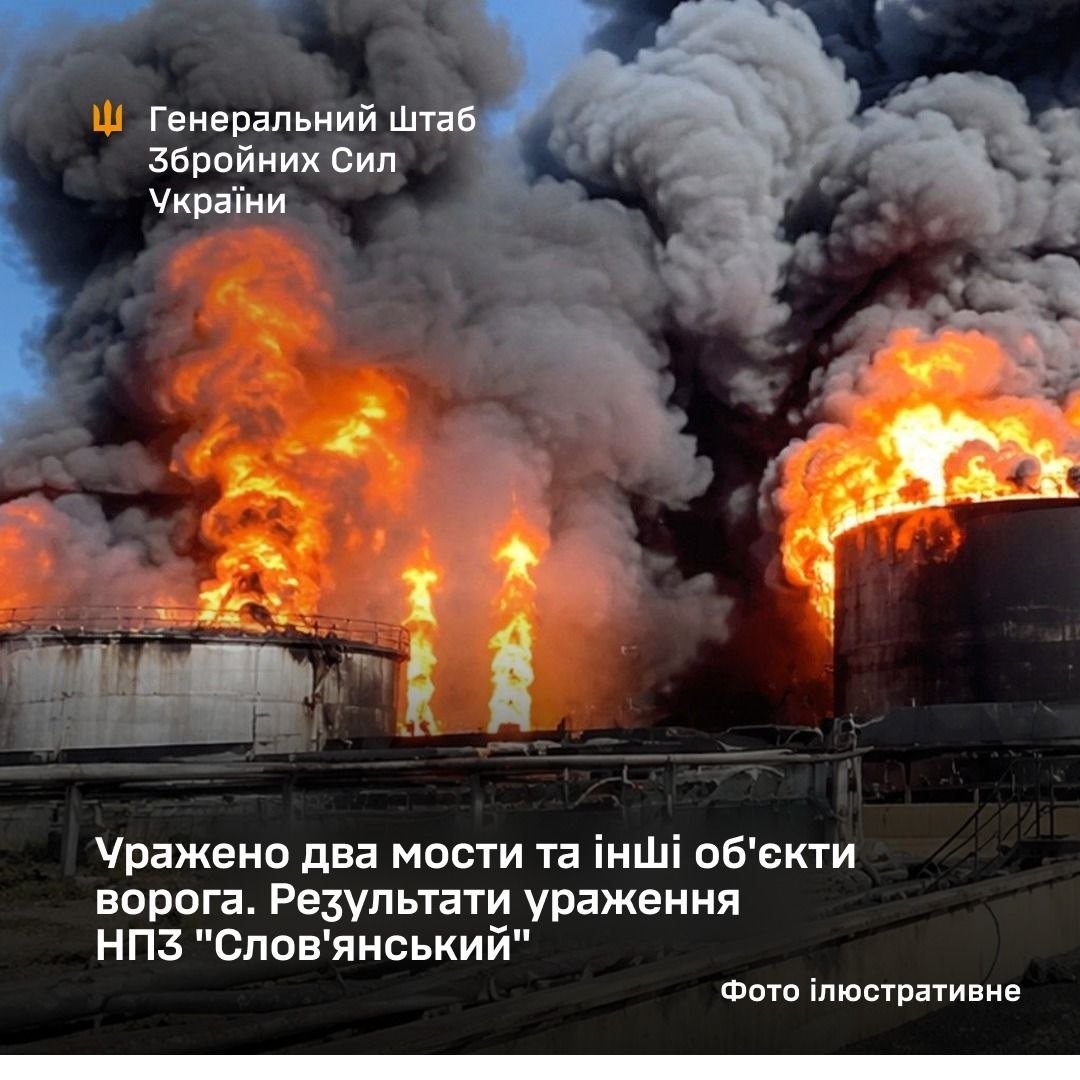
Earlier, at 11:36 UTC, Ukraine’s General Staff reported successful strikes on two bridges used by Russian forces in Zaporizhzhia Oblast and Crimea, as well as the destruction of five UAV command posts and a command‑observation post near Staromlynivka, Donetsk Oblast. Photographic evidence accompanying the report confirmed damage to the bridge structures and the UAV facilities.
"Ukraine's General Staff confirmed strikes on two bridges used by Russian forces in Zaporizhzhia Oblast and Crimea, along with five UAV command posts and a command‑observation post near Staromlynivka." – monitor_the_situation, 11:36 UTC, 30 June 2026 (https://t.me/monitor_the_situation/23248)
Targeting bridges serves a dual purpose: it hampers Russian logistical convoys and restricts the mobility of heavy equipment. Simultaneously, the elimination of UAV command nodes degrades Russian ISR (intelligence, surveillance, reconnaissance) capabilities, limiting real‑time battlefield awareness.
Emerging Drone Activity in Southern Ukraine
Additional drone‑related activity was observed in Zaporzhoye, Donetsk Oblast, where a dash‑cam video captured the arrival of an unidentified UAV at 12:35 UTC. While the footage did not confirm an attack, the presence of hostile UAVs in the area signals heightened aerial contestation and the potential for future kinetic engagements.
"The arrival in Zaporzhoye was caught on a dashcam." – intelslava, 12:35 UTC, 30 June 2026 (https://t.me/intelslava/89580)
Assessment of the June Kinetic Landscape
The June 2026 data points to a multi‑dimensional escalation in Ukraine’s kinetic operations. Russian forces continue to employ conventional air‑strike tactics against civilian targets, while Ukrainian forces have increasingly leveraged precision‑guided munitions and low‑cost drone platforms to inflict disproportionate losses on Russian armor, artillery, and logistical infrastructure. The Azov Corps’ casualty figures, if accurate, suggest that Ukrainian combined‑arms tactics are achieving measurable attrition against Russian ground forces.
Strategically, the focus on infrastructure—bridges, power substations, and UAV command posts—indicates a shift toward disrupting Russian sustainment and command networks rather than solely seeking territorial gains. This approach aligns with broader Ukrainian doctrine emphasizing the erosion of Russian operational depth.
Looking ahead, the continued proliferation of FPV and loitering‑munition drones is likely to amplify the tempo of kinetic engagements. Both sides may respond by bolstering air‑defence systems, electronic‑warfare capabilities, and counter‑UAV measures, potentially raising the risk of collateral damage in densely populated zones.